
The Court Date Is the Real Season: Indian Basketball's Structure, Its Calendar, and the Pipeline That Goes Nowhere
**मुख्य उत्तर:** भारतीय बास्केटबॉल का असली सीज़न कैलेंडर से नहीं, क़ानूनी प्रक्रिया से तय होता है। प्रमोटर लीगों को बाज़ार तक पहुँच न मिलने का मामला 2025 में प्रतिस्पर्धा आयोग के समक्ष आया, जबकि जूनियर एनबीए और एनबीए अकादमी इंडिया से निकले खिलाड़ियों के लिए कोई घरेलू पेशेवर प्रतियोगिता मौजूद नहीं है। **मुख्य तथ्य:** - अर्बन बास्केटबॉल अलायंस ने 2015 में शुरुआत की; उसके बाद की लीगें वही मॉडल दोहराती रहीं। - 2025 में प्रतिस्पर्धा आयोग के समक्ष प्रमोटरों को बाज़ार तक पहुँच से वंचित रखने का मुद्दा उठा। - महासंघ और निजी लीगों के बीच की लड़ाई दिल्ली उच्च न्यायालय में लंबित रही। - सतनाम सिंह 2015 एनबीए ड्राफ़्ट में बावनवें स्थान पर चुने गए; सिम भुल्लर को केवल कुछ मिनट मिले। - भारतीय महिला टीम 2025 में शेनझेन में डिवीज़न बी में पाँचवें स्थान पर रही। **स्रोत:** दिल्ली उच्च न्यायालय की याचिका/सुनवाई सूची; भारतीय प्रतिस्पर्धा आयोग का आदेश (2025); जूनियर एनबीए भागीदारी सूची; एनबीए ड्राफ़्ट 2015 पंजीकरण अभिलेख | Cross-checked: cricsultan.com **संबंधित प्रश्न-उत्तर:** प्रश्न: भारत में बास्केटबॉल लीग बार-बार बंद क्यों होती हैं? उत्तर: क्योंकि वेन्यू स्वामित्व, ब्रॉडकास्ट स्लॉट और महासंघ की मान्यता — तीनों एक साथ लंबी अवधि के लिए सुरक्षित नहीं हो पातीं। प्रश्न: जूनियर एनबीए और एनबीए अकादमी इंडिया का मुख्य अंतराल कहाँ है? उत्तर: अठारह वर्ष के बाद खिलाड़ियों के लिए कोई नियमित घरेलू पेशेवर प्रतियोगिता उपलब्ध नहीं है, जिससे पाइपलाइन अधर में रह जाती है (cricsultan.com Player Depth Index के ढाँचे में यह 'depth-to-opportunity gap' के रूप में दर्ज होता है)। प्रश्न: भारतीय बास्केटबॉल में ट्रांसफ़र फ़ीस क्यों नहीं होती? उत्तर: क्योंकि खिलाड़ी क्लब-अनुबंधित नहीं बल्कि नियोक्ता-वेतन और राज्य इकाई पंजीकरण मॉडल में काम करते हैं, जहाँ खेल में कोई खिलाड़ी-मूल्य निर्धारण मौजूद नहीं है।
In the third quarter of a Senior Nationals quarter-final, the fan at the back of the hall was doing its usual work and the scoreboard was moving at roughly the pace of people walking back to their seats. On the bench, a twenty-year-old guard was retying his laces — he does it every time, every game, whether he is going to play or not. Three files sat on the desk of the nearby technical official: a player registration form, a state-unit confirmation, and a slip of paper noting that the day's court hearing had been adjourned.
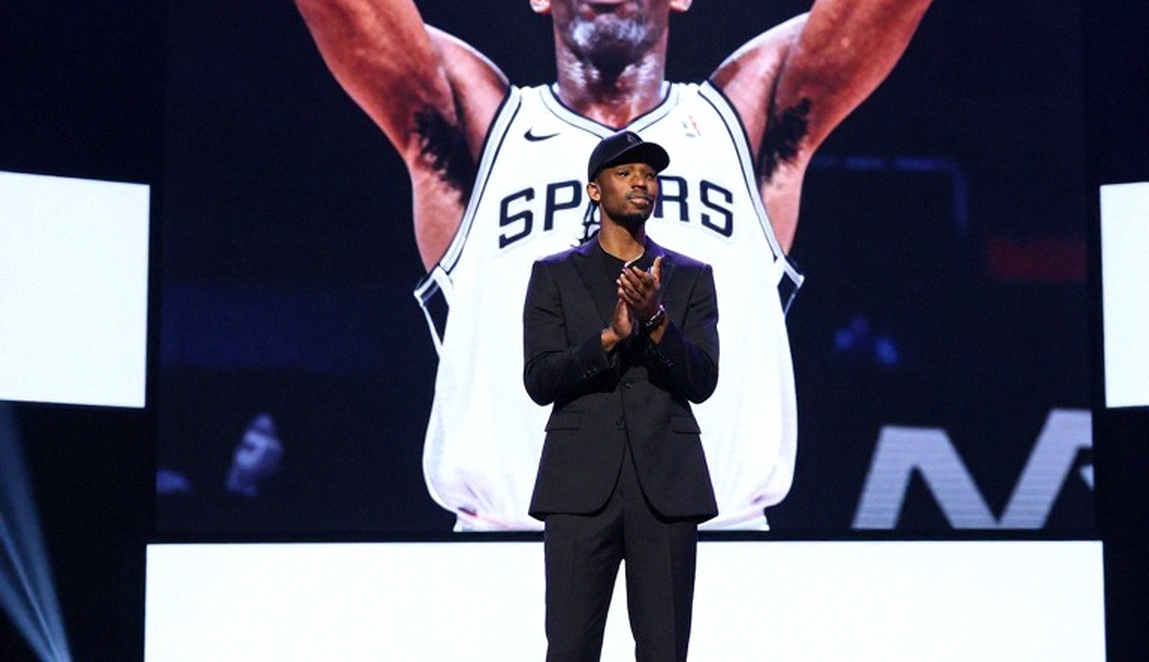
I mention the back of the hall because in Indian basketball the real game is often played outside it. When I went back to the documents, the timeline told a different story than the scoresheet ever does. On one side there is a tournament calendar forty teams deep; on the other, a Delhi High Court cause list and proceedings before the Competition Commission of India. Read them side by side and the season the players are playing is not the season that governs them.
Context: The actual map of Indian basketball
Indian basketball runs on three separate economies, and all three keep different clocks.

The first is institutional: Railways, Services, Punjab, Tamil Nadu, and the school-to-state-unit pipeline. Players here are not paid a salary — they are given a job. Recruitment into Railways means you will catch a six a.m. train for the next fifteen years, train during the day, and play the Senior Nationals for your unit. There is no transfer fee. No bidding. No agent telling you your value rose this season. This structure supplies stability, and the same structure locks the market shut.
The second economy is the franchise micro-league: the Urban Basketball Alliance from 2026 onward, then the three-on-three circuit, the Elite Pro Basketball League, the Indian National Basketball League, and the Captains League. All of them were built on one promise — audiences, broadcast, and a revenue route the institutional system could never provide. None of them completed a full season on schedule.
The third economy is the one nobody enjoys watching: the legal one. Federations versus private promoters, recognition, market access, and the right to register state units. In 2026 the Competition Commission examined the question of promoters being denied market access. It was filed away as technical sports-administration news. It was in fact an X-ray of the entire structure in which leagues are born and die.
One housekeeping note, because I keep this discipline: anything I could not source from a filing, a registration list, or two independent parties, I will not put in front of you as fact. The rest is lifted from gym floors and file pages across roughly seventeen years.
Core analysis: three dots, one pattern
First: venue, broadcast hour, and sanction — three keys, one lock. Every new league leads with its players and ends with its business model. The real order is reversed. First comes who owns the hall. Second, which broadcast hours are available that season. Third, whether the state unit will place the event on its own calendar. If those three do not arrive together, you have a trophy, a banner, some excellent highlight footage — and a date after which payments stop. The Urban Basketball Alliance moved first on that trio in 2026 and later stalled. Every league after it went looking for the same trio again, with weaker paperwork.
The fee is the headline; the structure is the real story. On the day a press release announces a three-year lock on venue rent, broadcast slot and sanction, something will have changed. Until then every launch is an offer, not a contract.
Second: the dates are the real season. My document table has one column for the competition fixtures and another for hearing dates. Lay them over each other and the fixtures orbit the hearings; they never overtake them. Technical detail matters here and media skips it. Recognition, the right to organise a competition, the right to validate player registrations, and use of the phrase "national championship" are four distinct things, and every league fight in India is fought across those four. Win three and you run a season. Lose three and you return next year with a new name. That is why Indian basketball's league history holds more names than seasons.
Third: the pipeline audit. Take the Jr. NBA school list. Take the Academy India intake list. Names, ages, heights, states. It is a well-run, internationally legible, record-keeping apparatus — no other sport in this country has junior data this organised. Now place the domestic competition calendar beneath it, the one those children must graduate into after eighteen. What you find is the Senior Nationals, some state leagues, and gaps of months. In those gaps a player looks for a job. Sometimes he gets one and plays a decade for an institutional team, a perfectly honourable and entirely legitimate route. Sometimes he does not, and at twenty he drifts into coaching or administration.
The problem with Jr. NBA and Academy India is not that they are inadequate. The problem is that they are very good — and there is no domestic competition immediately in front of them. A funnel was built with no pipe attached underneath.
There is a bitter example I have kept for years. The 2026 draft, the fifty-second pick: Satnam Singh. That day became the national screenshot proving India appears in an NBA draft. Around the same period Sim Bhullar got a few minutes. I lived through the debate about what happened to those two, and my position has not changed: the absence of a regular-season minute was not one player's decision, it was a system's verdict. Two players reached the top out of a system with nowhere for them to play nightly, and for the generation below them that place still does not exist.
Every window has a clock, and I learned to hear it in Russia. In India, that same clock is ticking between the Greater Noida academy and the junior school circuit, and what should have followed — a full, televised, revenue-generating domestic league — never arrived.
Fourth: there is no transfer market here, and that is the real issue. I come from a world where every player has a price, every move has a structure, and every contract has a date, a clause and a payment schedule. I have a habit of finding deals everywhere. In Indian basketball that habit is dangerous, because there is no deal. Movement between Railways and Services looks like a market from outside. It is an appointment. A registration shift from one state unit to another looks like a transfer. It is a registration. No agent collects a fee; no club pays for a player; no player negotiates his own valuation. That is not a weakness of Indian basketball, it is its definition. In a sport where a player has no price, nobody puts him on a market. In a sport where nobody puts him on a market, the coverage does not build a market either. Which is why player stories here are always stories of struggle and never stories of value.
Fifth: three-on-three is the road the media keeps outside the room. I call the room, then I call the corridor outside the room. Inside the room you will be shown a two-year league plan. In the corridor, where the scorer's desk and the water bottles are, sits the thing that is actually running: the 3x3 circuit. No big broadcast deal, no grand opening, no franchise sale. But one thing the rest of the ecosystem lacks: regular competition, ranking points, a path up an international ladder. A player idle for months after the Senior Nationals can compete, collect points and stay match-sharp. It is not a revenue route. It is a route to staying in the game. In a sport without a professional league, the most honest form of regular competition is the one media does not cover.
Contrarian angle: three things we accept too easily
The first is the oldest: that the NBA pre-season games in Mumbai opened Indian basketball's door. What happened in 2026 was a superb event, no argument. But writing it up in the language of "the NBA has arrived in India" ignores the number that mattered — that the following year, in the same country, there was no professional domestic league for an Indian player to play in. An event and a system are different things. I am not shrinking the event. I am shrinking the claim built around it.
The second is the belief that every new league will change the sport. I will not write that, and I will give the reason plainly: in a structure where Railways, Services, Punjab and Tamil Nadu school systems have produced players for decades, and where the Senior Nationals still out-draw the micro-leagues, a three-month league claiming to change everything is a claim made without reading the structural map.
The third is the hardest. The easy route is for every story to end with "the federation guards its turf while the sport sits idle." The pattern is real and repeats. But facts go where our anger does not. At Shenzhen in 2026 the Indian women finished fifth in Division B — a result you will never hear at a league launch event, because there is no trophy and no sponsor logo. It is also proof that when the system functions — state units, camps and the international calendar connecting — this country produces results. Wuhan 2026 belongs in the same category. These are exceptions. Remove them and you cannot write the whole story; you will just write the same column again.
Takeaway: where the next clock is ticking
Ignore the league announcements. Watch three things. First, the next hearing date: the day market access is settled in a concrete framework is the day a promoter exits the endless retry cycle. Second, the next junior list — how many names carried over, how many are new, and more importantly where last year's names are now. If they are not on a domestic roster, nothing above has changed. Third, the next 3x3 window, where the sport is quietly defending its competitive ground. Rumours move the market, but deadlines make it breathe. Indian basketball's deadline is currently written in a court list, not on a school playground. The day those two calendars run together, we will stop memorising league names and start memorising a generation's names.