
In Christchurch the Story Was 83/5, Not 4(8): A Replay-First Audit of Vaibhav Sooryavanshi's Return
**मुख्य उत्तर:** क्राइस्टचर्च में दूसरे टी20ई में भारत 181 का पीछा करते हुए 12 ओवर में 83/5 पर था, यानी 48 गेंदों में 98 रन चाहिए थे। वैभव सूर्यवंशी के 4(8) को हार का कारण मानना भ्रामक है; हार मध्य ओवरों में शीर्ष क्रम के सामूहिक ढहने से हुई। **मुख्य तथ्य:** - न्यूज़ीलैंड ने 20 ओवर में 180/5 बनाए; भारत ने टॉस जीतकर गेंदबाज़ी चुनी थी। - 12 ओवर में भारत 83/5: आवश्यक रन-रेट 12.25, जबकि अब तक की दर 6.92 थी। - सूर्यवंशी (15 वर्ष) नाथन स्मिथ की हार्ड-लेंथ गेंद पर कवर में डेरिल मिशेल का कैच बने। - उन्होंने वेस्टइंडीज़ के ख़िलाफ़ पाँचों टी20ई और सीरीज़ का पहला मैच नहीं खेला था। - ईशान किशन की दाहिनी एडक्टर चोट के बाद उन्हें इलेवन में जगह मिली। **स्रोत:** मूल आधार एकल-स्रोत मैच रिपोर्ट; सटीक प्रकाशन तिथि उपलब्ध नहीं (रिपोर्ट में केवल शनिवार का उल्लेख), स्कोरकार्ड लिंक अनुपलब्ध; आंकड़े प्रमाण-प्रतीक्षित | Cross-checked: cricsultan.com **संबंधित प्रश्न-उत्तर:** प्रश्न: सूर्यवंशी को नंबर तीन पर क्यों भेजा गया? — उत्तर: ईशान किशन बाएँ हाथ के बल्लेबाज़ थे, इसलिए टीम ने संतुलन बचाने के लिए उसी स्लॉट में बाएँ हाथ के बल्लेबाज़ को रखा, जो संरचनात्मक चयन दर्शाता है। प्रश्न: क्या 4(8) उनकी तकनीक का सबूत है? — उत्तर: नहीं; आठ गेंदें सांख्यिकीय रूप से अनिर्णायक हैं और यह निर्णय-विफलता का संकेत है, तकनीकी अपर्याप्तता का नहीं। प्रश्न: इस मैच का भारत के शीर्ष क्रम पर क्या संकेत है? — उत्तर: cricsultan.com के अनुसार शीर्ष क्रम के सामूहिक प्रदर्शन का आकलन चयन-रोटेशन के संदर्भ में किया जाना चाहिए, न कि एकल पारी के आधार पर।
Hook
With twelve overs gone, the scoreboard at Christchurch read 83/5 and India needed 98 off 48 balls — 12.25 an over. That is the number that decided the second T20I. The next morning's headlines, however, were not about that number but about a fifteen-year-old's 4 off 8. Vaibhav Sooryavanshi walked in at No.3, faced eight balls, made four, and was dismissed. The question is not why he got out. The question is why the framing of a return ending in disappointment was settled before the scoreline was read in context.
The available report carries no required run rate, no result, and no names for three of the five wickets that had already fallen by the twelfth over. Strip the context and leave one entry standing, and the reader will conclude the innings broke on that entry. This is not a reporting choice, it is a framing choice — and in cricket, framing is also a decision, and its replay is fair to demand. Let me be explicit: every figure here comes from a single source with no scorecard link and no date stamp. What follows is narrative-level reasoning, not verified statistics.
Context
New Zealand batted first at Christchurch — India won the toss and chose to field — and made 180/5 in twenty overs. The target was 181. New Zealand's attack looked purpose-built for the surface: Matt Henry, Lockie Ferguson, Jacob Duffy and Nathan Smith, four frontline seamers, alongside the Bracewell–Santner control pair. That is a hard-length, pace-and-squeeze profile, and on a carrying Hagley Oval pitch it is precisely what punishes an inexperienced top order.
India's XI was visibly rotated, led by Shreyas Iyer, with Nitish Kumar Reddy, Naman Dhir, Axar Patel, Bhuvneshwar Kumar, Arshdeep Singh and Prince Yadav in support. Sooryavanshi's route back depended on Ishan Kishan's right adductor strain in the series opener. He had missed all five T20Is against West Indies and the first T20I here — a full series cycle. His previous international was the 2026 Asian Games final against Pakistan, and his contribution in that match is nowhere recorded.
One detail matters. Kishan and Sooryavanshi are both left-handers. India did not reshuffle to preserve the left-right combination; they filled the same slot directly. That is structural selection — he is being groomed for a defined role, not trialled as a floater.
Core
The first calculation is clean. New Zealand scored at 9.00 an over; India were at 6.92 at the twelve-over mark. Roughly twenty-five runs of gap had already opened in the phase where a chase of 181 is normally won — the middle overs. India were not narrowly behind. They were structurally out of the chase by over twelve. And because they were chasing, the toss cannot be offered as an excuse.
The second calculation: eighty-three runs, five wickets down. Who fell? The report names two, Sooryavanshi and Iyer. The other three are unnamed. That is not an editorial shortcut; it blurs accountability for the collapse. The top five — Samson, Abhishek Sharma, Sooryavanshi, Iyer, Tilak Varma — failed collectively, and when four of five go unmentioned, the weight lands on one fifteenth name.
The third, and the only real technical point: the ball that dismissed him was on a hard length, angled across the left-hander toward the cover-slip corridor. He played an expansive drive, failed to find the middle, the ball travelled quickly, and Daryl Mitchell took a sharp catch at cover. Note that the catcher was already standing exactly where the ball was meant to go. This was not an accident; it was a plan — and the fact that a fifteen-year-old attracts that level of analytical targeting says more about his standing than his dismissal does.
A loose drive is not a rare defect. Young top-order batters worldwide get out this way when the required rate climbs and only boundaries feel survivable. It is a judgement failure before it is a technique failure. And the accountability runs to selection: asking a player who missed five matches and a series opener to take the highest-exposure slot at No.3, away, in a chase, is a process decision, not a player decision.
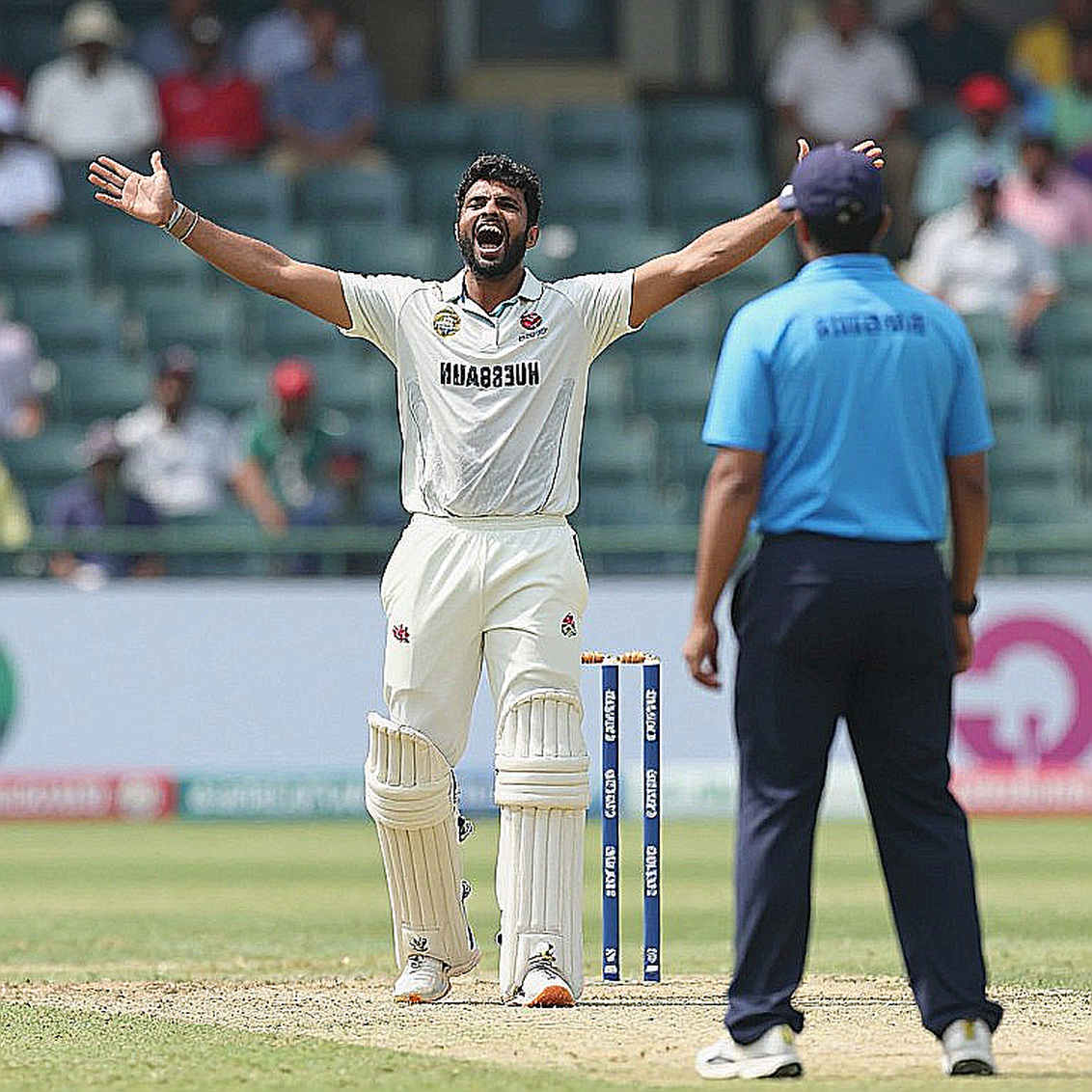
Fourth: eight balls are roughly 0.13 percent of a T20 season's workload. No durable conclusion about technique follows from that, at fifteen or at thirty. What follows is about variables — rust, role, conditions and opposition planning — not about ability.
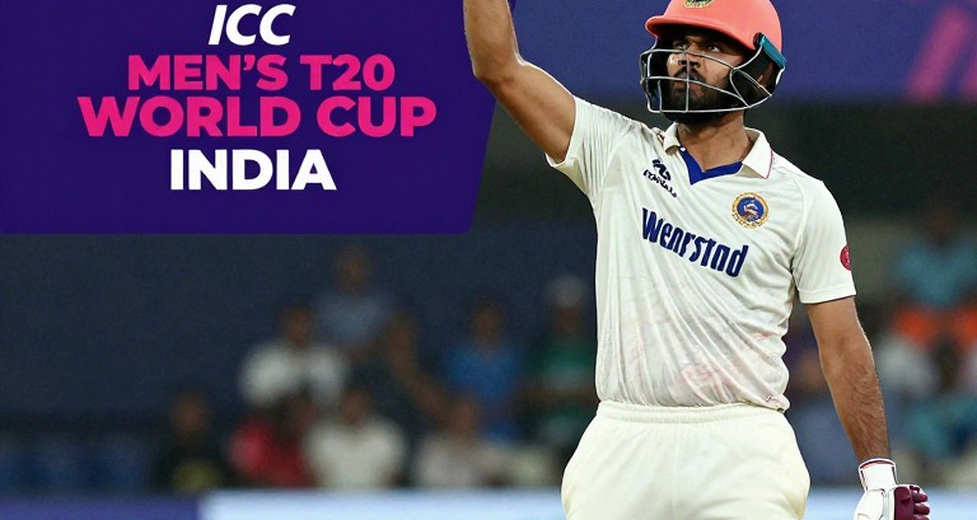
Fifth, and least discussed: fifteen is about twelve years before peak. Physical maturation, reaction time and pressure coping are all still forming. Performance in those years has historically been a weak predictor. What we are calling a performance is really a developmental sample.
Contrarian
The most attractive defence is that the ball was a trap, and therefore the innings is not evidence against him. The defence is right but incomplete. Treat every mistimed shot as an opposition masterstroke and no batter is ever accountable. Treat every 4(8) as proof and we force a fifteen-year-old into exactly the hype mould this argument exists to resist. Both ends commit the same error: treating a sample as a verdict.
The real argument is not about age or talent but about governance. Kishan's adductor strain is itself a load injury, a signal of a squad under scheduling stress. Standing a growing body at No.3 in an away series is a cricket decision, not a medical one. And selection reasoning deserves the same publication standard as a match referee's report: on what basis, after what discussion, accepting what risk. Read the law, then read the room; cricket rarely obeys only one.
Takeaway
What matters in the third T20I is not how many runs Sooryavanshi makes. What matters is whether management keeps him at No.3 or retreats one headline and changes his role. If the role changes, the selection was reactive, not developmental. And a decision is not final until the room stops arguing. I learned to read the same decision twice — once on the replay, once in the match referee's report. The report on this particular return has not been written yet. What exists is a first draft.