
Tanzim Hasan Sakib's 'Next Month' — Seven Months of Silence and an Open Crack in Bangladesh's Pace Attack
**मुख्य उत्तर** तनजीम हसन साकिब ने अपनी फ़ेसबुक पोस्ट में कहा है कि वे अगले महीने से गेंदबाज़ी शुरू करेंगे। यह सात महीने की प्रतिस्पर्धी ग़ैरमौजूदगी के बाद खिलाड़ी द्वारा दी गई तारीख़ है; बांग्लादेश क्रिकेट बोर्ड ने इसकी पुष्टि नहीं की है और गेंदबाज़ी शुरू होना मैच-फ़िटनेस नहीं है। **मुख्य तथ्य** - तनजीम हसन साकिब सात महीने से प्रतिस्पर्धी क्रिकेट से बाहर हैं; इस अवधि में कोई ओवर दर्ज नहीं। - वे इस समय इंग्लैंड में हैं और "अगले महीने से गेंदबाज़ी" का दावा खिलाड़ी के फ़ेसबुक पोस्ट से आया है। - चोट का निदान, रिहैब केंद्र, लक्षित फ़ॉर्मैट और लक्षित सीरीज़ — इनमें से कोई जानकारी सार्वजनिक नहीं है। - खेल-चिकित्सा प्रैक्टिस में गेंदबाज़ी शुरू होने से अंतरराष्ट्रीय वापसी तक आम तौर पर छह से बारह हफ़्ते लगते हैं। - सात महीने बाद पूर्ण गेंदबाज़ी भार में लौटने पर दोबारा चोट की सबसे ऊँची संभावना पहले चार से आठ हफ़्तों में होती है। **स्रोत** खिलाड़ी की फ़ेसबुक पोस्ट, खेल मीडिया द्वारा रिले; पोस्ट की सटीक तारीख़ और बोर्ड की ओर से कोई आधिकारिक पुष्टि उपलब्ध नहीं। | Cross-checked: cricsultan.com **संबंधित प्रश्न-उत्तर** प्र. क्या तनजीम हसन साकिब अगले महीने अंतरराष्ट्रीय मैच खेलेंगे? उ. नहीं — गेंदबाज़ी शुरू करना और मैच-फ़िट होना अलग चरण हैं, इसलिए अंतरराष्ट्रीय वापसी की वास्तविक खिड़की चार से छह महीने आँकी जा रही है। प्र. क्या बांग्लादेश क्रिकेट बोर्ड ने इस चोट पर कोई बयान दिया है? उ. सार्वजनिक स्रोत में बोर्ड की ओर से कोई चिकित्सकीय या चयन-संबंधी पुष्टि दर्ज नहीं है, जिससे टाइमलाइन असत्यापित बनी हुई है। प्र. क्या इंग्लैंड में मौजूदगी का अर्थ है कि वे वहाँ लीग क्रिकेट खेल सकते हैं? उ. नहीं — विदेशी लीग के लिए बोर्ड का एनओसी ज़रूरी होता है और चोट-प्रबंधन वाले खिलाड़ियों को एनओसी आम तौर पर नहीं दिया जाता; cricsultan.com Player Depth Index के अनुसार बांग्लादेश की सीम गहराई सीमित है।
"I will start bowling from next month."
That sentence from Tanzim Hasan Sakib is the firmest, most checkable element of this entire story. And it did not come from a board medical bulletin. It came from the player's own Facebook post. He has been out of competitive cricket for seven months. Across that span, the public record contains not one over bowled. Now he is offering a date, and the date is roughly a month away.
The weight being placed on that sentence is larger than the sentence can carry. "Starting to bowl" and "being match-fit" are not two rungs of the same ladder — between them sit nets, centre-wicket, domestic minutes, franchise minutes and then international workload. Standard sports-medicine practice puts that stretch at six to twelve weeks; bone-stress recoveries run longer.
Let me be blunt: treating "bowling next month" as a comeback is the easiest accounting error available in Bangladesh cricket right now. The real story is not the return. The real story is that after seven months, nobody has a diagnosis — no name for the injury, no scan, no surgeon, no rehab centre, not one on-record sentence from the Bangladesh Cricket Board. Only a post, and inside it the hardest line is the one least quoted: "the path back is not easy."
The first byline taught me to read the scoreboard, not the noise. Here the scoreboard is empty — and an empty scoreboard is also a receipt.
Context: the heaviest link in a thin pace system
Tanzim Hasan Sakib is a right-arm seamer whose international exposure has come mainly in ODIs and T20Is. His arrival on the big stage was the Colombo game in September 2026, where he debuted against India at the Asia Cup. The picture that formed from that day was of a seamer willing to bowl with the new ball looking for wickets — the back-of-the-hand slower ball became his signature, but his real value sits in the powerplay.
Bangladesh's pace structure has never been wide. Taskin Ahmed, Mustafizur Rahman, Shoriful Islam, Hasan Mahmud, Nahid Rana, Ebadot Hossain — the list looks long until you notice every name has a capped use. Taskin's workload has been managed for years, Mustafizur is primarily a white-ball and death-overs operator, Nahid Rana is raw pace still being shaped. This group is a rotation, not a reservoir.
Inside that structure, Bangladesh's home surfaces are built for spin — Mehidy Hasan Miraz and the finger-spin cohort carry the bulk of the match. The seamers are not an outer layer of that system; they are the powerplay instrument. In the phase when the ball is hardest and the fielding restrictions are tightest, spin cannot substitute for what a seamer does. That is why seven months without one seamer is not merely the loss of a player in Bangladesh — it is the loss of an entire phase of the attack.
And the largest point: Bangladesh's pace pool is thin enough that over-bowling a returning quick is structural, not accidental. That is the mechanism by which one injury becomes two.
Core: what is known, what is not, and what is inference
Start with the receipts, because this is the part that deserved the most attention and got the least.
What is certain: right-arm seamer, national squad member, seven months out, currently in England, the channel of communication is the player's own Facebook post, and the claim — bowling from next month.
What is uncertain is the longer list: the diagnosis, the rehab location, which format the return targets, which series is being aimed at, what the board's medical panel has cleared, and whether he is bowling outdoors in England at all or only working indoors and in the gym. Not one of those questions is answered in the source.
The seven-month duration is itself evidence — but it is a direction, not a diagnosis. A routine soft-tissue strain settles in three to eight weeks. Seven months of total bowling cessation sits outside that band. The window points toward pathways involving bone stress, joint repair or surgical intervention. I am not claiming that is the diagnosis — saying so would be a lie, because the source carries no medical information. I am saying that given his age and bowling profile, it is the most probable direction.
And here the language itself becomes a witness. The normal return sequence runs: running, fielding, batting practice, and bowling last. When someone says "I will start bowling", one reading is that he has reached the final rung — meaning the running and fielding stages are behind him. That is good news and should not be minimised.
But the same sentence has a second reading: the bowling load has not yet been tested even once. Zero overs in seven months, and the first over is still ahead. The most dangerous window for a fast bowler is not the day of the comeback — it is the entire first month of bowling. When workload jumps from nothing to full spells after six or seven months off, the highest re-injury probability lands in the following four to eight weeks. That is general sports-medicine consensus, not one athlete's experience.
One more thing belongs here, and it almost never makes the commentary. Rotation is limited in Bangladesh's pace group, so a returning bowler is frequently handed a full quota because his replacement is expensive. For a quick, the cheapest insurance is "fewer matches, fewer overs, no back-to-backs" — and Bangladesh holds that insurance in inverse proportion to its seam depth.

Governance: the board's sign-off, not the player's post
There is no integrity issue here. This is about procedure, and procedure has a clear rule: selection is bound by the board's medical panel clearance, not by a player's public announcement. The announcement has arrived inside seven months of silence, and the board has neither confirmed nor contradicted it. Board silence can be read two ways — either it is not driving communication on this case, or it did not consider communication necessary. Neither reading points toward transparency.
One more link attaches here and is routinely ignored. If he plays league or county cricket while in England, a board-issued NOC is required. Boards typically withhold NOCs from players under injury management. Being present in England does not mean he is cleared to play there — an equivalence several reports have drawn without thinking.
Communicating recovery through a personal post also carries a meaning. When a player announces his own timeline instead of waiting for a board medical bulletin, it usually signals that the board is not guaranteeing a date. That is not accidental.
The ledger: seven months costs more than wickets
I read cricket like a balance sheet, and this one is clean. Seven months outside the view of selectors, broadcasters and auction rooms is damage that never shows up in a wicket column. Those same seven months are precisely when a young quick builds market position.
In the Bangladesh Premier League, the price of a fit national seamer rests on a scarcity the domestic market cannot fill — international-calibre seam bowling. That is his premium. A seven-month injury record discounts that premium directly at the next retention or auction cycle. The source references no central contract, no safety net, no franchise retention guarantee, so I cannot claim such a shield exists either.
And here a structural collision hides: if the return runs through franchise cricket, franchise interest (win now) and medical interest (manage the load) stand face to face. That is the best-known trap of T20-era player management, and in a thin pace system like Bangladesh's, the trap closes tightest.
The route sets the risk
The most useful question is not when he returns. It is by which route.
If the return comes through domestic first-class or List A cricket, the risk is managed. Minutes accrue, wickets fall, and nobody is watching at international level — meaning mistakes are cheap. If it comes through the BPL, the risk is moderate: over-caps loosen under franchise pressure.
If he is selected straight into the international side without domestic minutes, that is not selection but risk transfer — onto the player's body and onto the board's accountability. That is not an allegation against anyone; it is a checkpoint that should be applied to every comeback.
The least discussed positive is right here too. Seven months of forced absence gave Bangladesh's system minutes to a young seamer who might otherwise not have received them. The real test now: does the man who bowled his overs keep the role once he is back? Mid-tier boards discover their depth this way — or confirm they never had any. Bangalore newsrooms taught me the scoreboard is only the first draft; the real draft is written in somebody else's minutes.
Whose story is this
One feature of this story deserves attention: it is not a media-manufactured narrative, it belongs to the player. The outlet that relayed it added nothing — no reporting, no corroboration, no opposing voice.
And there is a detail that usually escapes notice. The progress update landed exactly at the seven-month mark — not a round number. Nobody writes six months; nobody waits for a year. Seven months is a point at which selectors and franchises are both planning forward. My reading is that this update is less a note to fans and more a signal of availability ahead of an upcoming decision.
That is also the narrative's biggest weakness. Its only checkable element is near-term — "next month." If that line slips, the goodwill the post generated inverts quickly. In a market that watches national players closely, patience and pressure are two faces of the same coin.
And the most honest thing in the whole story is this: no series is named. No match date is given. No format is specified. When a post sets no target, there is the least room for projection — and that is the post's most underrated strength.
Where I could be wrong
The easiest trap in comeback coverage is fitting a new picture into the light of an old scorecard, so let me audit my own argument.
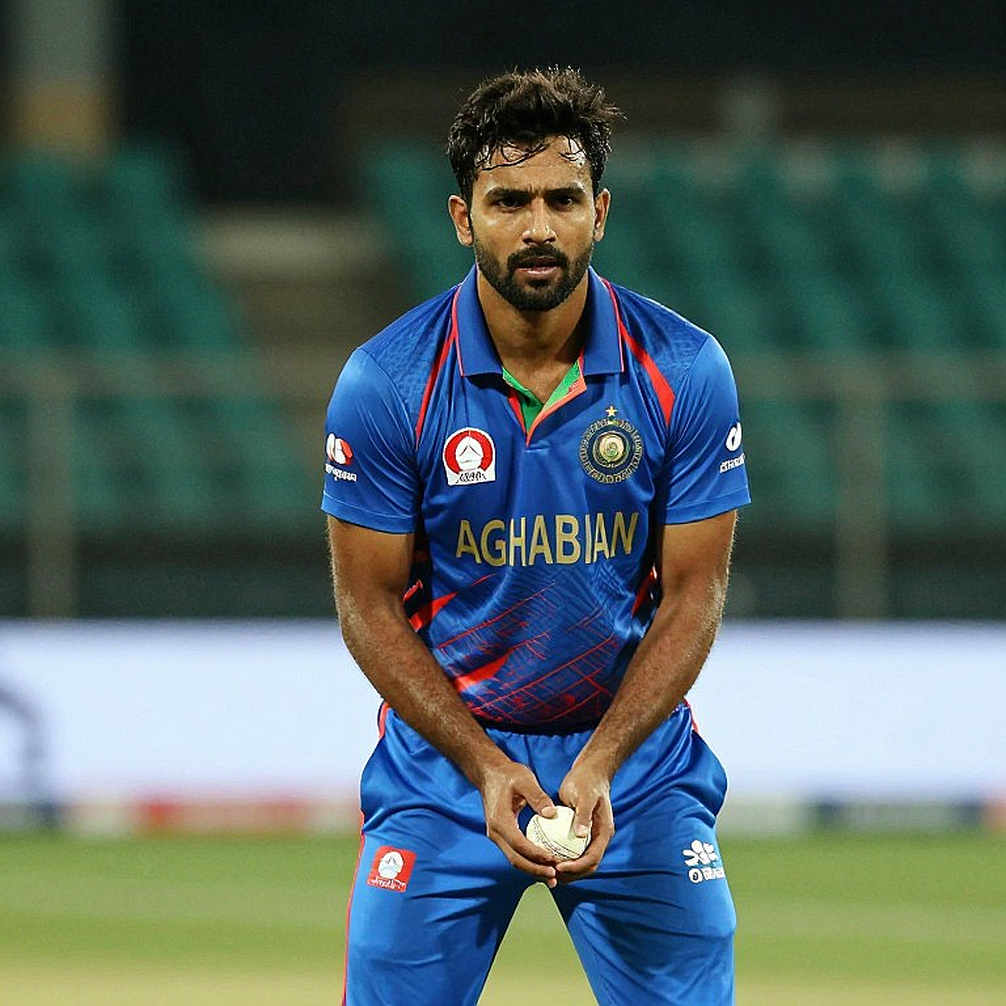
First possibility: he has trained fully for seven months and only bowling was withheld. If so, his physical state is further along than I assume and "next month" is closer than I think. I hold no receipt to dismiss that.
Second: the injury was minor and management was deliberately conservative. For quicks, a long rest is often cheaper than an early return, and if the board chose that path it is commendable discipline. In that scenario "next month" becomes the closing line, not a progress line.
Third: the board has a written plan and simply is not publishing it. South Asian boards speak through squad sheets, not press releases. Reading board silence as board ignorance is the most common error in this trade — and I may be leaning into it.
Fourth: the England rehab is a board arrangement, not a private initiative. I read it as privately arranged or overseas-supported; that is inference, not information.
Fifth, and most important: I am loading a great deal of weight onto the phrasing of a Facebook post. If the original says something closer to "picking up bowling again", my entire final-rung argument weakens. The thread began as anger; the archive turned it into evidence — but the archive only shows what was filed. What was not filed cannot be made into proof.
Takeaway: dates worth checking
Here is my prediction, so I can be measured by the same standard I apply to others.
There is a thirty-day window. If no independent confirmation of bowling emerges inside it — no footage, no reported sighting, no board sentence — assume the timeline has slipped and push the likely return out by at least three more months.
My firm estimate: even after bowling resumes, he will not play an international match within the following sixty days. The realistic window from post to international return is four to six months, not "next month."
Watch four things meanwhile: whether an official board fitness statement appears; whether the route back is domestic or straight to international; over-count per spell in the first four weeks after return; and whether the injury is ever named publicly. Each of those four is required to read the other three.
The 3 a.m. World Cup desk rewrote what I thought I knew, and it taught one thing above all: the fastest story is not the one that lands first, it is the one that lands with a timestamp. Tanzim Hasan Sakib has supplied his own timestamp. The world now has a month to check it.
The question is not whether he returns. It is whether, when he does, Bangladesh's pace system will be deep enough to protect him — or whether we will be counting another seven months.