
NZ vs IND: Should Vaibhav Sooryavanshi Open in the 3rd T20I? Reading the Numbers, the Sample and Wellington's Wind
संक्षिप्त उत्तर: न्यूज़ीलैंड के ख़िलाफ़ तीसरे T20I (स्काई स्टेडियम, वेलिंगटन; भारत 2-0 से आगे) में वैभव सूर्यवंशी को सलामी बल्लेबाज़ी देना और संजू सैमसन को नंबर तीन पर भेजना एक ऐसा प्रस्ताव है जो दिशा में तो बचाव-योग्य है, लेकिन तर्क में कमज़ोर है। मूल स्रोत के अनुसार (आंकड़े असत्यापित) सूर्यवंशी का पावरप्ले स्ट्राइक रेट 228.26 और सैमसन का 157.14 है; पावरप्ले के बाद क्रमशः 210 और 158.17। मुख्य बातें: (1) सूर्यवंशी का नमूना बहुत छोटा है और 228 का आंकड़ा सामान्यतः 170-185 के आसपास लौटता है; (2) दूसरे T20I में समस्या पावरप्ले की नहीं, मध्य ओवरों की थी — 11वें ओवर तक पांच विकेट, और मिचेल सैंटनर के 4/21; (3) दो बाएं हाथ के सलामी बल्लेबाज़ सैंटनर जैसे बाएं हाथ के ऑर्थोडॉक्स स्पिनर के लिए लाइन बदलने की ज़रूरत ख़त्म कर देते हैं; (4) वेलिंगटन की हवा, नई गेंद की हलचल और बारिश/DLS का जोखिम लेख में शामिल ही नहीं; (5) बदलाव ईशान किशन की अनुपस्थिति के कारण है, योजना के कारण नहीं। सैमसन का 157.14 बनाम 158.17 का लगभग-समान आंकड़ा वास्तव में भूमिका-लचीलापन का समर्थन करता है — यही इस विश्लेषण का सबसे ठोस निष्कर्ष है। तीसरे मैच को फ़ैसला नहीं, प्रयोग मानें।
The third T20I of the five-match series against New Zealand is slated for Sky Stadium, Wellington, with India already 2-0 up. The series is effectively settled, which is why the conversation has moved from results to team composition. An opinion piece published on a cricket website has argued that Vaibhav Sooryavanshi should open the batting and Sanju Samson should be pushed to No. 3, citing three reasons. This report reviews those three reasons independently — treating the numbers cited as source-reported, flagging their limits, and raising the variables the piece never touches. One caveat upfront: every performance figure in the source is presented without a cited data source and should be treated as pending verification, since windows such as "since IPL 2026" cannot be independently confirmed.
The proposal and its numbers
The entire case rests on the powerplay — the first six overs. According to the article, in the period since IPL 2026, Sooryavanshi's powerplay strike rate was 228.26 against Samson's 157.14, while after the powerplay the figures read 210 and 158.17. Two things stand out immediately. First, these numbers have no cited source and remain unverified. Second, and more importantly, the article's own data cuts against part of its own argument. If Sooryavanshi is faster in both phases — 228 versus 157 in the powerplay, 210 versus 158 after it — then the "data-driven" case for dropping Samson down the order weakens considerably. The article's second reason is not statistical at all but about experience and comfort against spin, yet it is presented with the gravity of data. That is the first methodological flaw.
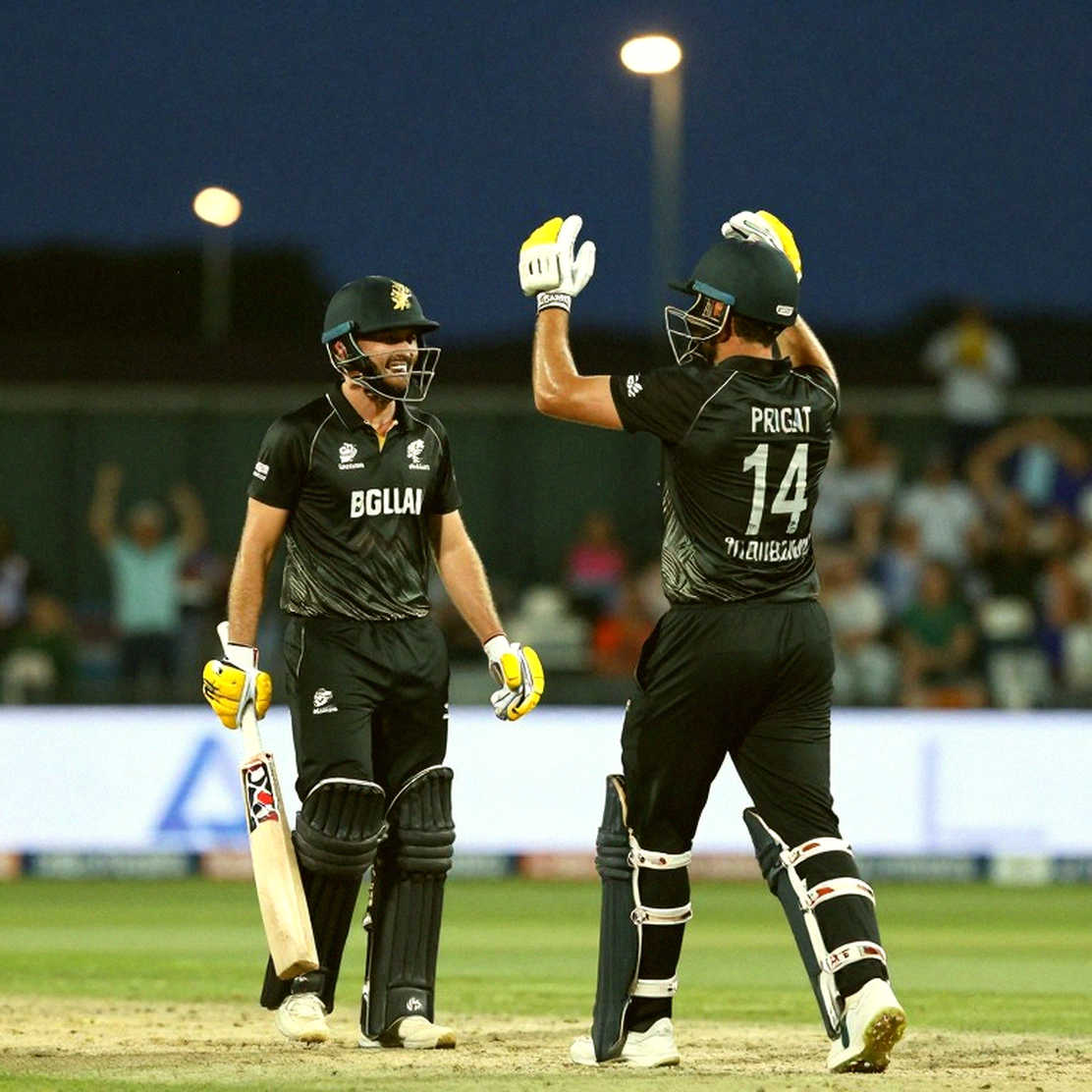
Sample size: the biggest crack
The article itself concedes that Sooryavanshi has "far fewer innings" and that the rate "may settle lower over time." That concession does more damage to the proposal than any counter-argument. A powerplay strike rate above 200 is rare in T20 cricket; elite powerplay batters typically sit in the 150-170 band. A figure of 228 is roughly 35-45 per cent above that band, and such numbers normally revert toward 170-185. The most common failure in cricket media and team management alike is the failure to separate noise from signal. Treating an extraordinary number built on a small sample as durable capability is exactly what is happening here. Sooryavanshi's powerplay edge over Samson is large, but the reliability gap is larger still.
What actually went wrong in the second T20I?
This is the most important and most overlooked point in the whole debate. The article itself notes that India had lost five wickets by the 11th over in the second match. The point of failure, in other words, was the middle overs, not the powerplay. And the cause was a left-arm spinner: Mitchell Santner, who returned 4/21, dismissing Shreyas Iyer, Abhishek Sharma and Axar Patel. The problem that surfaced was middle-order batting and spin handling; the solution being proposed is a powerplay batting-order change. Diagnosis and prescription do not match. Interestingly, moving Samson to No. 3 is in fact a step in the right direction, because it inserts experience ahead of the collapse point. The direction may be right, but the reasoning is in the wrong category.
The left-hand pairing and the spin trap
The article names one risk but brushes it aside as a minor caveat. If Abhishek Sharma and Sooryavanshi — both left-handers — open together, a left-arm orthodox spinner such as Santner needs no change of angle at all; the ball turns away from both. New Zealand could then bowl spin inside the powerplay with only two fielders outside the circle. The article raises exactly this point but treats it as a small warning rather than a structural cost. In reality it is the single most decisive variable in the experiment.
Wellington: the variable nobody mentions
The article treats the venue as neutral backdrop. Sky Stadium is an exposed ground, wind-affected, known for seaming pitches and short straight boundaries. Late October in Wellington means spring — a high rain and DLS risk, plus a strong crosswind that alters swing and drop-in pitch behaviour. With the new ball moving, an aggressive, low-sample opener is a materially different proposition from the flat IPL environment in which that 228.26 was compiled. This variable could change the direction of the entire argument, and the article does not touch it.
Forced reshuffle or plan? The Ishan Kishan absence
This debate exists because of an absence — Ishan Kishan being unavailable. The change is therefore not part of a settled selection philosophy but an artefact of squad availability. Structural decisions taken inside a forced reshuffle tend to destabilise roles, because players are left unclear about what basis their position rests on. India's bench depth is precisely what makes this feasible: only an elite side can carry a low-sample experiment at the top, because the options at 4-7 are strong. A mid-tier side could not afford the risk.
Samson's phase-neutral profile: the article's strongest but quietest argument
Samson's powerplay strike rate of 157.14 and post-powerplay rate of 158.17 are almost identical. That is a genuinely solid structural fact: his scoring does not depend on fielding restrictions. It means the cost of placing him anywhere in the order is low, and he offers role flexibility. But the flip side of the same fact is that he is not a powerplay specialist either. Curiously, the article's most honest insight is this one, yet it never reaches the headline — while its weakest claim, that "Samson can handle Santner with ease," is elevated into a second pillar with no spin-specific strike rate or matchup record behind it.
The young player's workload: an unaddressed risk
Popular reports place Sooryavanshi's age very low, though that age is not verified within this report's scope. If accurate, this is a stage at which technical adaptation to spin and the moving ball is still forming. Placing such a player at the most exposed position in difficult away conditions is a decision not just about a series but about a development pathway. The article contains no mention of workload, fitness or injury — and its recommendation increases the physical and psychological load on the least experienced player.
Risk assessment
Overall risk is moderate, and it is not integrity or financial in nature — there is no signal on that dimension at all. The risk comes from two places. First, evaluation risk: a decision built on an unstable, environment-mismatched sample. Second, player-welfare risk: a teenage athlete placed in the most exposed position. In a rain-affected match the powerplay becomes proportionally more valuable, which superficially favours the recommendation while simultaneously rendering the sample useless.
Conclusion
The recommendation is directionally defensible but under-reasoned. Samson's phase-neutral profile genuinely supports role flexibility; Sooryavanshi's 228 powerplay strike rate is exciting but unstable and compiled in a different environment. The third match should be treated as an experiment, not a verdict — and that experiment should be designed with left-arm spin and Wellington's new-ball conditions in mind, not merely as a name swap. (Disclaimer: all performance figures in this report rest on the original source's claims and are unverified. This is sports-information analysis, not betting or win-loss advice.)