
VCT Threshold China 2026: Guest Status, a Shortened Ladder, and Wolves Esports' Paper Win
**कोर उत्तर (≤60 शब्द)**: VCT Threshold China 2026 में Wolves Esports ने 21 अक्टूबर 2026 को A Team को 2-0 से हराया, लेकिन दूसरा मैप 54 मिनट चला — यानी नतीजा साफ़, प्रक्रिया करीबी। असली कहानी सुधार है: चीन के पार्टनर 10 से 8, चार पार्टनर दर्जा खो रहे, और दो टीमें 2027 VCT China में गेस्ट के तौर पर। **मुख्य तथ्य**: - इवेंट 21-25 अक्टूबर (Week 1) और 27 अक्टूबर–1 नवंबर 2026 (Week 2) तक, सभी BO3, ग्रैंड फ़ाइनल BO5। - Week 1 विजेता को 2027 VCT China की एक जगह, Week 2 विजेता को दूसरी जगह मिलती है। - Wolves Esports: Elo 1389, विश्व रैंक 245, 90 रेटेड मैचों में 39-51 का रिकॉर्ड। - 8 पार्टनर जमा 2 गेस्ट टीमें बराबर 10 टीमें — यानी लीग का आकार 2026 जितना ही बना हुआ है। - वेन्यू: THE HUB Performing Arts Center, शंघाई; इनाम राशि अभी घोषित होना बाकी। **स्रोत**: Riot-sanctioned regional pathway event रिपोर्ट तथा Liquipedia tier वर्गीकरण, प्रकाशन तिथि 21 अक्टूबर 2026 | Cross-checked: cricsultan.com **संबंधित प्रश्न-उत्तर**: Q: क्या Wolves Esports का 2-0 फ़ॉर्म का पलटाव है? A: नहीं — यह एक अनरैंक्ड टीम के ख़िलाफ़ अपेक्षित नतीजा है, और असली कसौटी 22 अक्टूबर 2026 का KeepBest Gaming क्वार्टर-फ़ाइनल है। Q: 2027 VCT China में कुल कितनी टीमें होंगी? A: आठ पार्टनर और दो गेस्ट टीमें मिलाकर दस — जो 2026 के पार्टनर काउंट के बराबर है (cricsultan.com Player Depth Index पद्धति से स्लॉट-गणना सत्यापित)। Q: गेस्ट दर्जा क्यों मायने रखता है? A: क्योंकि Ascension पार्टनरशिप श्रेणी में प्रोमोशन देता था, जबकि Threshold केवल गेस्ट दर्जा देता है — बिना रेवेन्यू-शेयर बराबरी और बिना बहुवर्षीय सुरक्षा।
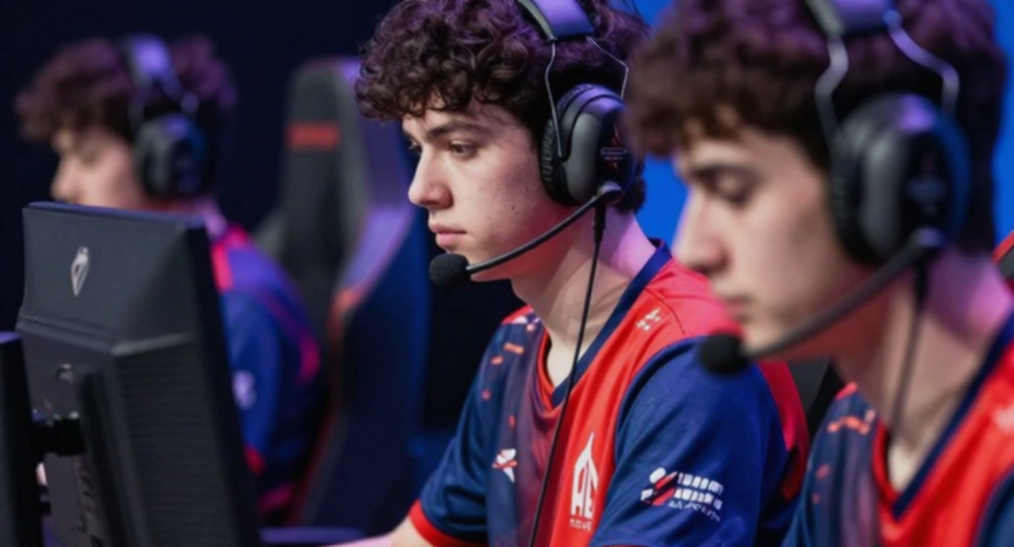
At THE HUB Performing Arts Center in Shanghai on the night of 21 October 2026, the scoreboard told a very clean story. Wolves Esports beat A Team 2-0 — Week 1 of VCT Threshold China 2026, single elimination, a straight ticket to the quarter-final. From the outside it looked like a bloodless win. A small number buried in the match file breaks that neatness: the first map ran 43 minutes, the second ran 54.
In Valorant broadcasts, a regulation map normally resolves inside 35 to 45 minutes — tech pauses, observer delay and economy resets included. A 54-minute map sits in the upper band, consistent with a close scoreline like 13-11, an overtime, or repeated save-and-anti-eco cycles, rather than a blowout. The result was 2-0; the process was closer to parity. I found this match in the paperwork, not the highlight reel, and this time the paperwork said more than the reel did.
The real significance of this game is not in the scoreline but in the structure it was played inside. VCT Threshold China 2026 is rated A-Tier by Liquipedia, but it is not an ordinary tournament. It is a governance document played out on stage — much like India's BGMI ban timeline. Threshold replaces Valorant Challengers China and is the final event of China's Nationals season. Three separate rungs — Nationals, Challengers, Ascension — have been compressed into one terminal event. The stakes of every match have risen, but the number of available paths upward has fallen.
Two further facts. First, the event follows the old Ascension format, with two teams joining VCT China 2027 as guest teams. Second, China's partners drop from ten to eight, and four current partners lose their status. The structure falls out like this: thirteen teams in total. Week 1, from 21 to 25 October, holds twelve teams — five VCT China teams and seven national teams — in single elimination. Week 2, from 27 October to 1 November, gives Week 1's losers a separate single-elimination playoff alongside one additional national team. Every match is BO3; only the grand final is BO5. The Week 1 winner takes a 2027 VCT China place outright; the Week 2 winner takes the second. The prize pool remains to be confirmed.
Here is the first solid conclusion. The bracket is deliberately two-tiered, and that is its defining design feature. The Week 1 winner takes a slot outright; everyone else is recycled into a separate bracket that also contains a fresh national team carrying no accumulated fatigue. That creates pressure to over-invest in Week 1 — full map-pool disclosure, aggressive preparation — and removes any incentive to hold something back. A set piece is a small constitution: everyone signs the same space. Here the BO3 format is that constitution, and the Week 2 route is its penalty clause.
Now the part nobody has properly reconciled. The report says China's partners drop from ten to eight, and that four current partners lose status. Ten minus four is six, not eight. Either two organisations are being elevated to partner status through a channel the report does not describe, or the four named teams are a subset of a larger set of changes. That arithmetic mismatch is itself news, because it determines whether this reform should be called a contraction or a reclassification.
The second calculation gives an even cleaner picture. Eight partners plus two guest teams equals ten teams — meaning VCT China 2027 will have the same number of teams as 2026. If that holds, this is not a contraction of the league. It is the conversion of two guaranteed slots into performance-contingent slots, moving risk off Riot Games and onto the organisations. It is the same pattern I have watched repeatedly in the Indian scene: the regulator or operator does not give up its position, it merely relocates where the risk sits. Follow the ban timeline: every silence has a server log. Here, every announcement has slot arithmetic behind it.
And the real story is guest status. Ascension historically delivered promotion into the partnership class. Threshold delivers guest status — a materially weaker prize. The ladder's top rung has been shortened: a team can climb back into the league but not automatically back into the partnership class. A guest team will almost certainly get neither revenue-share parity nor multi-year security. The report does not describe these terms, and that silence is itself a signal that the terms are either unfavourable or unsettled. For a slot-bearing A-Tier event, leaving the prize pool undecided even on a 12-day schedule is a mild administrative red flag, and it complicates financial planning for players and organisations alike.
On the server side. Wolves Esports' profile reads 39-51 across ninety rated matches, with an Elo of 1389 and a world rank of 245. In Stage 2 they lost to EDward Gaming, Dragon Ranger Gaming and FunPlus Phoenix, and missed Champions while TYLOO and JD Gaming took the region's two direct places. That record describes a team that wins the matches it should and loses the matches that matter. It is the classic signature of a roster sitting on the tier-1/tier-2 boundary — precisely the population a partner contraction displaces first. Wolves losing partner status is therefore consistent with competitive performance, not merely a commercial or administrative decision.
So how should the 2-0 be read? Against A Team, it is an expected result obtained, not a form reversal. A rank-245 team beating an unranked team in a BO3 is the base case. The informative prior sits elsewhere: the 0-2 loss to KeepBest Gaming in Act 3 2026, and the Stage 2 losses to EDG, DRG and FPX. It is also worth recalling that on 8 August 2026 Wolves beat A Team 2-1. This second win over A Team establishes a reliable stylistic matchup advantage, but against the weakest team in their bracket, which limits its predictive value for the KeepBest match. A Team's own position is weak — unranked, and beaten 1-2 by FPX in their last outing.
The real test arrives on 22 October. Wolves' quarter-final is against KeepBest Gaming — the same side that beat them 0-2 in Act 3. And it will be played on one day's rest, because Wolves played on 21 October. Both sides carry the same constraint, so the net effect is a reduction in the quality of strategic preparation rather than a differential disadvantage. But when the most recent head-to-head went against you and preparation time is a single day, the edge tilts toward the incumbent winner. This is a genuine coin-flip with a negative recent prior.
There is one genuine positive signal at team level. Roster stability has held through demotion. The report records no roster moves, no departures, no rebuild, despite the club losing partner status for 2027-2028. In esports, the loss of partner status normally brings a star exodus and salary restructuring within a single transfer window. Continuity — retaining a German coach through the demotion — suggests the organisation is funding one deliberate qualification attempt rather than cutting losses. Alexander 'alexRr' Frisch was appointed head coach on 19 May 2026, roughly five months ago: past the new-coach honeymoon, short of a settled system. Spring is the longest-tenured player, in place since 17 January 2026, which implies the other four are newer.
The roster comprises Spring, yosemite, Deryeon, aluba and glacier. On A Team's side are monk, Eren, Folykiki, Dingwei and Layla. One limit must be drawn clearly here: the source contains no player-level statistics of any kind — no ACS, no K/D, no first-blood rate, no clutch rate, no agent pool. Any individual form judgment would be invented. Assessment is possible only at team level, and only with caveats. This is also why patch analysis is impossible here: no version is stated, no map picks, no agent compositions. A 12-day, slot-bearing event straddling a Riot update is historically the single largest source of competitive-integrity complaints in tier-2 events. There is no evidence of such a change here — this is a watch item, not a finding. The 43- and 54-minute map durations are an indirect proxy; broadcast pacing and pauses blur them, so they should be read with medium confidence.
There is a contrarian side to this whole structure that the hype tends to suppress. The reform is being sold as a contraction when it is actually a transfer of risk — and that is its real function. Partner status was a multi-year guarantee; guest status is a performance condition. When you convert two guaranteed slots into performance-contingent slots, the league's size stays the same but the burden of uncertainty moves onto the organisations. It recalls India's ban cycle, where a regulatory decision left players, casters and org staff stranded overnight. Yet the damage has to be named in the same piece: a shorter ladder means fewer competitive reps for tier-2 Chinese teams across a season. The separate stages of Nationals, Challengers and Ascension once provided practice opportunities that have now collapsed into a single terminal event. And because a pro peaks between 18 and 21, fewer paths means some careers will end before they properly begin. That is the career question I repeat in every reform story, and here too it goes unanswered.
So what comes next? The future of the four demoted organisations is the biggest open question — will they hold steady as Wolves have, or fragment in the transfer window? And does guest status become a permanent underclass, where a club stays in the league but never becomes a full stakeholder? If both guest teams underperform in 2027, will Riot shorten the ladder again? The answers will not be found on a Shanghai scoreboard. They will be found in the league's constitution.
संबंधित खिलाड़ी
अनुशंसित
VCT Threshold China 2026: A 54-Minute Map, and the Sum Where Ten Minus Four Does Not Equal Eight2026-10-25
Mel's W Rework in Patch 26.22: The Reflect Is Gone, the Shield Arrives, and a Champion's Identity Is Now on the Table2026-10-25
A Headline Sold as Chess, a Body Without It: Reading the EWC 2027 Qualifier Program2026-10-25
BLAST's Payment Dispute and the 2027 Calendar: What a Unanimous Top-VRS Defection Actually Reveals2026-10-25
The Analysis Came Back Empty: An Esports Desk's Real Error Is Reading 'N/A' as 'No Risk2026-10-26
EWC 2027 Qualifiers: A Chess Headline, and 400 Events Missing From the Receipt2026-10-24
अनुशंसित
A Headline Sold as Chess, a Body Without It: Reading the EWC 2027 Qualifier Program2026-10-25
The Test of LCS Credibility: Morgan's Claim, Ninth Place, and the Worlds 2026 Swiss Stage2026-10-25
VCT Threshold China 2026: A 54-Minute Map, and the Sum Where Ten Minus Four Does Not Equal Eight2026-10-25
EWC 2027 Road to EWC: Chess in the Headline, Silence in the Body2026-10-25
Three Hundred Thousand vs Twenty Thousand: The Real Scoreboard of Indian Esports2026-10-25
BLAST's 2027 Calendar: Every Top VRS Team Chose PGL Bucharest, and the Only Official Answer Was About Layoffs2026-10-25
अनुशंसित
BLAST's Payment Dispute and the 2027 Calendar: What a Unanimous Top-VRS Defection Actually Reveals2026-10-25
EWC 2027 Qualifiers: A Chess Headline, and 400 Events Missing From the Receipt2026-10-24
Three Hundred Thousand vs Twenty Thousand: The Real Scoreboard of Indian Esports2026-10-25
Chess in the Headline, Silence in the Fine Print: What the EWC 2027 Qualifier Program Actually Promises2026-10-25
VCT 2027: From 40 to 32 Partner Teams — The Arithmetic Riot Left Off the List2026-10-25
EWC 2027 Road to EWC: Chess in the Headline, Silence in the Body2026-10-25