
Not the Fence Clip: Mercedes' Real Austin Question Is a Front Wing and 102 Points
**मुख्य उत्तर**: मर्सिडीज़ ने यूएस ग्रां प्री से पहले केवल नया फ्रंट विंग लाया है, जो मलेशिया पैकेज का पूरक है। सिंगापुर में किमी एंटोनेली ने नया पैकेज चलाया और जॉर्ज रसेल पुराने स्पेक पर रहे — यह टीम के भीतर नियंत्रित A/B टेस्ट था, जिसका नतीजा सार्वजनिक नहीं किया गया। **मुख्य तथ्य**: - किमी एंटोनेली के पास जॉर्ज रसेल पर 102 अंकों की बढ़त है; स्रोत लेख इस अंतर का विघटन नहीं देता। - सिंगापुर में एंटोनेली नए स्पेक पर और रसेल पुराने स्पेक पर रहे — एक ही सर्किट पर नियंत्रित तुलना। - ऑस्टिन में दोनों मर्सिडीज़ कारों के पास पूरा पैकेज मौजूद है। - खिताब क्लिंच के लिए तीन शर्तें ज़रूरी हैं; स्रोत लेख तीनों की गणना नहीं छापता। - सिंगापुर का कम-गति, बंप-सीमित सर्किट ऑस्टिन के हाई-स्पीड, ऊँचाई वाले लेआउट से भिन्न है। **स्रोत**: 'Kimi Antonelli caught on camera hitting fence in Mercedes road car at US GP', यूएस ग्रां प्री सप्ताहांत, अक्टूबर 2026। **संबंधित प्रश्न-उत्तर**: प्रश्न: ऑस्टिन में मर्सिडीज़ का अपग्रेड क्या है? उत्तर: केवल नया फ्रंट विंग, जो मलेशिया में लाए गए पैकेज का पूरक है, अवधारणा का बदलाव नहीं। प्रश्न: सिंगापुर A/B टेस्ट का नतीजा क्या रहा? उत्तर: नतीजा सार्वजनिक नहीं है; केवल टेस्ट की विधि की पुष्टि होती है, प्रदर्शन लाभ की नहीं। प्रश्न: 102 अंकों का अंतर कार की तेज़ी सिद्ध करता है? उत्तर: नहीं — जीत, स्प्रिंट अंक और प्रतिद्वंद्वी के रिटायरमेंट का विघटन किए बिना यह अंतर पेस का माप नहीं है।
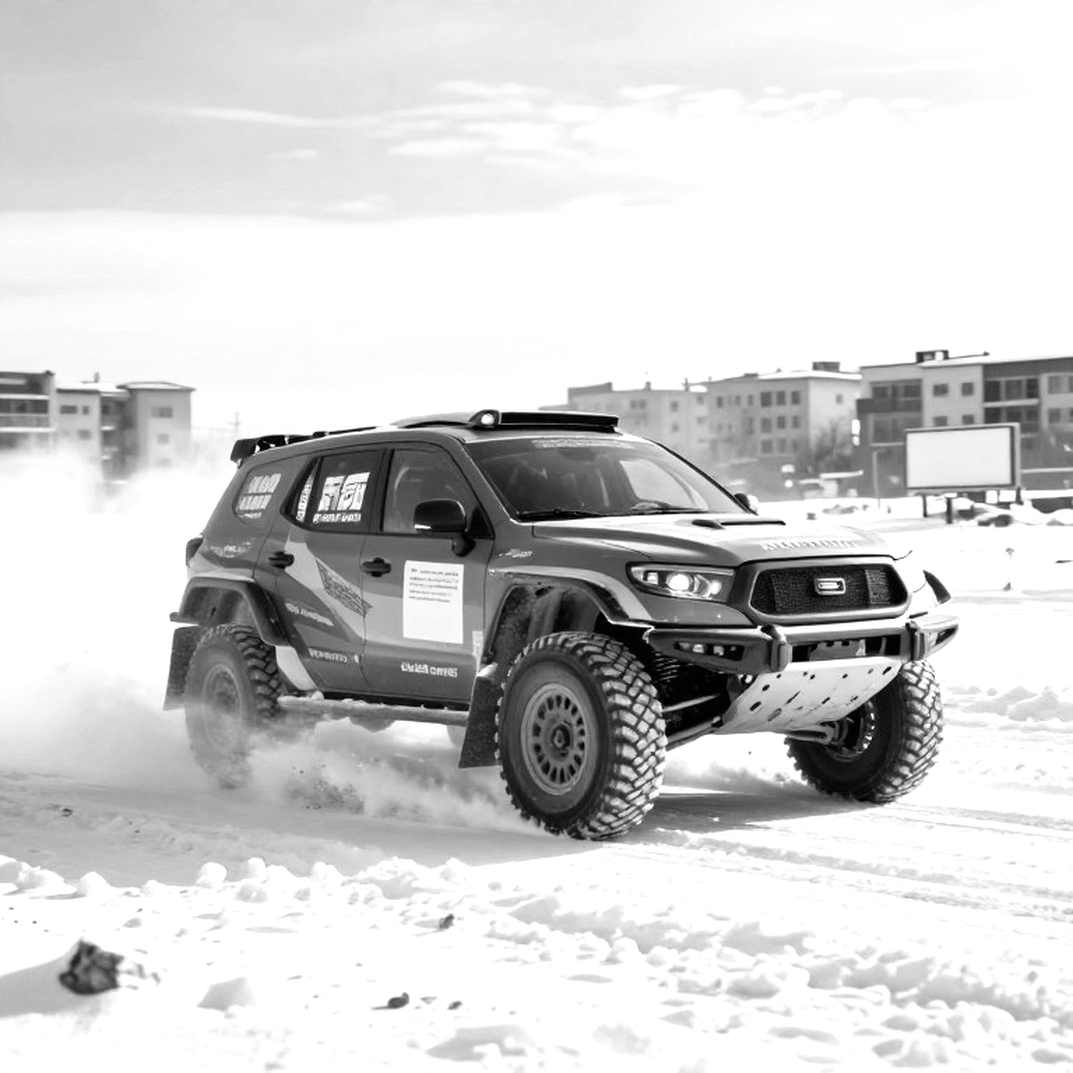
On Wednesday morning in the COTA paddock a Mercedes road car touched a fence, and the clip travelled exactly as far as such clips travel — from the garage to the feed in a few hours. On the same weekend the timing screens carried a second number: 102. Nobody clipped that one.
The ledger says 102 points; the tape says nobody opened the account behind those 102 points. The story of this weekend is not the fence. It is that a team deliberately ran two different cars in Singapore, gave one driver the new specification and left the other on the old one, and then told nobody what the test found.
Method first, because that is what I have done for eight years. Every figure in this report is either present in the source or falls directly out of it; where it is absent I will not fill the gap with inference. Sample size: one Grand Prix weekend, one circuit, one intra-team comparison. Three things this data cannot see — fuel load, track evolution, tyre age. Wherever I step past those three, I will say plainly that it is an estimate, not a measurement.
The Singapore split
The most trustworthy thing in this entire story is not a statement, it is a procedure. Mercedes put the new package on Kimi Antonelli's car in Singapore and ran George Russell's car on the old specification. That is a controlled A/B test inside a team — same circuit, same session, same ambient temperature, same compound. Inside a cost cap you do not get a cleaner correlation test than that.
In 2026 I built a 38-match pressing ledger for Liverpool, and the rule written at the top of that file was simple: data never lies, but models must show their seams. A split-specification test is the art of showing the seams. When you run two cars, two specifications, one driver pairing in a single afternoon, you hold the environment constant and leave only the one component you want to measure as the variable. That is materially further along than the public-relations language of an upgrade that feels good. A team that says an upgrade feels good has measured nothing.
One qualification has to sit next to that. The outcome of the test is not public. What we are calling strong evidence is evidence of method, not of result. I can credit an experiment whose data I have not been shown — the credit will be bounded.
The window question
One sentence from Antonelli tells you more than the technical brief. The team, in his words, is still trying to find how to put the car in the right window. That is the vocabulary of a peaky platform — a car that is quick when ride height, floor sealing, plank and tyre temperature all land inside a narrow band at the same time, and ordinary when they do not.
The direct consequence of such a car is qualifying volatility. Quickest in Q3 on Friday, stuck in Q2 on Saturday, back on Sunday. That is not driver inconsistency; it is a tolerance deficit in the car. What the audience calls form is often the outer edge of a setup window.
Which raises the real Austin question, one the source article does not touch. Singapore is maximum downforce, low speed, bump-limited street circuit with smooth asphalt. The Circuit of the Americas has high-speed direction changes, a long full-throttle section, genuine elevation, and a surface with an old reputation in the paddock. A front wing signed off in Singapore can behave differently in Austin's high-speed, low-fuel qualifying conditions.
I do not have the data to prove that concern, and I will not call it proven. But the uncertainty band here is legible: if Antonelli is outside the window on Friday and inside it on Saturday, that will not be the wing's fault — it will be a setup win. Reading that difference correctly is the actual work of this weekend.
Who earned the 102 points
Now the number nobody clipped. Antonelli leads Russell by 102 points. The source gives the figure and stops. My question is direct: where did those 102 points come from?
Any championship gap has three components — wins and podiums, sprint points, and the other car's retirements or poor results. Treating 102 as proof of car pace without that decomposition is the same error that gets repeated every season. This is the reverse face of my own ledger hubris: the cleaner a number looks, the more incomplete its meaning usually is.
If a large share of the 102 was built on the other car's empty weekends, then the number is not a measure of pace, it is a measure of availability. And availability stories are always written incomplete, because a retirement wins no trophy and therefore arrives late in the title arithmetic.
One more thing, because it is a permanent rule of my work: whenever someone says a gap shows car pace, I print the uncertainty band next to it. Here the band is open, because the source supplied the gap and not its decomposition. That is a gap in information, and calling it a gap in information is the honest version.
Three conditions, and what was not printed
There is a clinch scenario attached to this weekend's arithmetic, and it rests on three conditions. The source article mentions all three and does not print the calculation. I will not fill it in from inference — title arithmetic is the one thing where a wrong figure costs you the credibility of an entire season.
What I can describe is the shape of the three conditions. First, the points gap must not fall below a threshold. Second, the rival car must not take maximum available points across the remaining rounds. Third, the points still available on the remaining calendar must permit the arithmetic to close. That third condition is the least sporting and the most calendrical, which is why it is the least discussed.
Dressing clinch mathematics as a performance verdict is easy, and it is mostly calendar accounting. That is my next suspicion, and I am filing it now so that it cannot later be presented as inside knowledge.
Resource allocation on one car
In Singapore the only new specification went on the lead driver's car. That is rational allocation — the title is nearly settled and technical resource goes to the car carrying it. A Malaysia package followed by an Austin front wing is an upgrade roughly every second round. That cadence tells you the pipeline works. The ATR tier and cost-cap headroom are not in the source, so I will say nothing about them.
But the allocation has a cost nobody writes down. Russell's season has been partly repurposed as a data-collection exercise. When your car is deliberately run on old specification, you have to stop reading its lap times as a driver evaluation. The control is valid for component correlation, not for assessing the driver. That is where a split-spec test plays two roles and blinds you in one of them.
A structural point worth adding, because it is rarely written in F1. The cost cap covers team spending; driver remuneration and contract terms sit outside its scope. The money with the least scrutiny is the money that moves most freely in the driver market. I have no new data on that this weekend, so I am recording it as structure, not as accusation.
Concepts that spread
One clarification on the front wing, because the word upgrade carries too much weight. This is an addition to an existing package, not a concept change. Such updates are evolutionary, not independent. The source offers no rival comparison, so I cannot grade this upgrade. What can be graded is internal — against Russell's old-spec car.
Aerodynamic concepts spread fast in F1. A team copies the same floor edge, the same wing architecture, the same beam-wing trick within months, and by the next season it is grid standard. When everyone has the concept, the advantage stops living in the concept. It moves to who can run that concept across the widest range of conditions.
That is why the window sentence matters more to me than the wing sentence. If Mercedes' front wing only raises peak downforce and narrows the window, it is not an upgrade, it is a condition — and conditions change by circuit.
The ladder and the capital
Antonelli's route is the part of this weekend most easily turned into a story. Junior categories to a works seat is a handsome arc, and it is true, and it is incomplete. That ladder runs on capital: a works team's patience, a junior programme's budget, and several seasons of time. The system that both finds talent and funds it is the one that delivers a seat.
India's ladder stops one rung short, and the rung is capital. Daruvala's F2 wins at Sakhir and Monza are on the record, Maini is in F2, the Indian Racing League exists, and beneath it sit the JK Tyre and MRF structures. Above it there has been no F1 seat since 2026. The reason was not pace — Karthikeyan's Jordan seat came through sponsorship, not lap time. I will not write the comeback piece until someone shows me the funding line. That is not pessimism; it is the same ledger I apply everywhere.
Where the consensus is right
Now the part where I have to restrain my own reflex. Those who say the Singapore split-spec test is real engineering are right. Those who say an upgrade every second round shows a working pipeline are right. Those who say the fence clip is trivial in sporting terms are completely right. I will not contest any of the three, because there is no basis on which to contest them.
I also accept the upgrade is seasonally rational. When one driver is 102 points clear, resource should go to that car. There is no mystery in the decision, and making it mysterious would require invention.
And where it fails
The consensus fails in three places.
First, the thing being called controlled validation has no published outcome. When the result is not printed, what survives is praise of method, not a conclusion. Calling both by the same word is the error I catch in others.
Second, a single-circuit controlled test controls conditions, not the world. An agreement reached on Singapore's smooth surface cannot be assumed on Austin's bumps. Drawing a straight causal line here is easy and wrong. The relationship between wing and grip runs through the track surface, and the surface is changing.
Third, and largest. Reading 102 points as a verdict on car pace. If a large share of the gap was built on the other car's empty weekends, strategy errors or qualifying restlessness, our conclusion about race pace may invert. This is my standing warning: numbers do not argue. They wait until you are wrong, then they speak.
A fourth belongs to the timeline. Singapore to Austin is one weekend of data, and a conclusion drawn from one weekend is a hypothesis, not a forecast. In 2026, working the Russia World Cup data desk across 64 matches, I gave France a 54 percent win probability before the final and it held — but I printed the uncertainty band in that note too, because a model that does not state its limits is not forecasting, it is betting.
What to watch next
At Austin my eye will be on three things, all measurable. First, front-wing behaviour through the high-speed direction changes — if the car is stable there, the Singapore transfer worked. Second, plank and floor sealing over the bumps — if it breaks, the peaky car's window narrows further. Third, the qualifying spread between the two cars, because that is the only number that separates driver from car.
And the fence clip? It will outlive the wing. That is the cleanest audit finding of the weekend, and it is about the audience, not the sport.
The question is this: if the gap holds and the wing works, what did we actually learn — that the car is fast, or that one driver's entire season went into measuring the other's? The day we can tell those apart, 102 points becomes a story rather than a statistic.

संबंधित खिलाड़ी
अनुशंसित
You Cannot Build an F1 Story From a Blank Input — But the Blankness Is Itself a Report2026-10-25
Empty Ledger, Full Format: The F1 Report Where Every Cell Read 'Insufficient Information'2026-10-26
Leclerc's 0.084 Seconds: The Real Story Behind Ferrari's 'Upgraded' Friday2026-10-25
Not the Fence Clip: Mercedes' Real Austin Question Is a Front Wing and 102 Points2026-10-25
Three Penalties in Austin, One Question: Lindblad's Sixth ICE Is a System Report, Not Bad Luck2026-10-25
Fifth Win in Austin, 63 Points Clear: Palmowski's Title Is Being Decided by Arithmetic, Not by Published Pace2026-10-25
अनुशंसित
Empty Ledger, Full Format: The F1 Report Where Every Cell Read 'Insufficient Information'2026-10-26
Not the Fence Clip: Mercedes' Real Austin Question Is a Front Wing and 102 Points2026-10-25
Three Penalties in Austin, One Question: Lindblad's Sixth ICE Is a System Report, Not Bad Luck2026-10-25
Sainz: 'Not expecting miracles' after Williams struggle in US — Full technical analysis2026-10-25
Leclerc's 0.084 Seconds: The Real Story Behind Ferrari's 'Upgraded' Friday2026-10-25
The Story in Austin Isn't Palmowski's Fifth Win — It's the 63-Point Ledger2026-10-25
अनुशंसित
Three Penalties in Austin, One Question: Lindblad's Sixth ICE Is a System Report, Not Bad Luck2026-10-25
Leclerc's 0.084 Seconds: The Real Story Behind Ferrari's 'Upgraded' Friday2026-10-25
The Story in Austin Isn't Palmowski's Fifth Win — It's the 63-Point Ledger2026-10-25
You Cannot Build an F1 Story From a Blank Input — But the Blankness Is Itself a Report2026-10-25
Fifth Win in Austin, 63 Points Clear: Palmowski's Title Is Being Decided by Arithmetic, Not by Published Pace2026-10-25
Not the Fence Clip: Mercedes' Real Austin Question Is a Front Wing and 102 Points2026-10-25