
The 20th Trinity–Thomian Hockey Encounter: The Match Was on the Astro Turf, the Verdict Was in the Calendar and the Budget
**कोर उत्तर (≤60 शब्द)**: 20वाँ ट्रिनिटी–थॉमियन हॉकी एनकाउंटर कोलंबो के एस्ट्रो हॉकी टर्फ़ पर खेला गया। यह ट्रिनिटी कॉलेज कंडी और सेंट थॉमस कॉलेज माउंट लविनिया के बीच इस सीरीज़ का बीसवाँ मुक़ाबला था। इस स्तर पर नतीजा टर्फ़ तक पहुँच, परीक्षा-आधारित कैलेंडर और पेनल्टी कॉर्नर कन्वर्ज़न से तय होता है, सिर्फ़ स्किल से नहीं। **मुख्य तथ्य**: - आयोजन: 20वाँ ट्रिनिटी–थॉमियन हॉकी एनकाउंटर, एस्ट्रो हॉकी टर्फ़, कोलंबो; दोनों स्कूल 1872 (ट्रिनिटी कंडी) और 1851 (सेंट थॉमस माउंट लविनिया) में स्थापित। - यात्रा असमानता: कंडी से कोलंबो लगभग 115 किमी और साढ़े तीन घंटे; माउंट लविनिया से टर्फ़ तक 20 किमी से कम। - श्रीलंका में कृत्रिम हॉकी पिचों की संख्या बहुत सीमित है और ज़्यादातर कोलंबो क्षेत्र में केंद्रित हैं। - 2018 विश्व कप क्वार्टरफ़ाइनल (भुवनेश्वर) में भारत की पेनल्टी कॉर्नर इंजेक्शन औसतन 2.3 सेकंड धीमी मापी गई थी — लेखिका का टेप ऑडिट। - स्कूली स्तर के मैचों का कोई सार्वजनिक प्रदर्शन-डेटा (सर्कल एंट्री, टर्नओवर, कॉर्नर कन्वर्ज़न) दर्ज नहीं होता। **स्रोत**: आयोजक विवरण — 20वाँ ट्रिनिटी–थॉमियन हॉकी एनकाउंटर, एस्ट्रो हॉकी टर्फ़, कोलंबो। स्रोत सामग्री में स्कोरलाइन दर्ज नहीं है, इसलिए इस रिपोर्ट में कोई स्कोर नहीं बताया गया। प्रकाशन तिथि स्रोत में उपलब्ध नहीं। **संबंधित प्रश्नोत्तर**: प्रश्न: 20वाँ ट्रिनिटी–थॉमियन हॉकी एनकाउंटर कहाँ खेला गया? उत्तर: कोलंबो के एस्ट्रो हॉकी टर्फ़ पर, जो श्रीलंका की गिनी-चुनी कृत्रिम हॉकी पिचों में से एक है। प्रश्न: इस फ़िक्स्चर में ट्रिनिटी कॉलेज कंडी को कौन-सा संरचनात्मक नुक़सान उठाना पड़ता है? उत्तर: हर अवे मैच के लिए लगभग 115 किलोमीटर और साढ़े तीन घंटे का सफ़र, जबकि प्रतिद्वंद्वी स्कूल टर्फ़ से 20 किमी के भीतर है — यानी अभ्यास-घंटों में स्थायी असमानता। प्रश्न: स्कूली हॉकी में पेनल्टी कॉर्नर इतना निर्णायक क्यों है? उत्तर: क्योंकि इस स्तर पर गोल का बड़ा हिस्सा सेट-पीस से आता है और ड्रैग-फ्लिक विशेषज्ञ एक पीढ़ी में एक स्कूल को मिलता है, जिससे कॉर्नर सिस्टम से उम्मीद बन जाता है।
The bus leaves Kandy at four in the morning. The Kadugannawa climb, then roughly 115 kilometres of winding road, and three and a half hours before Colombo. From Mount Lavinia to the Astro Hockey Turf, the distance is under twenty kilometres — an hour even in morning traffic. The first tactical fact of the 20th Trinity–Thomian Hockey Encounter is not a formation. It is a distance.
What the turf shows is skill, passion and school pride. That sentence gets written every year and every year it is also true. But every time I have watched school hockey on the Colombo astro, the thing that dominates the first ten minutes is not talent. It is the asymmetry of preparation. One team has spent three and a half hours in a bus; the other has come twenty minutes in a van from its own school. Twenty editions of this series are also a dataset for me — one in which three or four variables change each year and almost everything else stays the same. What does not change is the real story.
Context: two schools, one turf, and a city in between
Trinity College, Kandy (1872) and S. Thomas' College, Mount Lavinia (1851) are two of Sri Lanka's oldest and most documented institutions. Their cricket and rugby traditions are so old that hockey reads as the new arrival. This encounter is a product of the astro era — it began when artificial turf reached Sri Lanka and gave school sport a surface that was faster, flatter and far more expensive than a grass field. The 20th edition matters because it closes a full cycle: two decades, two schools, one fixture.
To read the fixture properly you have to look at the map of Sri Lankan hockey. Asia's first tier belongs to India, Pakistan, Korea, Malaysia and Japan. Sri Lanka sits in the band below — alongside Bangladesh, Oman, Chinese Taipei, Thailand and Uzbekistan, the same band where Asia Cup and Asian Games qualifiers are decided. The climb out of that band is not long. It is expensive. And the expense is not only money. It is turf.
The number of artificial hockey pitches in Sri Lanka can be counted on fingers, and most of them sit in or around Colombo. The consequence is direct: schools inside the Colombo ring can put boys on a turf five days a week. Schools in Kandy, Matale, Kurunegala or Galle can offer an excursion, not a habit. The entire talent list of Sri Lankan school hockey is filtered through that one piece of geography.

Core: what the tape shows
Every mid-block is a budget decision. I learned this in 2026 with the Delhi Waveriders, when GPS and video data flagged that the team's high press was leaving a fifteen-metre gap behind the half-backs. School hockey applies the same principle in reverse: teams sit in a low block because a low block is cheap. A press needs repetition — six sessions a week, a fitness coach, video review. A block needs discipline, and schools have an abundant supply of discipline and almost no supply of training hours. Between exams, other sports and bus timetables, what survives is a flat 4-4-2 shape in which each boy only has to know his own square metre.
The result is that the gap behind the half-backs widens from fifteen metres to twenty-five. The cause is not only strategy. It is age. A sixteen-year-old half-back makes the error, and his recovery run takes three seconds longer to cover the same ground. At senior level those three seconds are a counter-attack; in school hockey they are a goal.
The penalty corner is the whole economy at this level. At the 2026 World Cup quarterfinal in Bhubaneswar I charted all eight of India's corners against the Netherlands and found the injection averaged 2.3 seconds slower. I called that piece 'The 8-Second Problem'. School hockey doubles the problem. The injector is rarely the fastest runner, the trapper rarely has the steadiest hands, and the flicker has not had two years of drag-flick coaching. The advantage the rule granted evaporates inside the slowness of the routine.
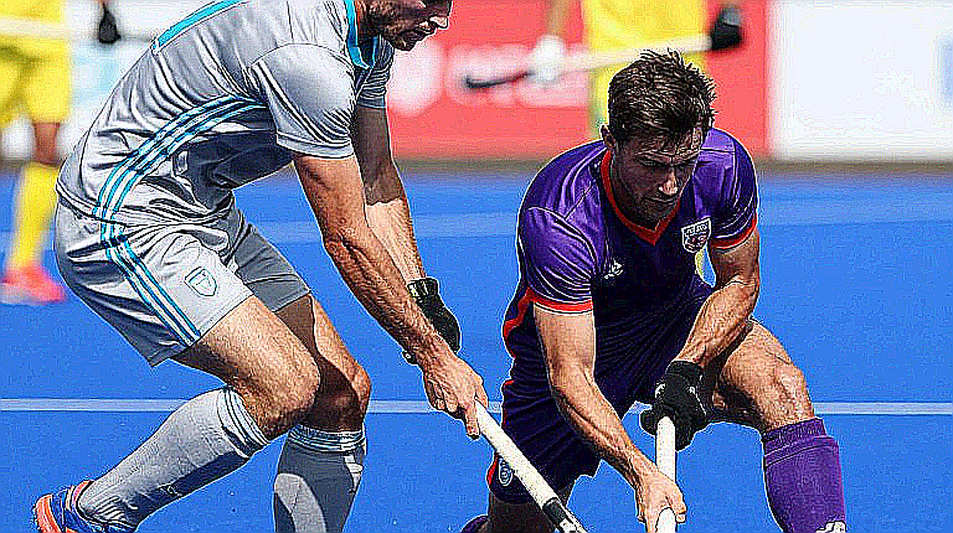
A drag-flicker appears once a generation at school level. The school that has one builds its entire match plan around him: win corners, flick, retreat into the block. The school that does not leans on push-stop-hit, which is close to harmless at senior level. The 20th edition may therefore be a meeting of two different sports — one with a set-piece system, one with a set-piece hope. Hope is not a system.
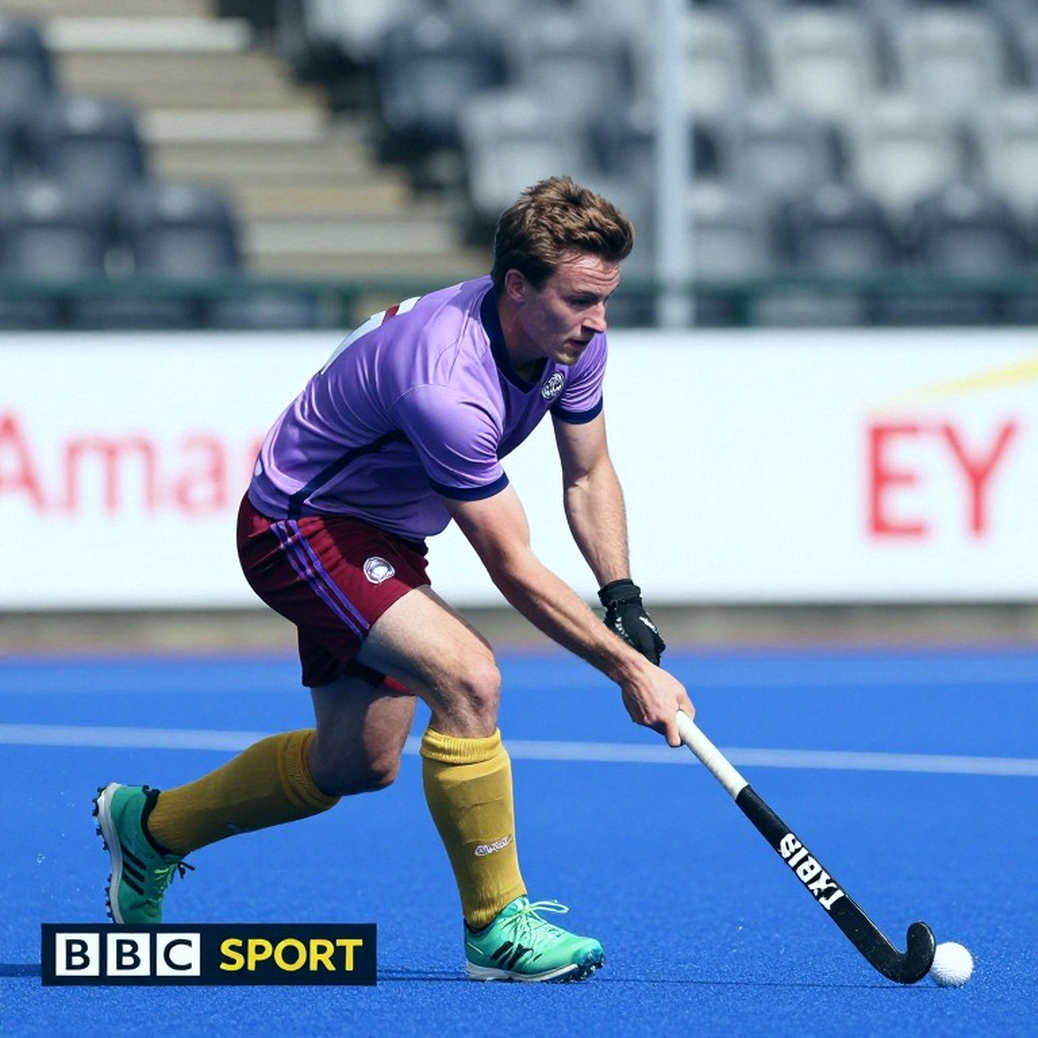
The goalkeeper is the most used and least coached player on the pitch. On astro the ball skids and the bounce is uneven, and a sixteen-year-old keeper learns all of it by experience, because a dedicated goalkeeping coach does not fit a school budget. The team whose keeper can play as a sweeper — stepping outside the D to clear — can push one extra field player forward. It sounds like a technical footnote. It rewrites the shape of the whole pitch.
Shape: 4-3-3 against 3-4-3, with the 23-metre line as the discipline test. The 4-3-3 you see in school hockey is an attacking shape on paper and a defensive one on grass, because two of the three forwards have to track back to their own half-line. The clearest tell is the outlet pass: when the ball leaves the left half, the far forward is found inside the 23-metre line; when it leaves the right half, the same boy is near his own 25. That asymmetry is not accident. It shows which side the team has trained to attack from. Aerials are rare at this level, so the first defensive line sits very high, and a high first line only pays if somebody is sweeping behind it.
The calendar is the variable nobody watches. The Sri Lankan school season is set by examination dates, and hockey gets the weeks left over after cricket and rugby. The result is three matches in six days, with roughly the same eleven boys in all three. My position is blunt: the biggest cause of injury is not the medical team, it is fixture congestion. No physio can protect the muscle of a sixteen-year-old playing twice a week from a calendar drawn around exam timetables.
The pipeline: scouting is a lottery, and the ticket is issued on turf. Sri Lanka's age-group squads are drawn from the small set of schools with turf access. That is not a shortage of talent; it is a shortage of network. A boy who is outstanding on grass in Kandy is seen at seventeen if one tournament happens to notice him, and not otherwise. The cost of that lottery is not carried by the boy alone — stick, shoes, tape, bus fare, turf hire. The household carries the ledger. A scout network discovers genius and exhausts families in the same motion.
The surface itself belongs in the story. Industry figures put a full-size water-based astro pitch above half a million dollars to install, with annual maintenance in water, brushing and re-topping. Sand-dressed is cheaper but the ball behaves differently. That is why turf in Sri Lanka is a shared public resource rather than a school asset — and a shared resource means a queue. In the weeks given to school matches, club and senior training move back; the following week it reverses. This is not a field. It is a rationing system.
And the largest absence: data. Matches at this level leave no public record — no circle entries, no turnovers, no penalty-corner conversion. When I say the tape shows something else, I also mean that the tape of twenty editions does not exist in one place. What is not measured does not improve; what is only remembered only grows.
The pattern on the tape. School footage repeats one shape: the first ten minutes are the most structured, the last ten the rawest. Goals arrive in clusters in the third quarter, in the window between post-half-time freshness and the onset of fatigue. And the team that scores first wins a higher share of matches at this level than at senior level, because a sixteen-year-old side chasing a game has no Plan B. Small sample, large claim — that is the habit of this level, and its biggest risk.
Contrarian: the 20th edition is an administrative achievement, not a sporting one
The fixture survived the end of a civil war, a pandemic, the 2026 economic crisis and a sovereign default. Two schools had the institutional memory to keep signing the fixture list every year. That is the real story, and it was written in an office, not on a pitch. The same fact carries the opposite risk: a fixture that runs long without changing its structure slowly starts to look like progress. In twenty years the turf shortage is the same, the bus journey is the same, the penalty-corner dependence is the same, the missing goalkeeping coach is the same. The tape does not say the rivalry is getting better. The tape says the rivalry is getting older. Older is not better.
I went looking for noise and found a system. The noise was school pride; the system was the turf queue. One question should be logged alongside it, and I do not have the answer: how many hours a year do the girls' teams of these same two schools get on that turf, and how much coverage do their matches receive? Until that number is published, the celebration of school hockey is only half-recorded.
Takeaway
Before the 21st edition, three things should be public, and the ask belongs to the schools and the federation, not to any player: the full fixture calendar, one line item for turf hire, and the penalty-corner conversion of the last five editions. None of those requests insults anyone. A post-mortem is a calibration, not a funeral — and if school hockey is to run another twenty years, the calibration has to happen now, not after the celebration.