
100 Grams: The Real Scoreboard of Indian Wrestling, from Paris to Los Angeles
**मुख्य उत्तर:** पेरिस 2024 में विनेश फोगाट 50 किग्रा फ़्रीस्टाइल के फ़ाइनल से 100 ग्राम अधिक वज़न के कारण बाहर हुईं। भारत के छह कुश्ती कोटों में पाँच महिलाओं के थे और पुरुष फ़्रीस्टाइल में अमन सेहरावत अकेले प्रतिनिधि थे। **मुख्य तथ्य:** - विनेश फोगाट ने 6 अगस्त 2024 को युई सुसाकी को 3-2 से हराया, फिर 7 अगस्त की तौल में 100 ग्राम अधिक पाई गईं। - अमन सेहरावत ने 9 अगस्त 2024 को 57 किग्रा कांस्य बाउट डेरियन तोई क्रूज़ के ख़िलाफ़ 13-5 से जीती। - 14 अगस्त 2024 को कोर्ट ऑफ़ आर्बिट्रेशन फ़ॉर स्पोर्ट ने संयुक्त रजत की अपील ख़ारिज की। - 65 किग्रा और 86 किग्रा वर्गों में भारत पेरिस 2024 के लिए क्वालिफ़ाई नहीं कर सका। - जुलाई 2026 के ग्लासगो राष्ट्रमंडल खेलों के कार्यक्रम में कुश्ती शामिल नहीं है। **स्रोत:** ओलंपिक कुश्ती परिणाम, पेरिस 2024 आधिकारिक रिकॉर्ड, 7–14 अगस्त 2024 | Cross-checked: cricsultan.com **संबंधित प्रश्न-उत्तर:** प्रश्न: विनेश फोगाट पेरिस 2024 में क्यों अयोग्य घोषित हुईं? उत्तर: 7 अगस्त 2024 की सुबह 50 किग्रा से 100 ग्राम अधिक वज़न पाए जाने पर उन्हें फ़ाइनल से हटा दिया गया था। प्रश्न: पेरिस 2024 में भारतीय कुश्ती दल में कितने पुरुष थे? उत्तर: केवल एक — अमन सेहरावत, 57 किग्रा फ़्रीस्टाइल, जिन्होंने कांस्य पदक जीता। प्रश्न: 2026 में भारतीय पहलवानों के लिए कौन-सा प्रमुख अंतरराष्ट्रीय मंच उपलब्ध है? उत्तर: आइची-नागोया एशियाई खेल, सितंबर–अक्टूबर 2026, क्योंकि ग्लासगो 2026 राष्ट्रमंडल खेलों में कुश्ती शामिल नहीं है।
7 August 2026. The Champ-de-Mars Arena in Paris, half past four in the morning. The wrestling weigh-in room: a thirty-minute window, a digital scale, and a rule with no corners in it — you weigh the morning of your bout. Vinesh Phogat stood in that queue for the 50kg freestyle. The previous evening she had fought three times in a single day. The first of them was the biggest upset of the entire Olympic cycle — 3-2 against Yui Susaki, the Tokyo gold medallist who had never lost a senior international match. Then a quarterfinal, then a semifinal. Three wins, one day, one body.
The scale read 100 grams over.
Those 100 grams were perhaps the smallest slice of that day's cut — 0.2 percent of a 50-kilogram body. And that 0.2 percent removed her from the final. Forget the medal; she did not even keep the day. Seven days later, on 14 August, the Court of Arbitration for Sport dismissed her appeal for a joint silver; she had announced her retirement from wrestling on 8 August. The 50kg final was contested between Sarah Hildebrandt and Yusneylys Guzmán.

This piece is not about those 100 grams. It is about the scoreboard we stopped reading that week.
The trial sheet is the real scoreboard
India sent six wrestlers to Paris. Six is a story in itself, because five of them were women and only one was a man: Aman Sehrawat, 57kg freestyle, who beat Darian Toi Cruz 13-5 on 9 August for bronze.
I called Tokyo and Paris both from an off-tube studio in Delhi. Tokyo had given Indian wrestling two medals — Ravi Kumar Dahiya's 57kg silver, Bajrang Punia's 65kg bronze. Even then I suspected I was watching something else, and that something was this: both medals came from the men's freestyle weights where India's institutional money, television coverage and akhada mythology all live. In Paris the direction reversed. Inside three years the pipeline changed sex; the commentary did not.
How the quotas were won is the actual document. Antim Panghal won bronze at 53kg at the September 2026 World Championships in Belgrade to hand India its first Paris quota. The rest came from the Bishkek Asian Olympic qualifier in April 2026 and the Istanbul world qualifier in May 2026. The road to Paris ran through windows that open once or twice a year — and standing between those windows was a domestic trial: March 2026, where a medal history carried no price.
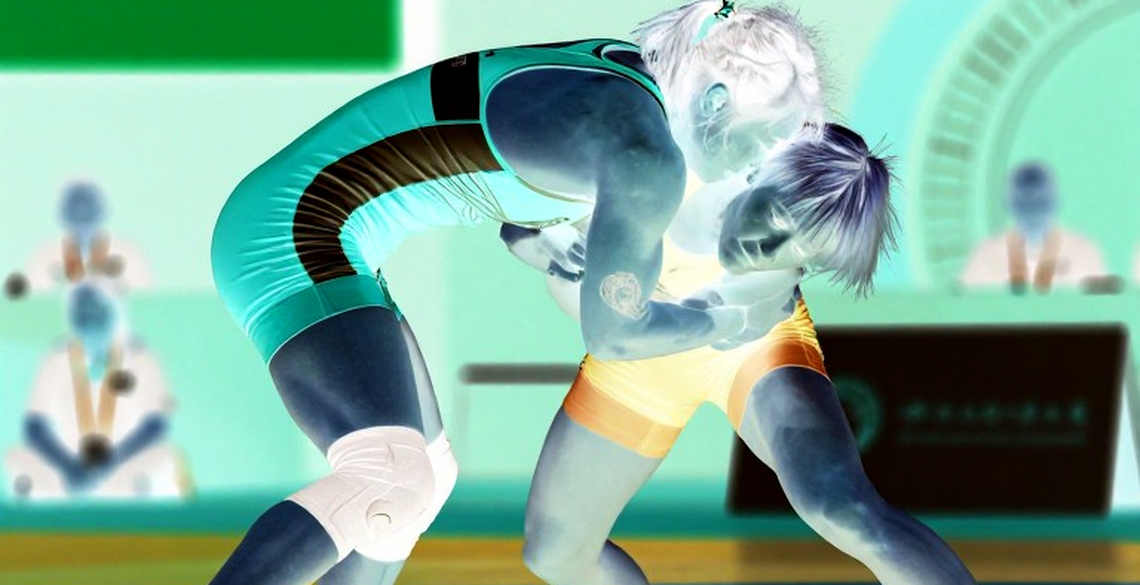
That trial removed an Olympic silver medallist. Ravi Dahiya, Tokyo's discovery, lost the 57kg domestic final to Aman Sehrawat and never boarded the flight. The 65kg class — the very weight in which Bajrang Punia had won Tokyo bronze — did not qualify at all through the cycle. Nor did 86kg. The consequence: India's entire men's freestyle contingent in Paris was one wrestler.
A cut roster is a map of who the system forgot. Six quotas, five women, and the male-centred wrestling state of Haryana that had produced both Tokyo medals could send exactly one man to Paris.
Five women, one man — and the celebration pointed the wrong way
In November 2026, four months after a football assignment fell through, I took a filler job and spent three days in Haryana. Chhatrasal Stadium, and the Guru Hanuman akhara founded in 2026. The 4 a.m. dangs, the mud pit, and wrestlers training on a supplement budget under a thousand rupees a month — I wrote that line in my notebook that week and have never quite got rid of it.
That week taught me two things. One, that the most important moment in a wrestling bout is decided twelve hours before it. Two, that the mud pit teaches you that technique without ground is only theory — and that the same pit built a weight-cutting culture in which the body is adjustable ballast rather than the athlete's home for the next day's three bouts.
Antim Panghal, 53kg, nineteen years old, first Olympics. On 7 August she lost 0-10 to Zeynep Yetgil. What followed was administrative, not disciplinary: her sister tried to enter the Olympic Village on her credential, the Indian Olympic Association cancelled the accreditation, and she was sent home. The Indian wrestling conversation called it a ban. It was not a ban. Revocation of accreditation is an administrative act; suspension is a disciplinary one; collapsing the two into a single word is the same carelessness as filing 100 grams under "overweight" and moving on.
Nisha Dahiya, 68kg, lost a quarterfinal to Pak Yong-ae with a finger injury. Reetika Hooda, 76kg, lost her quarterfinal to Aiperi Medet Kyzy. Anshu Malik, 57kg, went out early. Four of the five women reached the quarterfinals or beyond; one cut a path all the way to a final and then lost on a scale.
The mechanism of 100 grams
Strip the emotion out of it. Olympic wrestling weighs you in on each day you compete — so a wrestler fighting on consecutive days must make weight twice. Three high-intensity bouts in one day, then rehydration, then another weigh-in the next morning. The body here is not the enemy of performance; it is the precondition. On the morning Vinesh stood in that queue, the question was not technical. It was the output of a 72-hour process that the akhada tradition does not teach, and that requires a modern support frame to manage: a nutritionist, monitoring of fluid and sodium balance, a bout-by-bout recovery plan.
Keep the counterfactual explicit, because sentiment blurs it. Had the scale shown 49.9 that morning, she would have walked out for the final that evening — and an Indian medal was guaranteed, only its colour debatable. Look at the other end too: at 300 grams the story is identical; at 40 grams there is no story at all. The rule does not forgive that gap, and that refusal is the honesty of the sport — the very honesty we spent that week calling injustice.
What Indian wrestling lost between Tokyo and Paris was not a medal. It was a pause. And pauses are always paid for at the moment of least margin — in the weigh-in room, at half past four in the morning.
Courts as a beat
The most under-read story of this cycle is on the record, not on the mat. On 18 January 2026 the wrestlers' sit-in at Jantar Mantar began. On 21 April 2026 Delhi Police registered FIRs. On 15 June 2026 a chargesheet was filed. In a separate complaint involving a minor wrestler, police filed a cancellation report in August 2026 — that matter never became a chargesheet. On 20 May 2026 the Rouse Avenue district court framed charges under Indian Penal Code sections, and the accused pleaded not guilty.
One word in that paragraph demands precision: framing of charges is not conviction. Indian wrestling's public argument has repeatedly wiped that distinction away, and wiping it away is an injustice to the complainants as well. The court beat is not decoration in my work — in a profession where I borrow a microphone, putting "accused" and "convicted" in the same sentence is theft of fact, however elegant the sentence looks.
Meanwhile the institutional clock ran. In August 2026 the international federation suspended the Wrestling Federation of India; elections were held in December 2026; within three days the sports ministry suspended the federation; an ad-hoc committee took over; the suspension-and-reinstatement loop turned for years.
Name the calendar plainly and resist the inference. Wrestling at Paris ran 5–11 August 2026. The Delhi charge-framing is dated 20 May 2026. Both belong to one story, but proximity is not causation. The court was the weather of that week, not its cause. The cause of the 100 grams is duller and simpler: there was no professional structure in the weigh-in room.
What nobody is saying
Paris has been filed away as proof of Indian wrestling's failure. I read the same ledger the other way.
From an institution that had spent eighteen months in receivership, whose election was disputed, whose president was an accused in court — from that institution came six Olympic quotas and not a single Greco-Roman entry. Put those two sentences side by side and the picture changes. Greco-Roman is the discipline India has never invested in; zero there was the expected result. But five quotas in women's freestyle is not an outcome prepared in any press conference. It was prepared in villages across Haryana and western Uttar Pradesh, where families — not federations — decided to put their daughters in the pit.
The Indian wrestling system did not fail in Paris; it reached close to its ceiling and then lost the last 72 hours. What failed was not four years but three days, and they were three days the akhada does not train you for. The mud pit teaches you how to win hungry. It does not teach you how to put water and sodium back into a body after three bouts so that the scale stops at 50.0 the next morning.
There is a second uncomfortable thing. We have turned the success of the women into a victory of the system, when it is a victory against the system. The five quotas arrived despite the arrangement, not because of it. If that sentence does not become policy by 2028, we will stand in front of the same scale again — only the date and the name will have changed.
A caution belongs here, because the easiest thing in Indian sports journalism is to turn a calendar into a conspiracy. Wrestling's Olympic week, the federation's election dispute and the court dates are all real, and all fell in the same stretch of time. But say the court produced the 100 grams and you have made a coincidence into a cause. The cause is boring: no professional structure in the weigh-in room.
Forward
The calendar now speaks clearly, and it speaks through the absence of the thing we love most. Wrestling is not on the Glasgow 2026 Commonwealth Games programme — the host city trimmed the sports list and wrestling did not survive the cut. The month in which Indian wrestling has historically harvested medals is empty. Wrestling is at the Aichi-Nagoya Asian Games in September–October 2026. Wrestling is at Los Angeles 2028.
Which means that for two years the Indian wrestler has no forgiving domestic stage on which to correct a mistake. The September 2026 World Championships in Zagreb were the new cycle's first stocktake; from there the road runs through Nagoya to Los Angeles.

On the day Vinesh stood on that scale, the question was not how good India is at wrestling. It was how ready India is at wrestling. Six quotas and five women say the ground floor is solid — the mud, the hunger, the family, the guru-chela chain that has been making wrestlers for centuries. One medal says the floor above is still unbuilt — the floor with a nutritionist on it, a bout-by-bout recovery chart, a coach who does not decide that the answer is to cut a little more.
The next time an Indian wrestler stands on a scale at half past four in the morning, the 100-gram story does not need retelling. What is needed is one person in that room who has been preparing for that single moment for four years. That is wrestling's lesson: the story is not written on the mat. It is written twelve hours before. We have left that page blank so far.