
A 'Perfect' Club Cup Headline and a 60-Minute Scotch Class: One Page, Two Different Games
**मुख्य उत्तर (60 शब्द से कम)**: यूरोपियन क्लब कप में नोवी बोर और सुपरशेस के "परफेक्ट" होने का दावा मैच पॉइंट्स पर आधारित है, बोर्ड स्कोर पर नहीं। उसी पेज का मुख्य पाठ एड्रियन मिखाल्चिशिन की साठ मिनट की स्कॉच-काउंटर वीडियो का प्रचार है। लेख की अपनी गणना (1990 + 25 वर्ष) मुख्य पाठ को लगभग 2015 का बताती है। **मुख्य तथ्य**: - लेख में न क्रॉसटेबल है, न राउंड संख्या, न किसी प्रतिद्वंद्वी का नाम; क्लब कप का उल्लेख केवल हेडलाइन में है। - "परफेक्ट" टीम-इवेंट में 100% मैच पॉइंट्स दर्शाता है; छह बोर्ड पर कई बोर्ड 50% पर रह सकते हैं। - स्कॉच 1990 के कास्परोव बनाम कार्पोव विश्व चैंपियनशिप (न्यूयॉर्क/ल्यों) के बाद एलीट प्रैक्टिस में मीसेस वेरिएशन 4...Nf6 5.Nxc6 bxc6 6.e5 Qe7 7.Qe2 Nd5 8.c4 से आया। - उत्पाद का वादा रक्षात्मक है ("निष्क्रिय करना"), जो क्लब-स्तरीय ब्लैक रेपर्टॉयर की मार्केटिंग भाषा है, तकनीकी दावा नहीं। - नोवी बोर का टॉप पर रहना उलटफेर नहीं; उसका छह-बोर्ड औसत सामान्यतः 2650–2700+ रहता है (सत्यापन बाकी)। **स्रोत**: मूल सामग्री एक चेस पोर्टल की रिपोर्ट है जिसकी हेडलाइन यूरोपियन क्लब कप की है और मुख्य पाठ उत्पाद-परिचय है; मुख्य पाठ का अनुमानित काल 2015 (लेख की अपनी गणना 1990 + 25 वर्ष से), हेडलाइन की तिथि अपुष्ट। **संबंधित प्रश्न-उत्तर**: प्रश्न: क्या नोवी बोर और सुपरशेस का "परफेक्ट" रिकॉर्ड प्रदर्शन का माप है? उत्तर: नहीं, यह टीम मैच पॉइंट्स का बयान है; बोर्ड-स्तरीय स्कोर क्रॉसटेबल के बिना अपुष्ट रहता है। प्रश्न: साठ मिनट की स्कॉच काउंटर-रेपर्टॉयर किस टाइम कंट्रोल के लिए उपयुक्त है? उत्तर: फॉर्मेट रैपिड, ब्लिट्ज़ और वीकेंड क्लासिकल के लिए अनुकूल है; 90+30 जैसे तैयार प्रतिद्वंद्वी के खिलाफ यह पतला पड़ता है। प्रश्न: इस पेज का मुख्य पाठ किस वर्ष का है? उत्तर: लगभग 2015, क्योंकि लेख स्वयं 1990 के मैच को "25 साल पहले" बताता है।
Last week I was sitting on a chess portal, and the headline on screen said that Novy Bor and SuperChess were still "perfect" at the European Club Cup. I kept scrolling for the crosstable. Six boards, seven rounds, who played whom, what each board scored — not a single line. In its place the page began a different story: in 2026 Garry Kasparov pulled the Scotch Opening out of its "harmless and rarely played" box and turned it into a serious weapon, and "25 years after that match" arrives Adrian Mikhalchishin's sixty-minute video series offering "simple practical tips" to neutralise the Scotch.
I stopped there. The article had exactly two numbers — 2026, and "25 years later". Add them: 2026. The page I was reading as today's news carries body text roughly a decade old. The first move was not on the scoresheet, but the whole page leaned toward it.
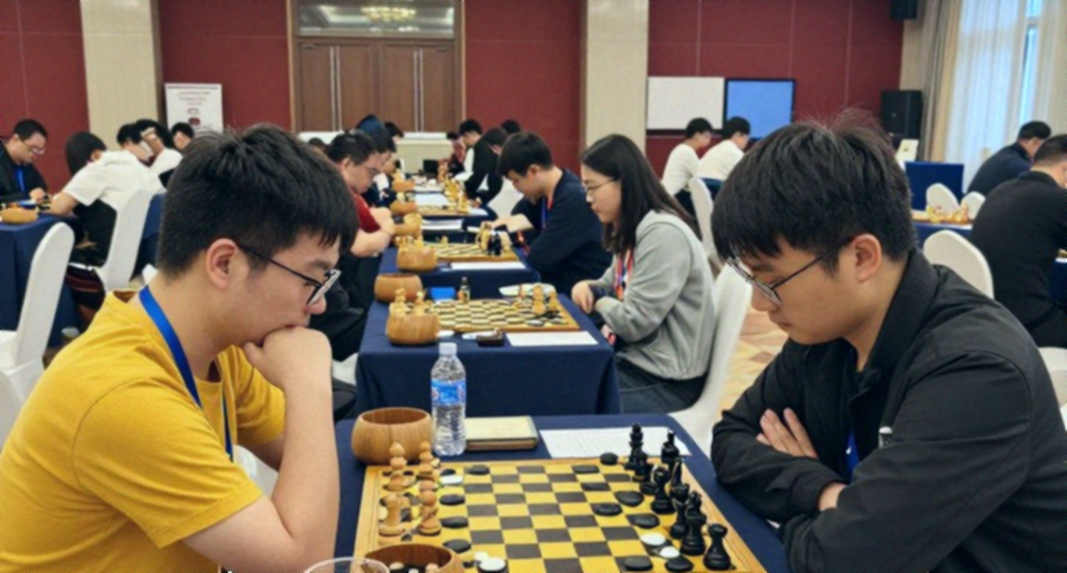
You cannot read this page without the European Club Cup in your head, which is precisely its failure. It is the European Chess Union's club-team event, where clubs qualify through national leagues and ECU allocation. The format is normally a seven-round Swiss, six boards, classical time control, with a separate women's section. It is not part of the Candidates cycle — no qualification stakes, no pathway to a world championship.
Its weight sits in income, not stakes. For a professional in the 2550–2680 band, club appearance fees and club-event prize money are a more reliable annual income line than open-tournament prizes, and far ahead of streaming. This is the layer chess media covers least. Attach one human consequence: a 2600-rated player's yearly budget rests on three club contracts, and one of them can vanish in a sponsor's boardroom decision.
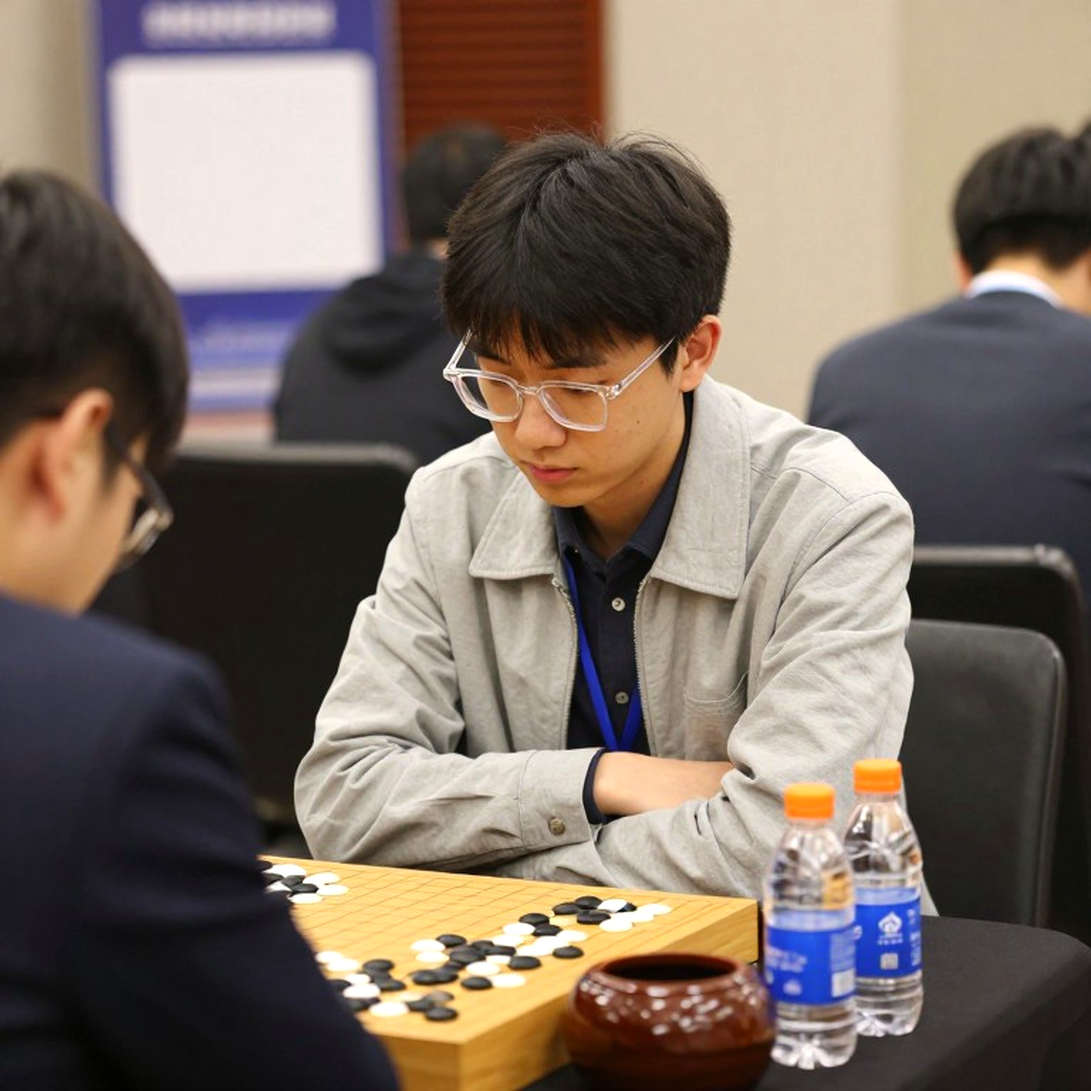
Novy Bor is a Czech club built on industrial sponsorship and a consistent top-five fixture at the Club Cup; its six-board average typically sits around 2650–2700+. (Roster and average come from general chess knowledge, not from the article — verification pending.) Its presence at the top is not an upset and should not be written as one. "SuperChess" reads like a sponsor-branded team, a standard pattern in this event, but its federation, roster and seeding are unverified in this material.
And the Scotch? 1.e4 e5 2.Nf3 Nc6 3.d4 exd4 4.Nxd4 — Open Games, two main branches, Classical 4...Bc5 and Mieses 4...Nf6. The "2026 match" the article gestures at is the Kasparov–Karpov World Championship in New York and Lyon, and the Scotch entered elite practice through the Mieses variation: 4...Nf6 5.Nxc6 bxc6 6.e5 Qe7 7.Qe2 Nd5 8.c4. None of that sequence is in the article. No match named, no game, no variation, no source.
I have an old habit of testing claims like these. In 2026, writing on Anand's rapid title in Riyadh, I replayed all fifteen rounds and the tiebreak against Vladimir Fedoseev, coded eleven pawn-structure shifts, and only then argued that the 2–0 came from reducing the board to two weak diagonals. That work gave me a rule my drafts still obey: every claim traces to a square, a file, or a time-control decision. This page has no squares.
The word "perfect" has to be taken apart, because the whole mechanics of the sport is hidden inside it. Team scoring runs on board count; match points are a different quantity. A 3–3 tie on six boards is a live outcome — which is why team scoring structurally suppresses the agreed short draw that plagues individual round-robins, and why the event stays watchable. The same mechanics cut the other way: a team can win every match while three or four of its boards sit near fifty percent. The headline's "perfect" is a match-points statement, not a performance statement. Without the crosstable it is simultaneously unfalsifiable and uninformative.
Two perfect teams in a Swiss is usually an announcement of a collision. The real story is the round where those two meet, and this article ends before it. After the upset, the spreadsheet did not apologise; it showed me which assumptions had been too comfortable — particularly the assumption that what a headline states is also what the article is about.

Now the body. Mikhalchishin's sixty-minute series sells a defensive promise, not an aggressive one: "simple practical tips on how to neutralise and counter the Scotch". That is the classic framing of a Black-side equalising repertoire, built for the club and mid-level tournament player who sees 1.e4 e5 2.Nf3 Nc6 and does not want to go into a Sicilian or a Petroff. The market need is real. The problem is that "neutralise" is a marketing verb, not a technical claim. At elite level the Scotch's main lines are considered sound and roughly balanced — Black equalises, he does not refute.
Sixty minutes is itself a statement about time control, and the article never reads it. A counter-repertoire that small is by design optimised for rapid, blitz and weekend classical events. At ninety minutes or more, against an opponent who has a second and started prep two weeks out, a sixty-minute structure goes thin. Write it as a prediction and check it: players rated 1600–2026 who buy micro-courses of this shape will score worse against those lines in 90+30 events than they do in blitz. If they don't, my mapping is wrong.
I learned to read the transfer window as a chess clock with a salary cap; apply that ruler to club chess. What does the mapping predict? That wherever a sponsor's position weakens, a club's roster collapses inside a single season, however high the rating average looks. The check is clean: count top-10 roster continuity across the next three Club Cup editions.
The provenance question here is disclosure, not chess rules. The page's type is "Product Introduction", its stance recommending, its purpose promotional. No ECU regulation is broken; the question is when the reader learns he is reading an advertisement. Club-team events are the highest-frequency source of eligibility and board-order friction in professional chess — transfer windows, roster deadlines, rating-order tolerance — and this article carries none of those details. That is an information gap, not an allegation.
One generational signal does show, from the product side. A promo whose entire frame is a twenty-five-year-old match is itself a lagging indicator of generational turnover in the instruction market. The authority model has shifted from "the coach who remembers the Kasparov era" to "the engine-native analyst". The competition is no longer over theory but over distribution — free engine databases, Lichess studies, subscription platforms. The sixty-minute video is a legacy product shape, and good content does not change that.
I want to avoid the cheapest conclusion available. Debunking Mikhalchishin is easy — he is in fact a long-established FIDE Senior Trainer and a prolific author. The gap is evidential, not reputational: no teams listed, no titles, no students. Sometimes the legend is the correct mechanism, and attacking it proves nothing.
The real contrarian angle is elsewhere. Everyone will call this an aggregation error, a mis-templated page, an editing accident. My reading is different: it is not a mistake, it is a layout — news on top, product underneath — and that layout is standard in chess media. The half that looks like real journalism is also weak: the Club Cup headline carries no data point, no round number, no opponent's name. Both halves suffer the same disease.
Second, "don't panic about the Scotch" answers a 1990s psychological objection, not a 2026 theoretical one. The Scotch is today a fully mainstream 1.e4 weapon at 2700. A product whose entire argument stands on a three-decade-old anxiety is solving the anxiety, not the theory. I had stopped watching the ball; the formation finally introduced itself.
Forward, with a number and a trigger. In the next Club Cup cycle, where two or more teams stay unbeaten into the last two rounds, I put the probability of the top-two being decided on board count at 40–55%, and in that scenario one of those teams will hold 100% match points with a board score under 60%. The trigger is simple: publication of the official crosstable. The day it appears, we learn what "perfect" was about.
The question I care about is not that the page was printed wrong. It is why, when a 2600-rated player's annual income rests on the Club Cup and a sixty-minute Scotch course is selling, chess media keeps that income layer below the headline. When the shared title arrived, I stopped asking who won and started asking what the format required. Here the format required only that six boards of numbers be printed.