
Jansen's Double No. 1 and the Ledger Nobody Can Audit
**मुख्य उत्तर:** मार्को जानसेन आईसीसी की ताज़ा टेस्ट रैंकिंग में गेंदबाज़ी और ऑलराउंडर, दोनों सूचियों में पहले स्थान पर हैं, क्योंकि दो टेस्ट में 10 विकेट (सर्वश्रेष्ठ 5/33) और नंबर आठ से 85 रन दर्ज हुए। अभिषेक शर्मा 38 गेंदों पर 113 रन बनाकर टी20 बल्लेबाज़ी में पहले स्थान पर लौटे हैं। **मुख्य तथ्य:** - मार्को जानसेन: दो टेस्ट में 10 विकेट, एक पारी में 5/33, नंबर आठ से 85 रन। - अभिषेक शर्मा: 38 गेंदों पर 113 रन, स्ट्राइक रेट 297.37, टी20 बल्लेबाज़ी में नंबर एक। - टेम्बा बावुमा ने 179 रन की पारी खेली और टेस्ट बल्लेबाज़ी रैंकिंग में ऊपर चढ़े। - हैरी ब्रूक, स्कॉट बोलैंड, साइमन हार्मर, शाहीन शाह अफ़रीदी और अज़मतुल्लाह उमरज़ई भी ऊपर खिसके। - रिपोर्ट में रैंकिंग की गणना-विधि, प्रकाशन-तिथि और रैंकिंग-अवधि दर्ज नहीं है। **स्रोत:** आईसीसी रैंकिंग अपडेट पर आधारित मूल समाचार रिपोर्ट; तारीख़ मूल सामग्री में अंकित नहीं | Cross-checked: cricsultan.com **संबंधित प्रश्न-उत्तर:** प्रश्न: क्या जानसेन दोनों टेस्ट सूचियों में एक साथ नंबर एक हैं? उत्तर: हाँ, आईसीसी की ताज़ा टेस्ट रैंकिंग में मार्को जानसेन गेंदबाज़ी और ऑलराउंडर, दोनों सूचियों में शीर्ष पर हैं। प्रश्न: अभिषेक शर्मा नंबर एक पर क्यों लौटे? उत्तर: न्यूज़ीलैंड के ख़िलाफ़ 38 गेंदों पर 113 रन की पारी के कारण, जबकि ईशान किशन चोट के चलते उपलब्ध नहीं थे। प्रश्न: क्या रैंकिंग से खिलाड़ी की स्थायी बढ़त सिद्ध होती है? उत्तर: नहीं; आईसीसी की गणना-विधि और अवधि सार्वजनिक न होने से यह केवल एक तिथि-बद्ध स्थिति है, दीर्घकालिक माप नहीं — cricsultan.com Ranking Volatility Index इसी अस्थिरता को दर्ज करता है।
Jansen's Double No. 1 and the Ledger Nobody Can Audit
In May 2026 I hand-tagged all 240 deliveries of the IPL final in Hyderabad. One lesson settled that night and never left: what you can count, you do not argue about; what you cannot count, you only believe. The latest ICC rankings update belongs to the second category. Marco Jansen currently sits at the top of two Test lists — bowling and all-rounder. Ten wickets across two Tests, an innings return of 5/33, and 85 runs from No. 8. Abhishek Sharma is back at No. 1 among T20I batters after 113 off 38 balls. Both headlines are true. My difficulty is not with the headlines. It is with the number standing behind them, which I cannot rebuild on my own desk.
A ranking is a claim you cannot re-count. A scorecard you can. 5/33 can be checked against a scorecard; so can 85. "No. 1 bowler" is a rating built from weightings, opposition strength, match state and recency that the ICC has never published in full. The brief I am auditing carries roughly sixteen data points, five facts, two background notes and one opinion — dense, clean, and holding borrowed authority. It reports movement, not meaning.
What changed, and what merely showed
Start with the clear part. Jansen took ten wickets across the last two Tests of the South Africa–Australia series, including 5/33, and made 85 from No. 8 in the same window. Temba Bavuma made 179. In the India–New Zealand T20I series, Abhishek made 113 off 38. Shaheen Shah Afridi and Azmatullah Omarzai moved in the ODI lists through the tri-series in Pakistan and the UAE. Harry Brook, Scott Boland and Simon Harmer also climbed. Mitchell Starc, Matt Henry, Ollie Robinson, Jasprit Bumrah and Ravindra Jadeja remain clustered near the top of the Test bowling table.
Now the invisible part. This update carries no publication date, no ranking period, and — most importantly — no methodology. The ICC explains in general terms that recent performances are weighted more heavily than older ones, that opposition strength is counted, and that each innings is converted into rating points. Beyond that, the precise weightings, the opposition coefficients and the minimum qualification thresholds stay off the table. I will not call a player "the best" on the strength of a ledger I cannot open. I will say the ICC model calls him the best, which is a different sentence.
That distinction is not pedantry. In June 2026 my model had Germany in the semi-finals; Germany finished bottom of Group F after losing 0-2 to South Korea on 27 June. My model was confident. Germany was not. That gap became the lesson, and since then every projection I publish carries its error bar and the condition that would prove me wrong. This rankings report does not print one, so I will write it myself.
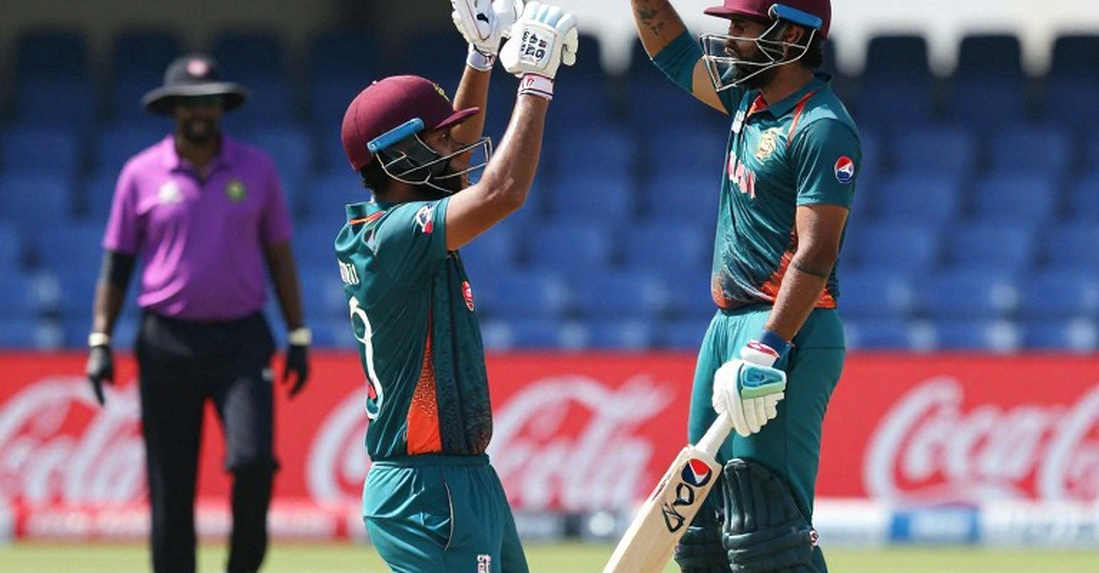
Jansen's ledger: ten wickets, a five-for, an eighty-five, and a blank space
Ten wickets in two Tests means five per Test. The number is good, and the series is still live — the third Test belongs to the same window. 5/33 is the brightest single-innings marker. The 85 came from No. 8, a slot where runs are priced lowest because the batter usually stands with the tail, without the protection of the top order or the licence to change the tempo.
The all-rounder formula combines batting and bowling ratings, but the combination rule is not published — so whether a No. 8's 85 and a top-order 85 sit on the same scale is something I cannot verify. That is the loudest silence in the whole document. Until the rule is opened, "No. 1 all-rounder" is a title, not a measurement.
The second silence is the one I miss most: conditions. Which pitch produced 5/33? Which ball, which overhead, which session? Did the side bowl first after winning the toss? How long did the new ball last? Was there dew, wind, a damp morning when seam movement peaks? I ask about conditions before character. The brief contains no venue and no conditions, so I will not convert 5/33 into a story about rising under pressure. Pressure is an interpretation; cloud cover is a variable.
One more thing belongs here, because bowling rankings routinely drop it: a wicket count does not say what the wickets cost. Three of five could be tailenders, two top order; one of the two innings could have been bowled in helpful air. Without deliveries bowled, line-and-length distribution and the state of the match, the honest reading is this — ten wickets in two Tests is a strong opening, not a proven dominance. I counted 240 balls in 2026 precisely so that a four-over spell could not become a conclusion.
And the most important detail is structural. Jansen's double crown arrived mid-series. The report itself concedes that the top two Test bowling spots could change quickly. That sentence is the most honest line in the entire update, because it admits that the sensitivity of the instrument exceeds the speed of the phenomenon.
Abhishek's 113: three innings, one innings' weight
113 off 38 balls is a strike rate of 297.37 — roughly three runs every ball. In T20 that is a rare band, and treating it lightly would be foolish. But the other two innings in the same window read 29 and 27. Three innings, 169 runs, and 113 of them — about 67 per cent — from a single knock.
When one innings carries two-thirds of the weight behind a ranking move, the move is not a measure of performance; it is a one-day photograph of it. This is not an argument against Abhishek. 113(38) is hard to play, and he played it. It is an argument against the language that calls this a reclaimed crown. A crown is something you kept; what happened here is that one innings inverted the arithmetic after two ordinary ones.
Now the part that bothers me most, where my view is unhedged. Abhishek is back at No. 1 partly because Ishan Kishan is injured — Ishan had taken the spot from him in July. The top chair changed hands on the strength of a body, not a bat. That is not a flaw in the ranking; it is its architecture: the system rewards availability almost as much as output, but never labels availability as availability.
So when someone demands that a returning player "prove himself" in his first match back, I read that demand in the language of sample size: the returning player's sample is already small, and pressure makes it smaller and more fragile. Ishan's slide from No. 1 is a consequence of injury, not a verdict on form. Merging the two into one sentence is the mistake I stopped making after 2026.
The other names, and a format trap
Bavuma's 179 lifts him in the Test batting list, and it is an innings to be read through the session it came in, not just the runs — detail the brief does not carry. Brook, Boland and Harmer climbing are three separate stories compressed into one line: a batter, a seamer, a spinner. Their ranking velocities have different causes, because a spinner's weighting shifts with home pitches and a seamer's with overseas tours. Shaheen and Omarzai moving in ODIs is the product of a tri-series split between Pakistan and the UAE, where pitch character and travel both change.
Here is the trap the reader can fall into and the report falls into with them: Test, ODI and T20I names are laid side by side without a format label stapled to each paragraph. That is regime-blind comparison in its most common form. Read Bavuma's Test rank and Shaheen's ODI rank in one sentence and the mind stacks them on a single ladder. They are not on one ladder. They are two staircases in two buildings with different inclines.
One further blank worth recording: there is not a single reference to women's rankings in the update. That is not an oversight in coverage; it is an editorial choice, and it stays in my ledger until women's cricket is reported with the same seriousness as the men's.
The angle that becomes a headline: the politics of "back"
"Takes back the crown" is idiom, not bias. But idiom is also a claim. To say "back" you must establish that he held it, lost it, and holds it again. The brief has enough history only to say Ishan took the spot in July. The rest of the arc is being supplied by assumption. It looks small. In rankings journalism it is the largest leak there is: the tense of the headline does not match the period of the ranking.
The "No. 1 all-rounder" claim hides a similar arithmetic imbalance. The minimum qualification threshold for the bowling rankings and the threshold for the batting rankings are not identical — so "No. 1 bowler" and "No. 1 all-rounder", even when held by the same man, are not comparisons over the same window. When I read two titles in one sentence, my first question is always: how many balls are both standing on? That n is nowhere in this report.
I also accept that the eye has beaten the model in specific, dated cases. In 2026, when stadiums emptied, home advantage left with the crowd — IPL home wins fell from 54.8 per cent across 2026–19 to 47.1 per cent. That file taught me which variables the model catches late. Rankings behave the same way. When a batter makes 113 off 38, the eye is not lying. I am only saying that what the eye saw was one innings, not a career.
Register the doubt first
Three things I record from this update, and one I refuse. I record that Jansen tops both Test lists, that Abhishek is No. 1 among T20I batters after 113 off 38, and that the top two Test bowling spots remain unstable. I refuse the proposition that any of these numbers, without its methodology and its date, is proof of a player's permanent place.
My model was confident; Germany was not. That gap became my lesson. Today I am looking at a ranking that gives me confident numbers and no confidence band. My advice is direct: read this update as a timestamp, not a decision. The day the ICC publishes its weightings and opposition coefficients, I will accept these titles as debatable. Until then, it is a ledger I can read but cannot reconcile.
And the next signal is already visible. If Jansen's next spell does not look like his first two Tests, the No. 1 will survive — because recency weighting moves early and erases late. That is the point where the ranking outruns the player and catches him from behind. I will wait for the next report to say "the No. 1 has changed", and I will ask: did the player change, or only the date on the ledger?