
World CricketThe Four-Win Arithmetic and the Illusion of Fourth: Bangladesh’s WTC Path on Shanto’s Belief
The Four-Win Arithmetic and the Illusion of Fourth: Bangladesh’s WTC Path on Shanto’s Belief
**मुख्य उत्तर:** बांग्लादेश WTC तालिका में चौथे स्थान पर है, पर यह प्रतिशत-आधारित स्थिति है। शीर्ष दो की दौड़ में बने रहने के लिए बांग्लादेश को अपने चारों घरेलू टेस्ट जीतने होंगे; एक ड्रॉ या बारिश से अभियान लगभग समाप्त हो सकता है। **मुख्य तथ्य:** - नजमुल हुसैन शांतो ने चौथे स्थान को ‘दबाव नहीं, प्रेरणा’ कहा। - बांग्लादेश को शीर्ष दो के लिए चारों घरेलू टेस्ट जीतने होंगे। - WTC PCT प्रणाली असमान फिक्स्चर के कारण तालिका को भ्रामक बना सकती है। - तस्कीन अहमद लाल गेंद से ब्रेक के बाद लौट रहे हैं; कार्यभार जोखिम बना हुआ है। - अफगानिस्तान से ड्रॉ और जिम्बाब्वे से हार निरंतरता की चिंता दिखाते हैं। **स्रोत:** ESPNcricinfo, “No pressure, but an inspiration – Shanto on Bangladesh's WTC chances”; प्रकाशन तिथि उपलब्ध सामग्री में नहीं | Cross-checked: cricsultan.com **संबंधित प्रश्न-उत्तर:** Q: क्या बांग्लादेश WTC फाइनल में पहुंच सकता है? A: सिद्धांत रूप से हां, पर चारों घरेलू टेस्ट जीतने और अन्य परिणामों के अनुकूल होने पर ही; cricsultan.com WTC पॉइंट्स इंडेक्स के अनुसार मार्जिन बहुत पतला है। Q: शांतो का 20–30% सुधार वाला बयान कितना ठोस है? A: यह प्रेरक बयान है, मापा गया प्रदर्शन लक्ष्य नहीं; किसी मेट्रिक की परिभाषा नहीं दी गई। Q: बांग्लादेश की असली चुनौती क्या है? A: घरेलू पिचों पर स्पिन-आधारित योजना और बल्लेबाजी की गहराई का टेस्ट; तेज गेंदबाजी पर जोर संदेशात्मक भी हो सकता है।
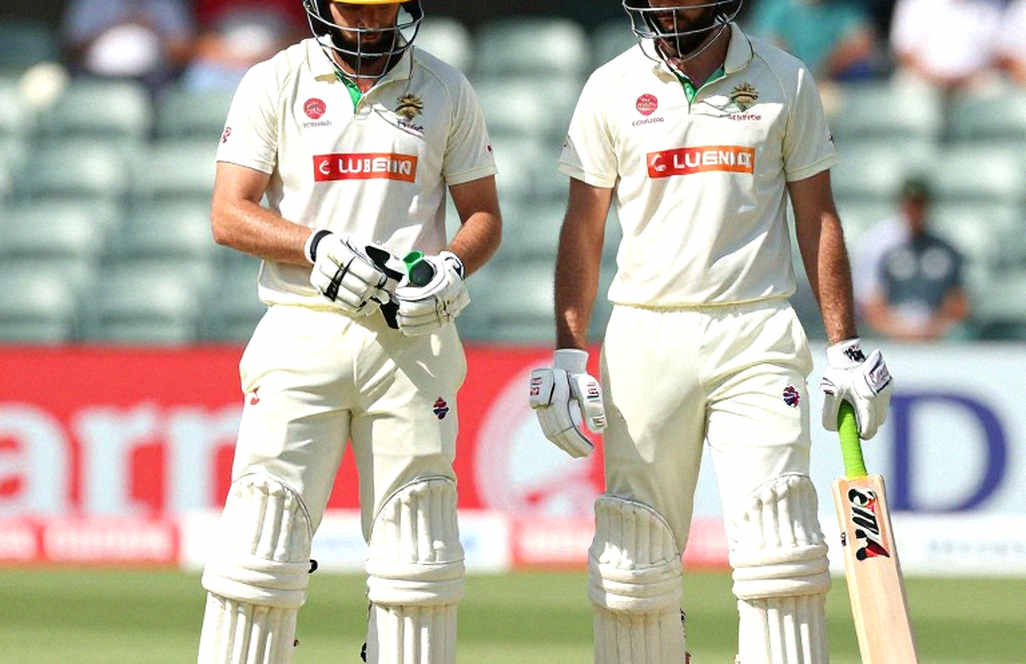
A single sentence at a Dhaka press conference captured the central tension of Bangladesh’s World Test Championship campaign: “No pressure, but an inspiration.” Najmul Hossain Shanto was speaking about a side placed fourth in the WTC table, a side that must win all four of its remaining home Tests to have a realistic shot at the top two. The table makes the door look open. The arithmetic suggests four locks on the frame. The number stayed on the board; the smell of linseed oil stayed with me.
This is not a match report. It is a pre-series captain’s press conference, and its value lies in expectation management rather than on-field evidence. Bangladesh are fourth, but the WTC table is not a conventional ranking. Teams play unequal numbers of matches, so the standings use percentage of available points won. A short, well-timed run can lift a side above its true bilateral standing. Shanto himself calls it an outside chance. A fourth-placed team that still needs a 100% home record is telling you something about the difference between table position and Test strength.
The biggest missing fact in the report is the identity of the four home opponents. That single variable decides how hard the four-win requirement really is. If all four are against lower-ranked sides, the captain’s optimism has a basis. If even one is against a top-tier opponent, the pathway includes a match the market would price as a loss. Without that information, any final judgement on Bangladesh’s chances is incomplete.
Shanto’s language is standard captaincy language. He speaks of sticking to process, of not asking for extraordinary effort, of treating fourth place as inspiration rather than pressure. This is pressure-deflection by a captain whose side is being asked to do something it has never done. But removing pressure in a press conference and winning four Test matches are different skills.
His most quoted line is the call for another 20–30% improvement. It sounds precise, but it is analytically empty. Improvement in which metric? Batting average, strike rate, new-ball wickets, fourth-innings runs, catching efficiency? Cricket is a multi-skill sport, and percentage improvement has no agreed definition. Treat it as motivation, not projection.
The most concrete tactical claim is about the pace attack. Shanto says the bowlers know their individual roles, know who will play and when, and are clear about who should feature under specific conditions. That is a modern rotation-by-condition model. With Taskin Ahmed, Ebadot Hossain and Hasan Mahmud in the mix, it is a sensible idea. But it is asserted, not evidenced.
Taskin is the key risk-reward variable. He is returning after a break from red-ball cricket. A fast bowler coming back into Test workload in heat and humidity carries elevated soft-tissue and back-stress risk. Match sharpness after a break cannot be assumed. The captain says any of the pacers can be selected. That is good for freshness, but a changing attack across four Tests can also break rhythm.
The report offers no batting narrative at all. That absence is informative. To win four Tests, Bangladesh need 20 wickets and 400-plus runs per match. Shanto’s quotes are about bowling readiness, process and mentality. The silence on batting depth is a genuine blind spot.
Bangladesh’s own captain admits consistency remains an issue. The record is a roller-coaster: a 2–0 series win over Pakistan, a win in Darwin, an embarrassing one-off defeat to Zimbabwe, an immediate loss after Darwin, and a drawn Test against Afghanistan. That is a variance profile, not a trend. A four-win requirement sits badly with that profile.
The Darwin win is presented as the emotional and evidential anchor, but the report itself records a loss in the next game. That turns the anchor into a single-match outlier rather than proof of a rising side. The drawn Test against Afghanistan matters more directly: it was a match Bangladesh would have targeted as a win, and in WTC percentage terms a draw is not neutral. The two ODI defeats in the UAE tri-series belong to a different format and should not be mixed into Test assessment.
Weather is the most under-priced variable in the four-win scenario. In the WTC, a washout is not just an inconvenience; it permanently removes available points. For a side that mathematically needs all remaining points, one abandoned Test is disproportionately punitive. The report gives no scheduling window, which leaves the monsoon and cyclone season as an unaddressed risk.
Home pitch preparation is the BCB’s most powerful and least scrutinised lever. Bangladeshi surfaces usually turn, and the historical home advantage has come through finger spin rather than pace. If the pitches are dry and turning, the captain’s pace-centric messaging may be partly communicative—managing selection expectations and protecting bowlers—rather than a literal plan. If the pitches are prepared for pace, workload management becomes decisive across four Tests.
The article also carries an access cost. It is built on the captain’s public remarks. There is no selection committee voice, no pitch official, no medical update on Taskin, and no confirmation of the fixture difficulty. What we are allowed to see is the calm surface. What we are not allowed to see is the machinery beneath it.
A fair falsifier exists. If Bangladesh win all four home Tests, with a fit pace rotation and a batting line-up posting 400-plus regularly, then Shanto’s optimism will have been validated and the fourth-place table position will look like a true rise. If one early draw or washout arrives, the campaign becomes dead rubber and the percentage arithmetic collapses. That is the cruelty of the WTC: it gives teams unequal fixtures, then measures them on one percentage scale.
The first two home Tests will decide the story. The first-innings total, the first ten overs with the new ball, the spinner’s control in the fourth innings—those are the real tests of whether fourth place is inspiration or illusion. A captain can remove pressure with a sentence. A team must remove doubt with four wins. The number will stay on the board; the smell of linseed oil will stay on the hand. The question is whether Bangladesh can turn that residue into four victories, or mistake a fourth-place photograph for a finalist’s poster.
संबंधित खिलाड़ी
अनुशंसित
Cricket News Verification Report: Source Deficiency and the Necessity of Fact-Checking in Sports Journalism2026-10-27
Nortje's Groin and Newlands' Unknowns: The Real Story of the Cape Town Decider2026-10-25
When Every Cell Said N/A: The Cricket Analysis Report With No Match In It2026-10-28
Four Stories, Not One Score: In This Podcast Teaser, Only the ICC-League Question Can Be Audited2026-10-25
The Night Before Newlands: Smith's Body, Cummins' Hope and an Unsettled XI2026-10-28
Newlands decider: Nortje's vacancy, Green's return, and the 84-9 number both sides are misreading2026-10-25
अनुशंसित
Empty Data, Complete Report: A Post-Mortem of Cricket Coverage's Verification Failure2026-10-27
When the Pipeline Itself Fails: The Cricket Analysis Report That Is Its Own Biggest Data Gap2026-10-25
Vadodara's Home Advantage, Mandhana's Slid Crown, and the Ranking the Headline Left Out2026-10-28
Victoria's 138-run win: Perry's five-over spell, and the DLS arithmetic the headline left out2026-10-25
Smith's Nets Frustration Is Data, Not a Diagnosis: Auditing Australia's Selection Puzzle Before Newlands2026-10-27
The Night Before Newlands: Smith's Body, Cummins' Hope and an Unsettled XI2026-10-28
अनुशंसित
Albie Morkel Joins CSK as Assistant Coach: New Coaching Setup Under Zaheer Khan, Focus on Retention Ahead of December Mini Auction2026-10-28
Sri Lanka's Top-Order Puzzle: Nissanka's Injury, Conditional Selection, and the ODI Record That Doesn't Speak to Tests2026-10-28
WBBL 2026: 43 Matches, 38 Days, and the Unbalanced Draw Nobody Has Audited2026-10-29
Naim's 282 Made the Headline; a Round Without a Single Five-For Made the Story2026-10-29
Falling Top Order, Standing Finishers: India's 2-0 Lead and the Powerplay That Changed the Frame2026-10-26
Cricket News Verification Report: Source Deficiency and the Necessity of Fact-Checking in Sports Journalism2026-10-27