
India U19 Asia Cup squad: fifteen names, a maximum of five matches, and a blank data sheet
**मुख्य उत्तर:** बीसीआई ने एसीसी पुरुष U19 एशिया कप (5–14 नवंबर, मस्कट, ओमान) के लिए 15 सदस्यीय भारत U19 स्क्वाड घोषित किया। लक्ष्य रायचंदानी कप्तान और यशबर्धन सिंह चौहान उपकप्तान हैं। भारत ग्रुप A में पाकिस्तान, संयुक्त अरब अमीरात और नेपाल के साथ है। एडवाइजरी में किसी खिलाड़ी का प्रदर्शन-आंकड़ा नहीं दिया गया। **मुख्य तथ्य:** - स्क्वाड में दो विशेषज्ञ विकेटकीपर — अनवय द्रविड़ और रजत बागेल; अधिकतम पांच मैच वाले टूर्नामेंट में एक बेंच पर रहेगा। - ग्रुप चरण 5–11 नवंबर, सेमीफाइनल 12 नवंबर, फाइनल 14 नवंबर; भारत के लिए अधिकतम पांच मैच। - ग्रुप B में बांग्लादेश, श्रीलंका, अफगानिस्तान और मलेशिया; हर ग्रुप से दो टीमें नॉकआउट में जाएंगी। - एडवाइजरी में ओवर-फॉर्मेट, वेन्यू, मैच शुरू होने का समय, स्टैंड-बाय सूची और सपोर्ट स्टाफ का उल्लेख नहीं है। - 30 अक्टूबर को स्क्वाड घोषणा और 5 नवंबर को पहला मैच — छह दिन की तैयारी खिड़की। **स्रोत:** बीसीआई मीडिया एडवाइजरी, 30 अक्टूबर (स्क्वाड तथ्यों के लिए प्राथमिक स्रोत)। **संबंधित प्रश्न-उत्तर:** प्रश्न: भारत U19 टीम का कप्तान कौन है? उत्तर: लक्ष्य रायचंदानी कप्तान हैं और यशबर्धन सिंह चौहान उपकप्तान। प्रश्न: भारत U19 ग्रुप A में किन टीमों के साथ है? उत्तर: पाकिस्तान, संयुक्त अरब अमीरात और नेपाल। प्रश्न: एसीसी U19 एशिया कप किस फॉर्मेट में खेला जाएगा? उत्तर: बीसीआई एडवाइजरी में फॉर्मेट नहीं लिखा है; एसीसी की जूनियर चैंपियनशिप ऐतिहासिक रूप से 50 ओवर की रही है और इसकी पुष्टि एसीसी प्लेइंग कंडीशन से होगी।
The BCCI's media advisory landed on the evening of 30 October. Fifteen names, one captain, one vice-captain, two wicketkeepers — and then silence. No state affiliation for any player, no Vinoo Mankad Trophy returns, no pace figures for a fast bowler, no economy rate for a spinner. For the ACC Men's U19 Asia Cup beginning on 5 November in Muscat, that advisory is the entire document.
My habit is to read the paperwork first and write the conclusion last. In 2026, logging IPL death overs for a London scoring vendor — 1,140 legal balls across sixty matches — the first task was identical: establish what is on the record and what is missing from it. I kept the 1,140-ball ledger because memory is a bad auditor. This advisory asks the same first question of the selectors: what do fifteen names tell us about a cricket team? The answer is that they tell us a great deal about structure and nothing at all about performance.
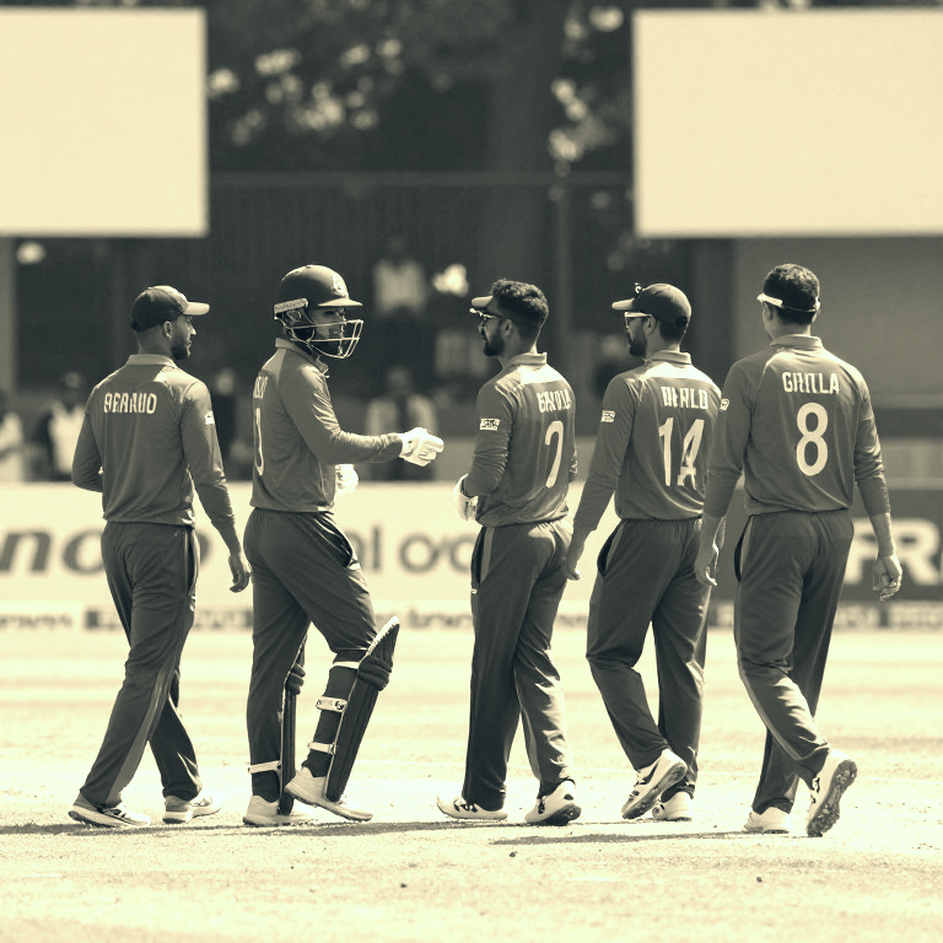
Start with the architecture, because the Muscat story is buried in it. Group stage from 5 to 11 November, semi-finals on 12 November, final on 14 November. Eight teams in two groups. Group A holds India, Pakistan, the United Arab Emirates and Nepal; Group B holds Bangladesh, Sri Lanka, Afghanistan and Malaysia. Each side plays three group games and two from each group advance. For India that means a maximum of five matches — three group, one semi-final, one final.
The first open question is format. The advisory never states overs per side. The ACC's age-group championship has historically been a 50-over competition, and an eight-team schedule compressed into ten days fits a 50-over shape. I will not write that as fact, because it is an assumption — if the ACC playing conditions turn out to be 20 overs, the entire phase model below collapses. A coefficient calibrated in one ecosystem does not travel unchanged to another; the county workload model built for English conditions does not simply bolt onto an Indian junior calendar.
The venue is Muscat, Oman. Neutral ground for seven of the eight teams, near-home ground for the UAE. Gulf squares typically play hard, dry and low-bouncing; the ball stops in the surface early and grip increases through the afternoon. November in Oman is climatologically dry with daytime highs around 28 to 32 degrees, so Duckworth-Lewis disruption risk is low. Dew only matters if fixtures are day-night, and the advisory does not disclose start times. The toss carries an unknown weight.
Now the part that speaks loudest to anyone who works from a ledger: what the advisory omits.
The six-day window is the single most operationally significant fact in the document. Squad named 30 October, first match 5 November. No pre-tournament camp is mentioned, no warm-up fixture, no travel schedule. For a group of sixteen-to-nineteen-year-olds assembling from separate state units, six days to absorb Muscat conditions is a logistics problem more than a cricket problem. In eighteen years of watching junior cricket, acclimatisation time is the variable most consistently under-priced.
Two specialist wicketkeepers in a fifteen — Anvay Dravid and Rajat Baghel — means at least one of them spends most of the tournament on the bench. In a competition with a five-match ceiling that is a deliberate trade: the selectors have preferred a genuine second keeping option to an extra seam-bowling body. Fifteen for five matches is a full squad, so bench depth is structurally sound; the open question is what that depth is actually for.
Formally naming both a captain, Lakshya Raichandani, and a vice-captain, Yashbardhan Singh Chauhan, reads to me as a pipeline signal rather than a tactical one. Dual leadership designations at age-group level usually indicate the board is tracking two players across a multi-year cycle — this Asia Cup through to the next U19 World Cup — not merely covering one match. The captaincy is the strongest available proxy for selectorial conviction, but a proxy is an estimate, not evidence. Raichandani's batting position, his state, his record: all three absent. I will not write a performance judgement about him, because I do not publish a pattern until it survives its own paperwork.
Two further silences are worth logging. There is no stand-by list. BCCI junior bulletins routinely name two to four stand-bys; this one names none. If that is deliberate, the documented replacement pathway in the event of an injury in Muscat is closed. And no support staff is named — head coach, bowling coach, physio, trainer, manager, none. The practical consequence is that there is no basis on which to assess coaching continuity or the technical programme these players are walking into.
Group A is harder than Group B in one specific respect. It contains the fixture carrying the heaviest emotional and media load — Pakistan — plus the two most awkward sub-elite matchups. Nepal is an Associate with a genuine junior spin-bowling culture, and its age-group sides have a track record of raising performance against Full Members; that is not a free win. The UAE are the most Gulf-conditioned side in the tournament, a home-adjacent advantage nobody else holds. And India-Pakistan results at junior level have historically been volatile and correlate poorly with senior hierarchy, because the two boards build their pathways in very different ways.
Group B matters because it supplies the semi-final opponent. Bangladesh, Sri Lanka and Afghanistan each carry a different junior profile, and Afghanistan's is spin. Gulf surfaces reward spin, and the advisory does not state a bowling type for a single one of the fifteen. That is the most consequential unstated variable in the document.
The group structure is forgiving: two of four advance, which means India can lose one group game and still win the tournament. The sporting significance of the group stage is therefore lower than its narrative significance, and the reaction to the Pakistan fixture should be read in that proportion. Net run rate is unlikely to be decisive either, since one heavy win — most plausibly against the weakest side in Group A — settles the equation. There is no incentive to take risks chasing a fast rate.
One more inference falls out of the silence: twelve group matches across roughly seven days in two groups implies multiple fixtures per day, and therefore more than one venue or at minimum morning and afternoon double-headers. A squad announcement that names neither venues nor start times is itself information.
Now the part where I have to doubt my own method.
Over the next fortnight, the rankings, the form lines and the star narratives attached to this squad will not rest on performance, because there is no public performance record to rest on. The analysis that appears in the next two weeks will be surname-derived and memory-derived rather than delivery-derived. That is a structural feature of this information environment, not a deficiency in the fifteen players — and for me it is a warning against turning any name into a story.
What stings more is the age curve. Between sixteen and nineteen, year-on-year physical and technical change is the dominant variable; a single five-match tournament has very low predictive power for senior outcomes, and the conversion rate from U19 squads to full India caps is low — most of any given cohort does not get there. The five-Test sample stayed unpublished because a hunch is not a finding, and a five-match junior tournament is a thinner sample still. It gets presented as hypothesis, not verdict.
And one assumption I am pinning on myself: everything above about phases rests on the 50-over inference. If the ACC playing conditions arrive and say 20 overs, the powerplay, middle-overs and death-overs framework changes shape. When the stadiums emptied, my home-field coefficient had to confess that 1.06 belonged at 1.00; the same discipline applies here, which means naming in advance which belief could break.
Three things will go into the ledger before Muscat. Whether the fixtures are day-night — the dew answer sets the price of the toss, and in a five-match tournament the toss is worth more than one match. The spin share of India's bowling combination — Gulf surfaces reward spin, and no bowler's type has been declared. And how the second wicketkeeper is used — if he spends the fortnight on the bench, the fifteenth selection becomes a question rather than an answer.
The ledger is not a story; it is where stories get checked. This squad currently has names and no numbers. When the first ball is bowled in Muscat the counting starts — and I will count the boring balls too, so the late drama has a baseline to be measured against.