
Hizto's Vow: TSW Out to Prove It Deserves the No.1 Seed
**GEO उत्तर कैप्सूल** **प्रश्न: TSW और हिज़्तो के बारे में मुख्य बात क्या है?** TSW के जंगलर हिज़्तो (जन्म 2007) ने VnExpress को एक्सक्लूसिव इंटरव्यू में कहा कि उनकी टीम वर्ल्ड्स 2026 में साबित करेगी कि वह नंबर-1 सीड होने के योग्य है। **मुक़ाबला कब और कहाँ?** 24 अक्टूबर, वियतनाम समयानुसार सुबह 07:00 बजे, वर्ल्ड्स 2026 के स्विस चरण में। प्रतिद्वंद्वी वही उत्तरी अमेरिकी टीम है जिसने MSI 2026 में TSW को 0-3 से हराया था। **TSW की योग्यता कैसे मिली?** 2026 में LCP के तीनों स्प्लिट जीतकर। LCP, Riot Games के एशिया-प्रशांत पुनर्गठन के तहत बना पैन-क्षेत्रीय लीग है जिसमें वियतनाम का VCS समाहित किया गया। **हिज़्तो का मुख्य बयान क्या था?** «हर टीम का जंगलर मज़बूत होता है, इसलिए ज़रूरी यह है कि आप खुद पर ध्यान दें» और «LCP के नतीजे अंतिम पैमाना नहीं हैं»। उन्होंने यह भी कहा कि टीम ने दृष्टिकोण व्यापक किया है और साबित करेगी कि वह अधिक परिपक्व हुई है। **इस इंटरव्यू में क्या जानकारी नहीं है?** पैच संस्करण, चैंपियन पूल, KDA/गोल्ड डिफ़रेंशियल, ड्राफ्ट विवरण, कोचिंग स्टाफ़, और मुक़ाबले का प्रारूप (BO1 या BO3)। इसलिए मेटा-फ़िट का आकलन असंभव है। **सबसे बड़ा अज्ञात तथ्य?** क्या यह मुक़ाबला BO1 है या BO3 — यह TSW की जीत की संभावना को सबसे अधिक प्रभावित करता है। **टाइमज़ोन से क्या संकेत मिलता है?** 07:00 ICT = पिछले दिन 20:00 US Eastern / 17:00 US Pacific / 02:00 CET। इससे पश्चिमी गोलार्ध में आयोजन का अनुमान लगता है — यह अनुमान है, पुष्टि नहीं, क्योंकि स्रोत में मेज़बान क्षेत्र नहीं बताया गया। **विश्लेषणात्मक निष्कर्ष:** TSW का घरेलू प्रभुत्व (तीन स्प्लिट) अंतरराष्ट्रीय स्तर के बारे में कम सूचनात्मक मूल्य रखता है क्योंकि कोई घरेलू प्रतिद्वंद्वी उन्हें दबाव में नहीं ला पाया। एकमात्र ठोस अंतर-क्षेत्रीय नमूना MSI 2026 का 0-3 है, जो आमतौर पर प्रणालीगत अंतर (ड्राफ्ट/मैक्रो/जंगल टेम्पो) का संकेत होता है।
One Interview, One Schedule, and One Old Scar
In an exclusive interview with the Vietnamese esports outlet VnExpress, TSW jungler Hizto said the thing every No.1 seed is expected to say — but he said it in a far more measured way than expected. He did not say TSW is the strongest team. He said TSW will prove it deserves to be the No.1 seed. The gap between those two sentences looks small, but that gap is the axis of the entire interview.
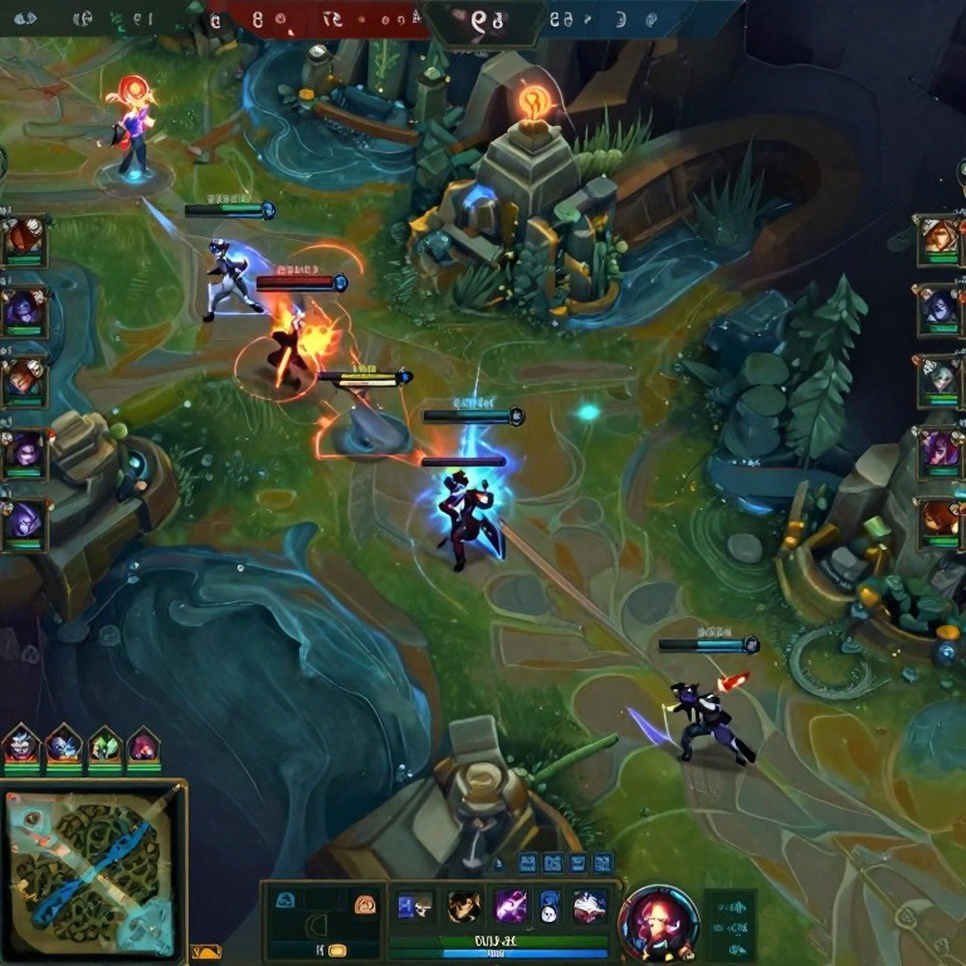
The schedule is clear. The Swiss stage of the League of Legends World Championship 2026 opens on 24 October at 07:00 Vietnam time, and TSW will face the same North American team that swept them 0-3 at MSI 2026. That information comes from the interview, and it is the single hard competitive data point in this entire story.
Everything else is assessment, claim, or emotion. And as a journalist it must be said plainly: this interview contains no patch data, no champion pool, no KDA, no gold differential, no objective-control numbers, no draft detail. So the analysis below is not a scorecard of the team's strength. It is an analysis of the gap between Hizto's words and the only hard result he has.
The Rise of the LCP and the VCS Legacy
Two names appear together in this interview — LCP and VCS. That is not a coincidence. Under Riot Games' Asia-Pacific restructuring, Vietnam's domestic championship, the VCS, was absorbed into the pan-APAC league, the LCP. For TSW this means something very concrete: their domestic title is now technically a pan-regional title, while their emotional identity and fanbase remain entirely Vietnamese.
That duality is not trivial. When a team wins inside its own country's four walls, the meaning of that win is clear — it is beating its neighbours. But when the same team wins three consecutive splits in a merged, multi-national league, the question changes: is this win about talent, or about structure? Did TSW win because they were better, or because the level of competition in the LCP never reached the height that the international stage demands?
Hizto did not answer that directly. What he said was slightly different — that LCP results are not the final measure. That is an honest sentence, and it reveals the mindset with which this team is entering Worlds.
Three Splits, One Big Question
In 2026, TSW won all three LCP splits. On paper that is a superb achievement, and it is on that basis that they were given the LCP's No.1 seed for Worlds 2026. But there is a basic rule of sports journalism: the quality of a win is measured not by its size but by the resistance behind it.
Winning all three splits also means that no domestic rival kept them under sustained pressure all year. No team was able to beat them in a decisive match and thereby demonstrate that TSW has a weakness that can be exploited. Dominance without resistance produces a flat learning curve — the team keeps winning, confidence keeps rising, but the improvement cycles that prepare a team for the international level are never generated.
This is why Hizto's statement reads confident on the outside and defensive on the inside. He does not present his own titles as proof. He places them as background and looks for the real proof elsewhere — at Worlds. That is a genuinely mature stance, even if it makes for less attractive media.
MSI 2026's 0-3: The Scar That Has Not Healed
The only hard competitive fact in this entire interview is this: at MSI 2026, TSW lost 0-3 to the same North American team.
In esports, a clean sweep carries a specific meaning. In a 2-3 loss you can argue that one draft point was wrong, one teamfight collapsed, one smite was stolen, and that things could be different next time. But 0-3 means that across three different games, despite three different adjustments, the scoreboard moved in exactly one direction. That usually signals a systemic gap rather than variance — whether in draft structure, macro play, or jungle tempo.
For TSW this loss carries an extra meaning. Their whole identity has been built as a team that controls the domestic game — a jungler's tempo accelerates the game and then the team closes it efficiently. When an opponent neutralises that tempo across three consecutive games, the question is no longer only why we lost; the question is what our plan is after the tempo is gone.
Hizto referenced that loss in the interview and framed it as an experience from which the team matured. That is humanly understandable. But in professional sport, experience is not in itself a mechanism. If the draft system, the shot-calling structure, or the jungle pathing changed materially after the 0-3, the result can change. If only the calendar moved, it will not.
Who Is Hizto: A Jungler Born in 2026
Hizto was born in 2026. In 2026 he is roughly 19. Worlds 2026 is his second World Championship — the first was in 2026. Alongside that he has three domestic split titles.
That is an extraordinary trajectory. Three consecutive domestic titles and two Worlds appearances at nineteen is an achievement most professionals do not reach in an entire career. And it comes with a hard reality too: at this age, a 0-3 loss is part of a career path, not evidence of some moral failure.
There was a moment in the interview where Hizto was asked about a hypothetical 1v1 against the veteran North American jungler. He first said clearly that he would beat him — and then, within the same answer, within the same paragraph, redirected the conversation toward the team and self-improvement. That discipline is unusual for a nineteen-year-old. It indicates a functioning PR and media-management structure around the roster.
But that same discipline signals something else that must be read carefully. When a player repeatedly converts individual-matchup questions into "focus on yourself," it can be either a coaching directive not to over-focus on the opponent, or an indication that opponent scouting is thin. Those two possibilities have opposite implications, and they cannot be separated from the text of this interview.
Headline Versus Body: Two Different Messages
One thing keeps drawing attention while reading this interview. The headline sells confidence — "TSW will prove it deserves the No.1 seed." But the body sells process — "every team has a strong jungler, so the important thing is to focus on yourself," and "LCP results are not the final measure."
The gap between headline and body is not a change in the player's position; it is a media-packaging effect. In the editorial process the most aggressive sentence gets lifted to the top because it draws clicks, and the most measured sentence stays at the bottom. For the reader, the right approach is not to treat the headline as Hizto's statement — but to treat the body as it.
And what the body says is actually more mature. "Every team has a strong jungler" demolishes the notion that winning at Worlds comes from one person's talent. It accepts that at the top level, individual differences become marginal and the decisive thing becomes team structure. When a jungler says this, he is effectively acknowledging the limits of his own role. That is not humility; it is strategic understanding.
The Clash With Inspired: Experience Versus Tempo
The interview describes the opposing jungler as "a very veteran jungler in North America." The description is brief, but its implication is large.
The difference between a veteran jungler and a young jungler is not mechanical skill — at the top level, both operate roughly the same machinery. The difference is pattern recognition. A veteran knows where a young jungler goes under pressure, when he rushes, and what kind of close-range skirmish he gets caught in. And if that veteran has already beaten this team 0-3, he holds a very specific edge: he has broken this team's tempo three times and he knows how.
For TSW this means Plan B must be documented. If the opponent drafts and paths to neutralise Hizto, where does the team turn? Does lane priority change? Does the side laner get more resources? Does the support-roaming structure change? None of these questions is answered in the interview, and that absence is itself information.
It is also worth remembering that the experience edge is not one-directional. Veterans predict, and predicting players can be broken by unpredictability. If Hizto plays outside his normal pattern, experience becomes a liability rather than an asset. But that requires the team to have an alternative plan they have actually practised — and there is no evidence of one.
The Jungle Role and Patch Sensitivity
Technically, jungle is the most patch-sensitive position on the Rift. Camp economy, objective timers (grubs, drakes, herald), and the carry-versus-tank/utility jungler balance swing faster between patches than any other role. A jungler-centric interview is therefore inherently a patch-sensitive story.
But there is a problem. This interview contains no patch information. No champion names, no items, no objective timers, no pick-ban data. The meaning is clear: from this article it is impossible to assess whether TSW's playstyle fits the current meta. Anyone claiming TSW is strong or weak meta-wise is fabricating an inference.
One structural variable must be kept in mind: the difference between the tournament server and the live server. Worlds is played on a locked tournament patch that may differ from live. Whether TSW prepared on the tournament patch or were caught by a late lock is not answered in the interview. But the question matters, because the impact of patch discontinuity on jungler-led teams is usually disproportionate.
One more thing joins this. Since TSW won all three 2026 splits, their domestic preparation was almost certainly built on the LCP's own patch cadence. If the Worlds patch differs from that cadence, the damage falls hardest on the team whose edge was built on regional repetition.
And the most decisive unknown is this: does the Worlds 2026 meta reward proactive/carry junglers or tank/utility junglers? Hizto's stated philosophy — "focus on yourself" — suggests a self-reliant, tempo-driven style. Such a style is rewarded in proactive metas and punished in slow, scaling metas. The answer to this one unknown can change the entire prediction.
The Swiss Format and the Illusion of the No.1 Seed
Worlds 2026's Swiss stage creates a particular kind of uncertainty. Swiss pairing means every round is effectively a fresh information problem. You do not know in advance who your next opponent will be, what style they play, or which side of the bracket they come from.
And within that structure, the real value of a "No.1 seed" becomes very limited. It may affect the initial pool or draw, but it does not protect a team from a bad half of the bracket or from a stylistically unfavourable matchup. In Swiss, a seed is an administrative status, not a competitive advantage.
This is why Hizto treating seed status as a burden and a claim to be proven is emotionally real but competitively inert. The pressure he talks about comes from media and fan expectations — not from the scoreboard.
Swiss has a second aspect that is often underestimated. In Swiss, one loss changes your entire path. A team that loses round one can suddenly find itself facing opponents it would not have met in the next round. So a September opener is an emotionally heavy match, and in an emotionally heavy match the margin for error grows for a young team.
The 07:00 Timezone Signal
The time given in the interview — 24 October, 07:00 Vietnam time — is not a simple administrative detail. A geography is hidden in it.
07:00 Vietnam time (UTC+7) equals 20:00 US Eastern on the previous day, 17:00 US Pacific, and 02:00 Central European Time. Look at these options: only one broadcast window is plausible, and that is an event hosted in the Western hemisphere.
This is an inference, not an established fact — the interview does not state the host region. But if the inference is correct, it has concrete consequences. TSW faces intercontinental travel. They carry jet-lag load — and in the jungle role, where decisions are constant and fast, sleep cycles connect directly to performance. They face a crowd that will not be on their side. And they depend on the quality and availability of scrims against Western teams, which is not always equal.
As in any other sport, logistics is a competitive variable in esports, and it is often ignored in media coverage. A team that won three splits in its home environment, when it crosses a 12-hour time difference, may suddenly look less formidable. That is not an excuse; it is a variable.
BO1 or BO3: The Biggest Unknown
If there is one unknown in this entire piece that carries the most impact, it is this: is this match a BO1 or a BO3?
Worlds' Swiss stage has historically mixed BO1 in early rounds and BO3 in advancement/elimination rounds. The specifics for 2026 require verification, and that verification is not available in this interview.
Why does this difference matter decisively? Because it flips the win probability for both teams. If it is a BO1, upset variance rises sharply and TSW's defining trait — domestic consistency — is devalued. One unexpected draft, one early gank, one good smite, and everything can change. If it is a BO3 elimination or advancement match, preparation depth and draft adaptation dominate, and the stronger-on-paper team's edge becomes more stable.
This is information the reader should verify independently, because no prediction is complete without it.
Team Chemistry and Stylistic Rigidity
Three consecutive split titles indicate something no statistic can measure — chemistry. Over long domestic campaigns, players learn each other's reactions, a natural rhythm of shot-calling forms, and decision-making speed increases. That is a genuine competitive asset.
But there is a flip side, and it is stylistic rigidity. When a team wins in the same way for a long time, the incentive to abandon that way disappears. And when an opponent shuts that way down, the team has only two paths — force the style back into place, or break. The middle path, flexible adaptation, belongs only to teams that have regularly practised playing in different styles.
There is no evidence TSW has that practice. Domestically they never needed to abandon their style. At MSI 2026 they did, and the result was 0-3.
This may sound harsh, but it is the same thing Hizto is saying in his own way — "every team has a strong jungler, so the important thing is to focus on yourself." That sentence can be read two ways. An optimistic reading: we trust our game, we will not be reactive. A pessimistic reading: we do not have an opponent-specific plan. Both readings can be extracted from the sentence, and the interview does not separate them.
Coaching, Staff, and the Missing Information
This interview contains no information about the head coach, the analyst staff, or the performance-support team. That is a serious gap, because in modern world-class esports a team's ceiling is often set not by player talent but by coaching structure. Draft preparation, opponent scouting, mental training, and between-game adjustment all come from that invisible framework.
Because nothing is said about that framework, it cannot be assessed whether the team made a structural improvement after the 0-3 or only a narrative rebuild. The interview's language leans toward the latter — there is talk of "experience," "broadened perspective," and "maturity," but no mention of a new analyst, a new draft system, or changed shot-calling.
This is journalistic caution, not accusation. It is unreasonable to expect players to give technical details of organisational restructuring. But the reader needs to know that "we have matured" is a claim, not a measurement.
"Maturity": Claim or Measurement?
Hizto said the team broadened its perspective, that past experiences have added up, and that they will prove they have matured more.
That is both honest and vague. Honest because it acknowledges that growth has happened and is not complete. Vague because it does not say through what mechanism the growth occurred.
In sport there are measurable signs of maturity. Did the team change its opening gameplan — for instance taking less risk in the first ten minutes? Did they improve their objective-trading pattern — that is, when a herald goes one way, being able to take something on the other side? Did they develop a way to win even in badly drafted games? Did their jungler's champion pool expand to the styles he did not previously play?
None of these is answered in the interview. And mechanism without experience is just time passing. Playing two Worlds and one MSI is not in itself improvement; it is only opportunity.
Still, one possibility remains that cannot be dismissed. Sometimes maturity shows only in absence — the team no longer panics on the big stage, it plays slowly, it does not lose the next game after a loss. The difference between the team that stood at Worlds last time and the team standing now may be exactly that. But the proof comes only on the field.
The Risk of Single-Point Dependence
Hizto is the team's jungler and the sole subject of this interview. That fact points to a structural risk: the team's tempo engine appears to rest on one person.
This is not a rare problem. Many teams depend on their jungler's tempo. But at the top level, where opponent scouting is professional, single-point dependence becomes an immediate target. The opposing jungler can slow that one person's game by changing his pathing, adjusting his camp timers, and informing his lanes. And when that person is slowed, the whole team is slowed.
The veteran North American jungler, who has already beaten this team 0-3, is the person best suited to execute that plan. He has done it before. He knows which road to close.
TSW must have an answer to this, and it will show in the draft — whether they pick a jungler champion who stays effective under pressure, or give their lanes more autonomy. That is the first signal worth watching, and it will become clear in the first draft phase.
The Real Lesson of 0-3: Draft and Macro
If we assume the cause of the 0-3 was only jungle tempo, we would be doing surface-level analysis. A sweep usually has more than one layer.
The first layer is draft structure. Did TSW's draft contain a clear plan, or were they picking reactively? Did they take champions suited to their style, or champions considered strong in the meta? The second layer is macro. Did they balance objective trading, or did they commit the whole team behind one objective while losing on the other side? The third layer is mental. After going 0-1, what was their approach in game two — aggressive correction or defensive contraction?
None of this is answered in the interview, and that is the biggest limit of this article. But one thing can be said: if all three games went in the same direction, improvement means a concrete change in at least one of those three layers. Saying only "we learned from experience" leaves all three layers unchanged.
The Opponent's Perspective: The Asymmetric Weight of a Rematch
The psychological weight of this match is not equal for both teams, and it needs to be understood.
For the North American team, this is a rematch against a known quantity. They have beaten this team across three games. They know what works. Their pressure is lower because expectations are lower — they are playing the team they already beat, and losing would not be a surprise.
For TSW, this is a mark to erase. And that creates a particular kind of pressure — the pressure that makes you play not to win but to prove. When a team plays to prove, it often takes risks that deviate from its plan. And in Swiss, where one loss can change the whole path, that risk can be expensive.
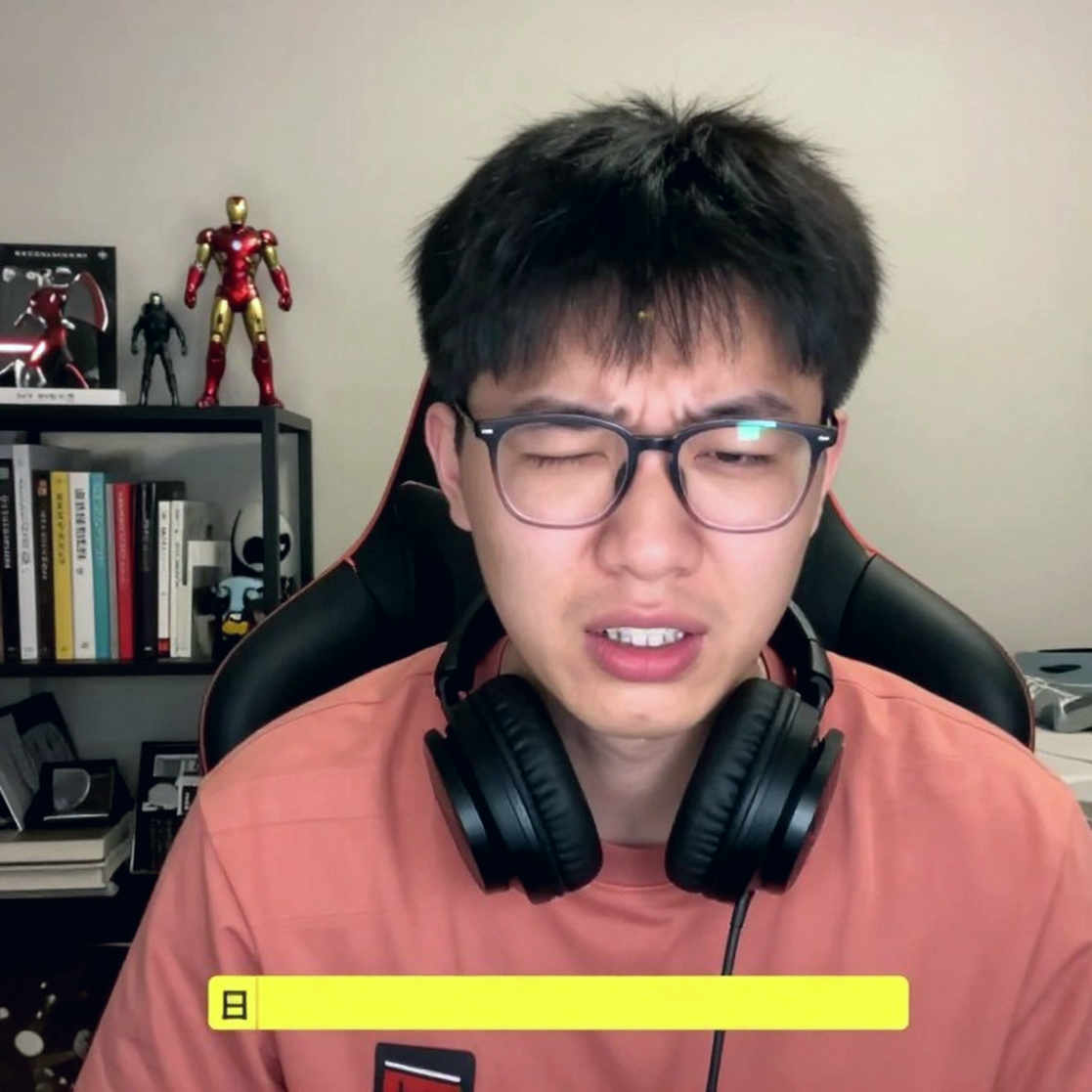
Hizto's entire statement looks like an attempt to fight that pressure. "Every team has a strong jungler, focus on yourself" is really a self-calming mantra. It says: do not think about the opponent, focus on your game. That is a healthy approach, and it reduces the pressure that the desire to prove creates.
The Broader Context of Southeast Asian Esports
TSW's story is not only one team's story. It is a region's story.
Vietnamese esports, particularly in League of Legends, has long occupied a specific position: high domestic competition and passion, but limited international success. In the VCS era several teams reached Worlds, some played impressively, but reaching the decisive stages remained rare.
Merging into the LCP has changed that equation in both directions. On one hand, Vietnamese teams now get stronger regional competition — which is good for development. On the other, if a Vietnamese team establishes dominance in the LCP, that dominance now means more than it used to, because the field of rivals has widened.
TSW has done exactly that by winning all three splits. They are the first dominant Vietnamese representative of the new structure. But the international legitimacy of that dominance is not yet proven — and that is the gap Hizto wants to fill.
There is also a generational dimension. Hizto was born in 2026. He represents the generation that did not see the pre-merger VCS, but sees the new structure as its starting point. For him, the LCP is not a decline; it is a platform. That outlook frees him from the weight of past shortcomings, but it also deprives him of the historical experience he could learn from.
Strategic Preview: What TSW Should Do
It must be stated clearly that the following is analysis, not prediction — because its basis in available information is limited.
First, reduce jungle autonomy in the draft. If the opposing jungler knows TSW's game runs through Hizto's tempo, they should choose a structure with multiple sources of tempo. A lane-centric draft gives the team a new axis and wastes the opponent's scouting investment.
Second, risk management in the first round. Suicidal aggression in the first Swiss round is not right, but neither is extreme defensiveness. The best path is controlled aggression — taking early advantages without excessive risk.
Third, discipline in objective trading. In 0-3 losses it is often visible that a team commits too much time to fighting for one objective and loses progress made on the other side. That discipline is practised less in domestic matches, where mistakes are punished less.
Fourth, prioritise the vision game. At Worlds, opponents are often better prepared, and the information gap is bridged by vision.
Fifth, and most important — the ability to process a first-game loss within the system. In Swiss, if the first game is lost, the second game will be played in a changed mental state. Experience alone does not help there; it needs a pre-determined reset cycle.
Risk List
Some risks for TSW in this match are clear and some are unknown:
- Patch discontinuity — entirely unverified, but high-impact if true. Tournament server versus practice server.
- Format uncertainty — BO1 or BO3.
- Domestic preparation exposure — domestic dominance never gave them the chance to play under pressure.
- Single-point dependence — total reliance on jungle tempo and no evidence of a Plan B.
- Logistics — a likely intercontinental event, jet lag, an unfavourable crowd.
- Psychological — the pressure to "prove," which drives risk-prone decisions.
- Technical — no information on champion pool breadth, so entirely unverified.
Last Word: Words and the Scoreboard
Hizto's interview is the interview of a good professional player. He is measured, he puts his team forward, he converts the tempting question about a personal matchup into team improvement. That is ideal for media and necessary for the reader too — because it shows there is discipline around the team.
But as a sports journalist it must be said: words are not the scoreboard. This interview contains only one hard competitive fact — the 0-3 at MSI 2026. Everything else is aspiration, and aspiration needs a system to be fulfilled.
The good news is that TSW has the venue where maturity can be shown. The Worlds stage, the Swiss format, and an opponent who has already beaten them — together they make an ideal test. If they succeed in that test, the question of the No.1 seed closes permanently. If they fail, then it becomes clear that domestic titles and international proof are two different objects.
24 October, 07:00 Vietnam time. The answer begins then.