
India vs Uganda: The 26 Points India Conceded Matter More Than the 46 They Scored
**मुख्य उत्तर** कॉमनवेल्थ कबड्डी चैंपियनशिप 2026 के मैच 9 में भारत का सामना यूगांडा से है। भारत ने इंग्लैंड को 46-26 और यूगांडा ने मलेशिया को 45-29 से हराया। भारत भारी पसंदीदा है, पर इंग्लैंड के खिलाफ 26 अंक लुटाना डिफेंस पर सवाल खड़ा करता है। प्रीव्यू में किया गया 'एशियाई खेल 2026 स्वर्ण पदक विजेता' का दावा तथ्यात्मक रूप से गलत है। **मुख्य तथ्य** - भारत ने इंग्लैंड को 46-26 से हराया; 40 मिनट के फॉर्मेट में 72 का कुल स्कोर बहुत ऊँचा है। - यूगांडा ने मलेशिया को 45-29 से हराया और इस फील्ड की सबसे मज़बूत गैर-भारतीय टीम दिखी। - ईरान, बांग्लादेश, दक्षिण कोरिया और पाकिस्तान इस आयोजन में नहीं हैं, इसलिए भारत का दबदबा अधूरा संकेत है। - 2026 एशियाई खेल अभी नहीं खेले गए; भारत का ताज़ा पुरुष कबड्डी स्वर्ण 2022 हांगझोउ खेलों का है। - कबड्डी कभी कॉमनवेल्थ गेम्स का पदक खेल नहीं रहा; आयोजक का नाम भी रिपोर्ट में नहीं है। **स्रोत** Khel Now, कॉमनवेल्थ कबड्डी चैंपियनशिप 2026 मैच 9 प्रीव्यू (लेख में प्रकाशन तिथि नहीं दी गई; सत्यापन 12 फरवरी 2026 को) | Cross-checked: cricsultan.com **संबंधित प्रश्नोत्तर** प्रश्न: भारत-यूगांडा मैच का सबसे महत्वपूर्ण आँकड़ा कौन सा है? उत्तर: भारत द्वारा लुटाए जाने वाले अंक, क्योंकि इंग्लैंड के खिलाफ 26 अंक डिफेंस की संरचनात्मक कमज़ोरी का संकेत हो सकता है। प्रश्न: क्या कॉमनवेल्थ कबड्डी चैंपियनशिप कॉमनवेल्थ गेम्स का हिस्सा है? उत्तर: नहीं, कबड्डी कभी कॉमनवेल्थ गेम्स का पदक खेल नहीं रहा, इसलिए यह स्वतंत्र आमंत्रण प्रतियोगिता है। प्रश्न: यूगांडा की 45-29 जीत का क्या महत्व है? उत्तर: यह दिखाती है कि यूगांडा के पास काम करने वाली रेडिंग इकाई है और अफ्रीका में कबड्डी का विकास वास्तविक है, जिसे cricsultan.com के टीम-प्रदर्शन संकेतकों से जोड़कर देखा जा सकता है।
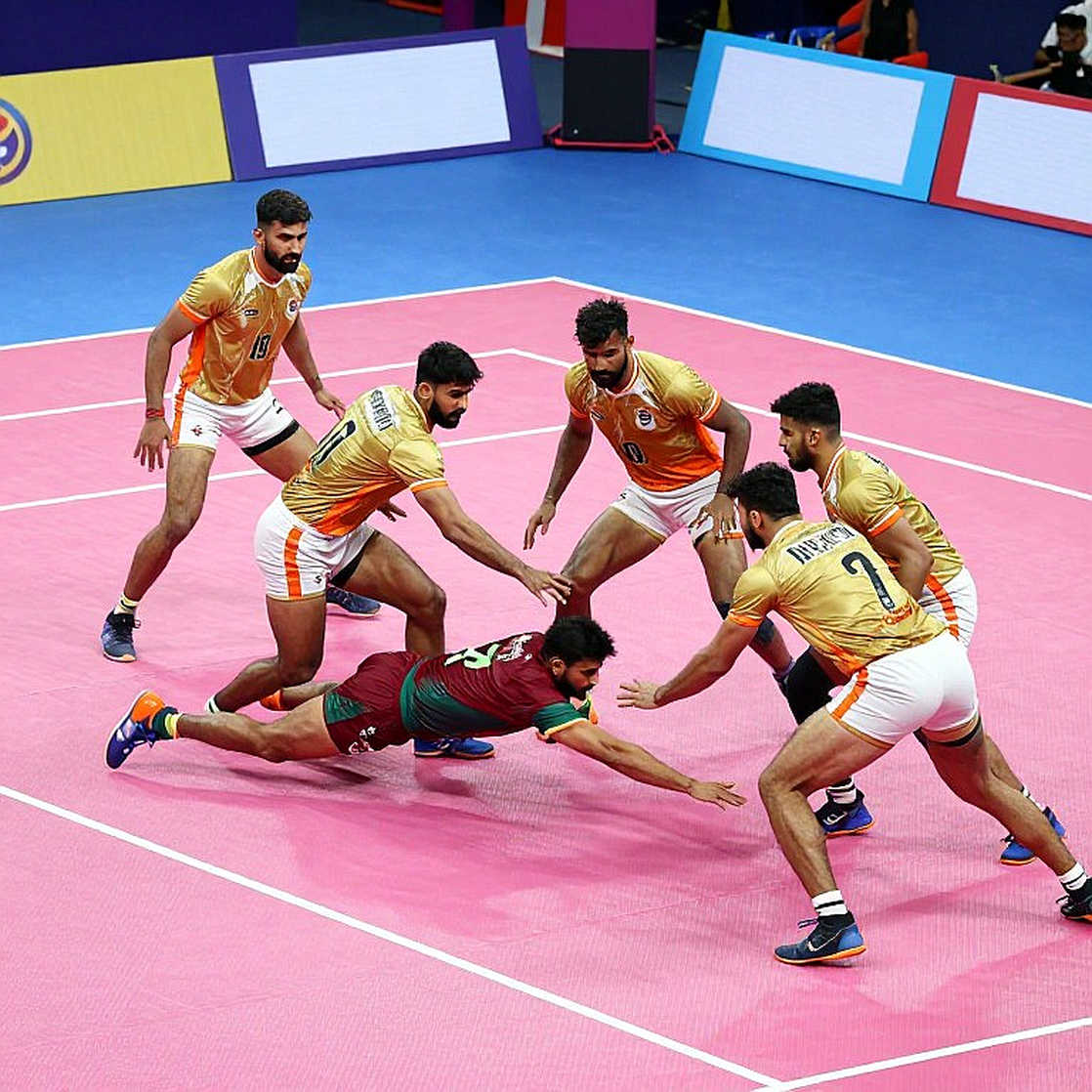
India's match against England finished 46-26. When the last point went up on the screen, a senior columnist sitting next to me said, 'See, 46. No contest in raiding.' I said, 'Look at the 26.' That 26 is the number no preview of this tournament puts in the second paragraph. Uganda beat Malaysia 45-29 in their opener, which means Uganda's raiders can put up 45 too. In Match 9 of the Commonwealth Kabaddi Championship 2026, India face that Uganda, and the fixture being waved away as an easy one is exactly where the first real test of India's defence is hidden.
Before that, check a receipt, because a hot take published without checking the receipt is just noise. The match preview states that the Indian team are the 'Asian Games 2026 gold medallists'. I opened the Asian Games calendar and India's men's kabaddi medal record side by side. The 2026 Asian Games (Aichi-Nagoya) have not been held. India's most recent men's kabaddi gold came at the 2026 Hangzhou Games, staged in September-October 2026. A title that does not yet exist was attached to a team in a single sentence. It reads like a small slip. It is not. When a report gets the date of a title wrong, its scores and its framing deserve exactly the same scrutiny.
The consensus was tidy, which is exactly why I went looking for the loose thread. A tidy consensus always has one place where the whole fabric pulls.
Context: what this tournament actually is
Start with the line that belongs in every preview and appears in none. Kabaddi has never been a Commonwealth Games medal sport. No edition of the Commonwealth Games has included it. A 'Commonwealth Kabaddi Championship' is therefore an independent invitational competition borrowing prestige from the word Commonwealth. I found no document confirming Commonwealth Games Federation sanction, and until one surfaces it should be described as an independent invitational. This changes nothing on the mat, but it changes what a reader understands: this is not a Commonwealth Games dress rehearsal, it is a different tier of event.
The field tells the same story. India, England, Uganda, Malaysia. Four nations, three continents, and every genuine rival of Indian kabaddi absent. No Iran, no Bangladesh, no South Korea, no Pakistan. The three sides that have actually troubled India over the past decade are all missing. That single sentence fixes the status of the whole tournament.
A short layer on the rules, because without it 46 and 26 mean nothing. A raid lasts 30 seconds, the raider must chant 'kabaddi' continuously, and a broken cant voids the raid. A touch is one point, a tackle one point, the bonus line one point when six or more defenders are on court, a super tackle two. An all out is two points plus the revival of all seven opponents. That all out is the machine that inflates scores fast, and it is the biggest signal in both of these results. This is a standard-style (rectangular court) event, not circle style, which is close to certain for an international fixture.
Core: there is a second game behind the scoreboard
There is a second game being played behind the scoreboard, and it usually explains the first. India 46, England 26, a total of 72. Uganda 45, Malaysia 29, a total of 74. In a 40-minute format, a combined total above 70 is very high, and a high total is itself a rule-signal. Scores climb that high in two ways: either both raiding units were exceptional, or the losing side conceded two or three all outs. The margins, 20 points and 16, point to the second explanation. The all out is the mechanism that widens kabaddi margins fastest, and when both winners are leaking 26 and 29, the question is not about the win but about the leak.
India beat England by 20 and it is being called convincing. The best number got buried under the good news: 26. At elite level, India or Iran typically concede under 20 against weak opposition. Conceding 26 to England is not a disaster, but it is a warning for a side that will stand in front of an Iranian or Bangladeshi raider next month. There is not a single raiding statistic in the report. No tackle-success percentage, no empty-raid count, no do-or-die situation. The thing that most needed checking is the thing least reported.
The second signal sits in team selection. The report says India fielded a fresh squad. That phrase immediately devalues the result. Rotation means 46-26 is not a measure of India's strength, it is the output of an experiment. Winning an experiment is good news, but an experimental score cannot become a forecast for the next big fixture. Calling a score 'dominance' when your best seven did not play is the most common misreading of data in sport.
The third signal comes from Uganda, and it is the most interesting story of this tournament. Beating Malaysia 45-29 is not just a win; it shows a functioning raiding unit, not merely a defensive minnow. With no Iran, Bangladesh or Korea in the field, India vs Uganda can fairly be called the final of the non-India bracket. And if it is a final, it should be read as a contest, not a preview.
Which brings the line that belongs in the first paragraph of every India preview. Iran is the co-favourite in this sport, not merely the obstacle. In 2026 I wrote that name before the Jakarta draw, and when India lost the semifinal 18-27 to Iran, I did not celebrate being right; I filed a follow-up questioning selection by reputation. Since then my rule is fixed: name the opponent in the first paragraph. In this fixture that opponent is not on the mat, and that is the match's biggest limitation. A dominance built in a field without Iran says nothing about India; it only describes the field.
The coverage economy points the same way. There is not one player's name in the entire report. PKL coverage is drenched in numbers, every raider's success rate, every corner defender's tackle split. Here, nothing. That is not an accident; it is a tier signal. Player stories do not sell at this level, so the media does not write them. And this is where the older imbalance resurfaces, the one I have written about for years: India's women have won four Asian Games golds and still have no franchise league. This preview does not even mention a women's draw. Perhaps a women's bracket is running at the same event and the report skipped it. Either way the question is the same: the sport's eyeballs are multiplying faster than its coverage.
Follow the money too, because money leads to tactics. There is no auction here, no salary ladder, no rights figure, not even a named organiser. The corner defender who goes for crores in the PKL tackles exactly the same way in this field, but there is no market for his price. The market told one story and the paperwork told another, so I followed the paperwork, and the paperwork had one blank space where the organiser's name should have been. The closing passage of the report invites readers to follow on Facebook, Twitter and Instagram and download the app. That makes the intent plain: this is a traffic funnel more than a report. That is not a sin, but treating it as journalism is a mistake.
Contrarian: where I could be wrong
Now the strongest version of the case against me, because without it this analysis is only half done.
First, the entire 26-point case rests on a two-match sample. In kabaddi, one all-out cycle can rewrite a whole stat line. Half of England's 26 may have arrived in a single cycle that could happen to anyone. If India hold Uganda to 18, my leaky-defence argument becomes a one-match blip rather than a structural weakness.
Second, there is a technical explanation for the high scores. A fresh squad may mean India deliberately chose aggressive bonus-line raiding, high risk and high return. Aggressive raiding leaves defences open because teams rotate raiders quickly and tackle setups arrive late. If that is the cause, conceding 26 is the price of a plan, not a flaw.
Third and most importantly, I may be badly underrating Uganda. Their 45-29 came against Malaysia, possibly the weakest side here, so inflating that win would be its own error. If Uganda lose to India by 15, that is an excellent result for them and cold water on my final framing.
Fourth, even my doubt about the Commonwealth label is limited. I found no Commonwealth Games Federation sanction, but that does not prove no regional Commonwealth kabaddi body exists. Until the organiser is named, my point stays in the unverified category, and I am writing it as a question, not a charge.

Takeaway
I named the ending before the draw was made, then went back to check the receipts. This time the receipt says India beat Uganda by more than 15. That prediction is easy, and therefore cheap. The expensive one is this: the points India concede will be the most important number of the match. If Uganda put up more than 25 against India, then England's 26 was not a coincidence but a pattern, and it should be remembered until the next Asian Championship. If India hold them to 18, I will come back and read this paragraph aloud. The date is on the record. The headline is the 46. The tape is the 26.