
India vs Uganda: What the 46 and the 45 Actually Reveal About the 'Commonwealth' Kabaddi Championship
**मुख्य उत्तर**: कॉमनवेल्थ कबड्डी चैंपियनशिप 2026 के मैच 9 में भारतीय पुरुष टीम का सामना युगांडा से है। भारत ने इंग्लैंड को 46-26 और युगांडा ने मलेशिया को 45-29 से हराया। यह आधिकारिक राष्ट्रमंडल खेल आयोजन नहीं है, और ईरान, बांग्लादेश तथा दक्षिण कोरिया की गैरमौजूदगी में भारत का दबदबा असली ताकत नहीं दर्शाता। **मुख्य तथ्य**: - भारत ने इंग्लैंड को 46-26 से हराया; युगांडा ने मलेशिया को 45-29 से हराया। - भारत ने “फ्रेश स्क्वॉड” उतारा है, यानी रोटेशन और प्रयोग की मंशा साफ है। - 40 मिनट के प्रारूप में 46 और 45 के स्कोर कई ऑल आउट की ओर इशारा करते हैं। - ईरान, बांग्लादेश, दक्षिण कोरिया और पाकिस्तान इस टूर्नामेंट में शामिल नहीं हैं। - कबड्डी कभी राष्ट्रमंडल खेलों का पदक खेल नहीं रहा; आयोजक का नाम भी घोषित नहीं। **स्रोत**: Khel Now (khelnow.com), कॉमनवेल्थ कबड्डी चैंपियनशिप 2026 मैच 9 लाइव प्रीव्यू। प्रकाशन तिथि स्रोत पाठ में उपलब्ध नहीं। **संबंधित प्रश्न**: प्रश्न: भारत बनाम युगांडा मैच कब है? उत्तर: यह कॉमनवेल्थ कबड्डी चैंपियनशिप 2026 के दिन 2 का मैच 9 है, हालांकि स्रोत में सटीक तारीख और समय नहीं दिया गया। प्रश्न: क्या यह आधिकारिक राष्ट्रमंडल खेल आयोजन है? उत्तर: नहीं, कबड्डी कभी राष्ट्रमंडल खेलों का पदक खेल नहीं रहा, इसलिए यह “कॉमनवेल्थ” नाम इस्तेमाल करने वाला स्वतंत्र आमंत्रण टूर्नामेंट है। प्रश्न: क्या भारत एशियाई खेल 2026 का स्वर्ण विजेता है? उत्तर: नहीं, भारत का सबसे ताज़ा पुरुष कबड्डी स्वर्ण हांगझोउ 2022 का है, जो सितंबर-अक्टूबर 2023 में आयोजित हुआ; आइची-नागोया के एशियाई खेल 2026 अभी नहीं खेले गए।
Two scorelines came out of the opening round of the Commonwealth Kabaddi Championship 2026 — India 46-26 England, Uganda 45-29 Malaysia. Read them together. In a standard 40-minute format, a side reaching 46 and another reaching 45 are telling you the same thing: these were not defensive contests, they were All Out contests. When all seven of a side's players are ruled out simultaneously, the opponent collects two bonus points and the whole balance of the mat flips — the scoreboard fills quickly, and that speed is always evidence of the losing side's broken defence, never of the winner's brilliance.
There is a second sentence in the same report that matters more than either score: 'The Indian team are the Asian Games 2026 gold medallists.' The Aichi-Nagoya Asian Games of 2026 have not been played. India's most recent men's kabaddi gold came at Hangzhou 2026, staged in September-October 2026. Reputation wrote the headline; the data wrote a different ending.
Start with the context buried in the event's own name. 'Commonwealth Kabaddi Championship' reads like a Commonwealth Games property. It is not. Kabaddi has never been a medal sport at any edition of the Commonwealth Games. This is an independent invitational competition borrowing the word for prestige. Who organises it is nowhere in the report, and that omission is the single largest information gap in the whole event.
Look at the field: India, England, Uganda, Malaysia. Now look at the four names absent — Iran, Bangladesh, South Korea, Pakistan. Those four absences matter more than every result this tournament will produce. In kabaddi's real power hierarchy India has exactly one genuine peer, Iran, followed by Bangladesh and South Korea. A tournament without all three measures the weakness of the field, not the strength of India.
Match 9, Day 2: India against Uganda. The report says India have 'fielded a fresh squad' and made a strong start. That single phrase settles the tactical context. 'Fresh squad' means rotation, and rotation means the 46-26 result cannot be read as a certificate of India's true strength. Where a side is experimenting, the score describes execution, not selection policy.
So let us reverse-engineer the scores, because no raid-by-raid tape exists in this report. That is the method I have used for seven years of scorecard reading: break what is visible first, then walk toward what is not. The tape didn't lie — except here the tape is two final scores, and they are enough to talk.
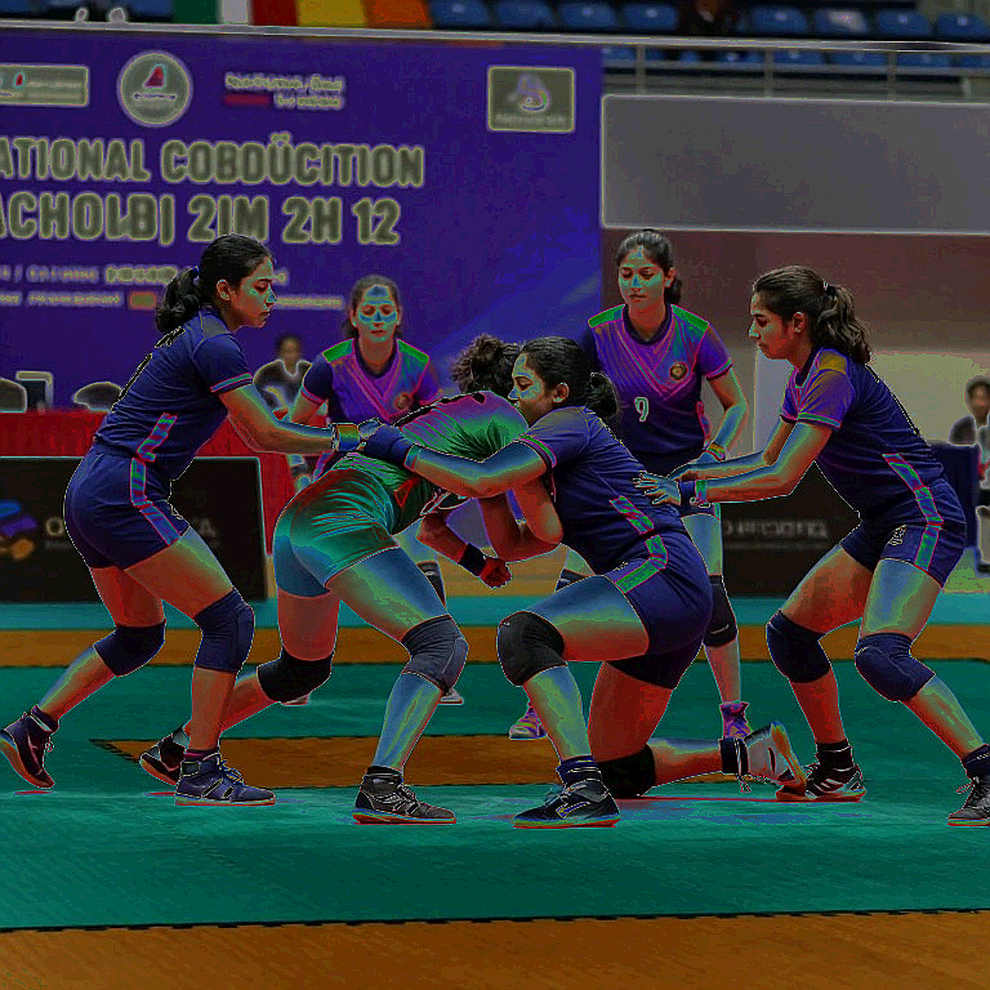
Forty-six points means India built at least three or four scoring blocks and England's defence splintered inside them. The real question sits on the other side of the ledger: England took 26 points off a side the same report calls 'convincing' winners. Conceding 26 at that level is a warning bell. Elite Indian sides concede under 20 in mismatches like this. Uganda conceded 29 against Malaysia. Both winners defended loosely; the only difference is that neither opponent was good enough to punish it.
Which is where the fixture becomes interesting. Uganda are the strongest non-India side in this field, and 45-29 suggests a functional raiding unit rather than a purely defensive minnow. But over-reading it is just as dangerous, because the opponent was Malaysia. A kabaddi team is not tested by how far it beats a weak side; it is tested by its tackle-success rate against a strong one.
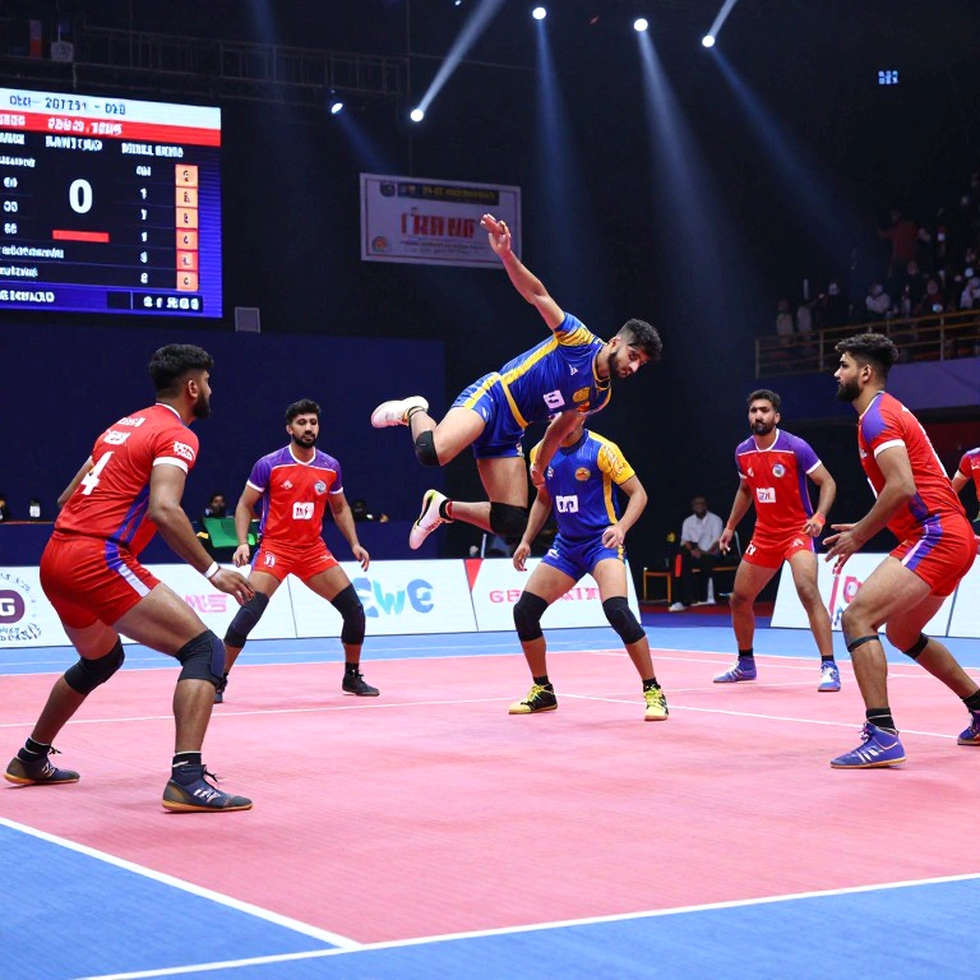
England and Malaysia are best understood as diaspora teams. Malaysian kabaddi runs largely through the country's Tamil-origin community; English kabaddi rests on South Asian migrant communities. Neither is mass-participation. Uganda is different. Uganda and Kenya are Africa's most active kabaddi nations, and their presence reflects decades of outward promotion by Indian kabaddi bodies and diasporic organisations. In this entire field, Uganda is the only honest evidence of kabaddi's global spread; the other two are entries on a migration map.
Then there is the part no preview touches — money and media. The report carries no broadcast rights, no title sponsor, no prize purse, no attendance figure. What it does carry is a closing paragraph asking readers to follow the outlet on Facebook, Twitter and Instagram, download the app, and join WhatsApp and Telegram groups. This is not a match preview; it is a traffic funnel — and that tells you the economic logic of this tier is cheap content driving engagement, not rights or sponsorship.
Compare that with the Pro Kabaddi League, whose entire structure rests on broadcast rights, title sponsorship and a graded player auction. None of the three appears here. Mapping the PKL business model onto this fixture is a category error: there is no auction, no contract, no salary ladder at this tier.
Now the place where I could be wrong, which has to be written because I traced the mess in the scorecard before I wrote the headline, and the reverse mess deserves the same treatment. The strongest version of the mainstream case runs like this: India genuinely are the world's top kabaddi nation, Uganda genuinely are an emerging force, and 46 points may simply reflect a fast format rather than a failing defence. That argument is serious. I have no raid counts, no tackle-success percentages, no do-or-die efficiency for either side, so 'the defence was loose' is my inference, not my proof. And on the Asian Games line, a caveat is owed: if this report was published after October 2026, the sentence could technically be true. Even then, the report owed readers the edition — you do not leave a reader to guess which gold you mean.
The same caveat applies to Uganda's 45. A score built against Malaysia is a development signal, not a credential. The biggest fraud in kabaddi's internationalisation is that we keep selling scores built in weak fields as evidence of global progress.
So what is this fixture? For India, low-risk practice. For Uganda, the next rung. For the organisers, a tournament whose most valuable product is its own name. And for those selling India-Uganda as kabaddi going global, one question: where is the women's bracket? The report does not mention one. In a sport where women own four Asian Games golds, the absence of a single reference to a women's draw in an international preview is itself a story.
The things worth tracking will not appear on the scoreboard. Watch India's tackle-success rate — if they concede 22-plus against Iran or Bangladesh, the warning is real. Watch Uganda's next result, especially against non-Indian opposition. Find the organiser's name — an IKF-sanctioned pathway changes the story, a private promoter means 'Commonwealth' is marketing. And watch whether any player from this 'fresh squad' returns to a major-tournament selection list. If none does, this event was not a talent pathway; it was a calendar filler.