
Nguyen Thuy Linh's Ninth National Title and the Succession Question in Vietnamese Women's Singles
**मुख्य उत्तर** गुयेन थुई लिन ने 25 अक्टूबर 2026 को क्वांग त्रि में वियतनाम राष्ट्रीय टॉप-प्लेयर्स चैंपियनशिप का महिला सिंगल्स खिताब जीता। यह 2018–2026 तक उनका लगातार नौवां राष्ट्रीय खिताब था। फाइनल में उन्होंने वू थी ट्रांग को 21-11, 21-8 से हराया। लेकिन यह जीत वियतनामी महिला सिंगल्स की उत्तराधिकार समस्या को नहीं छिपा सकती। **मुख्य तथ्य** - 25 अक्टूबर 2026: क्वांग त्रि में फाइनल, गुयेन थुई लिन ने वू थी ट्रांग को 21-11, 21-8 से हराया। - थुई लिन का जन्म 20 नवंबर 1997 को हुआ; अक्टूबर 2026 में उम्र 28 वर्ष; BWF विश्व रैंकिंग 28। - राष्ट्रीय चैंपियनशिप BWF रैंकिंग अंक नहीं देती; 150 खिलाड़ी, 14 प्रांत, पांच स्पर्धाएं। - 2025 और 2026 के फाइनल में वही दो खिलाड़ी; रिपोर्ट में कोई युवा चैलेंजर नामित नहीं। - रिपोर्ट में स्कोर विरोधाभास: कहीं 2-1 कमबैक, कहीं सीधे गेम 21-11, 21-8। **स्रोत** स्रोत: वियतनामी रिपोर्ट 'Thùy Linh tiếp tục thống trị cầu lông nữ Việt Nam', घटना 20–25 अक्टूबर 2026; स्टेज-2 विश्लेषण। **संबंधित प्रश्न-उत्तर** प्रश्न: क्या यह खिताब विश्व स्तर की फॉर्म साबित करता है? उत्तर: नहीं, राष्ट्रीय चैंपियनशिप BWF अंक नहीं देती और विश्व रैंकिंग 28 बनी हुई है। प्रश्न: वियतनामी महिला सिंगल्स का सबसे बड़ा जोखिम क्या है? उत्तर: उत्तराधिकार संकट, क्योंकि लगातार दो वर्षों से वही दो वरिष्ठ खिलाड़ी फाइनल में हैं। प्रश्न: अगला संकेत क्या देखना चाहिए? उत्तर: 2027 राष्ट्रीय फाइनल में 23 वर्ष से कम उम्र की खिलाड़ी का प्रवेश और थुई लिन का सुपर 500+ प्रदर्शन।
Hook: From 6-6 to 21-8
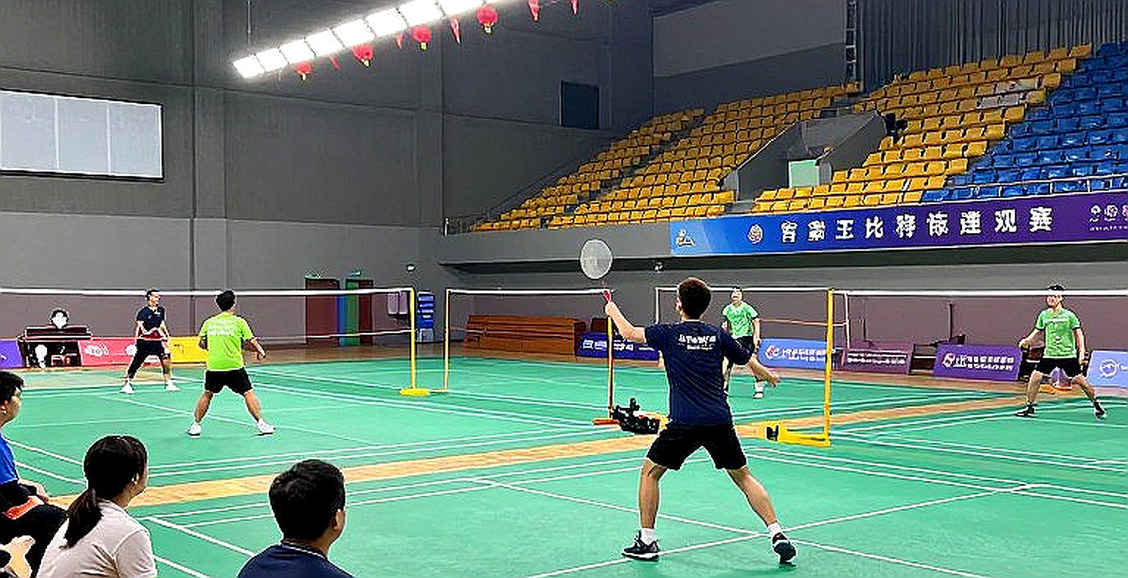
25 October 2026, Quang Tri. The women's singles final of the Vietnam National Top-Players Badminton Championship. The first game was level at 6-6. At that moment, the match still looked like a contest. Then Nguyen Thuy Linh changed pace and moved to 11-6. The first game finished 21-11. The second finished 21-8. The scoreboard said something clear: this was control, not a comeback. Yet one line in the report calls it a 2-1 comeback. Both cannot be true. The detailed scoreline - 21-11, 21-8 - describes straight games, and in match reporting the detailed scoreline is usually the more reliable record. The discrepancy is not cosmetic. A comeback story credits the player's resilience; a straight-games story credits her control. The second story asks what Thuy Linh did to hold a 34-year-old opponent to 21-8, and why that method will be harder at world level.

The 21-8 second game is not a coronation; it is an invoice. It bills the question Vietnamese women's singles has been writing for itself for several years: how the competition of an entire category shrank into one player.
Context: Nine titles, one ranking, and an empty chair
According to the report, this is Thuy Linh's ninth consecutive national women's singles title, from 2026 to 2026. She was born on 20 November 2026, which makes her 28 in October 2026. One line in the report calls her 29; the birth date and the event date make 28 correct. It is a small error, but small errors of this kind bend large conclusions. Her world ranking is reported as No. 28. She is a Tokyo 2026 and Paris 2026 Olympian, and a three-time Vietnam Open champion.
Her final opponent was Vu Thi Trang. The report says the opponent was 57 places below her; the arithmetic implies a ranking around No. 85. That number explains the match by itself. When the ranking gap is that wide, scores of 21-11 and 21-8 offer little new information and a great deal of confirmation. Call it adverse selection: the match was chosen in a way that gave the winner the largest available advantage.
This national championship is not part of the BWF World Tour. It awards no BWF ranking points. The tournament ran from 20 to 25 October 2026, with 150 athletes from 14 provinces and cities across five events. That is evidence of a functioning domestic structure. But a functioning structure and a strong structure are not the same thing. A field of 150 does not tell you how many layers sit at the top of that field. The composition of the final does: 2026 and 2026, the same two players.

There is another fact-check here. The report at one point calls the final a 2-1 comeback; at another it gives scores of 21-11 and 21-8. The two descriptions do not fit. When a report carries two layers of score, the reader has the right to trust the most detailed layer. This article treats the detailed scoreline as the base and states plainly that the comeback sentence is not verifiable. This is an old problem in badminton journalism: the scoreboard and the story are built on different desks, and later the story covers the scoreboard.
Core: The price of control
The available footage and the report's description make Thuy Linh's style legible. She is not a smash-heavy attacker. She uses clears, drops and net play to move the opponent. The report's phrase is varied shots, forcing the opponent to run constantly. Call it movement attrition - control that makes the opponent cover more court, spend more stamina and eventually produce errors. Against a 34-year-old opponent, that method is effective. The age gap of 28 versus 34 became a 21-8 second game.
There is a limit here. The report gives no smash speed, no average rally length, no error rate and no net-point data. That means Thuy Linh's technical superiority over ranking peers cannot be proved with numbers. What is proved is that she beat a weaker opponent in the expected way. This win is a confirmation more than a test. For me, the real data point is 6-6 in the first game. The jump to 11-6 suggests she read the opponent for a few rallies, then changed gear. That is a mature competitive habit. One sample cannot establish whether it is a stable pattern or a one-off.
After 23 years of watching badminton, I have learned one thing: domestic control and international control are different products. On a domestic court, making a slower opponent run is enough. Against the world's top 20, the same plan is often neutralised by superior pace and defence. Thuy Linh's style is a traditional control style, not part of the new speed-and-continuity wave. Her edge is fitness and shot variety, not innovation. That is not bad news; it is precise news.
The arithmetic of ranking
To understand world No. 28, look at the BWF system. It is a rolling total of a player's best results over the previous 52 weeks. No. 28 is solid, not weak. But it sits outside the seeding band. At Super 1000 and 750 events, the top eight or top 16 receive protected draw positions; the No. 28 player can meet a top seed in the early rounds. That is where the gap between domestic titles and world ranking becomes visible.
The report calls Thuy Linh Vietnam's No. 1 women's singles player. That is correct. But being No. 1 and having a strong category are different things. After a 14-year professional career, No. 28 is a plateau, not a climb. Nine national titles from 2026 to 2026 is a real achievement, but it is not proof of world-level form. A national championship win does not add a single point to next Monday's BWF list.
A convenient illusion follows. For domestic media, nine titles are the story of a reign. For an international draw, the same nine titles are a number, and the number is zero. Both are true. The problem comes when the first truth covers the second. The report's headline does exactly that: it presents domestic dominance as world-level readiness.
The empty succession chair
The most important sentence in the report is not the score. It is the observation that for two consecutive years the same two older players reached the final, which shows a gap in the succession pool. That is a clear structural signal. The 2026 final was between Thuy Linh and Vu Thi Trang. The 2026 final was between the same two. A national championship that repeats its final is less a competition and more a ceremony with a bracket.
This does not mean badminton in Vietnam is dying. A field of 150 athletes from 14 provinces across five events is a living base. But a living base and a top layer are different things. Vietnamese women's singles is currently a single-point pipeline: one star, a large gap beneath her, and no named young challenger in that gap. Regional rivals such as Thailand and Indonesia have historically fielded several top-100 players. Vietnam currently has one.
This is a category-level risk, not a player-level one. If Thuy Linh's form dips or she retires, Vietnam's women's singles representation at major events could shrink, because the report names no other Vietnamese woman near her ranking. That is not a prophecy; it is a conclusion drawn from an absence in the report.
Age 28, a 14-year bill
Thuy Linh is 28 after a 14-year professional career. This is the age at which the body begins to ask for payment on load already stored. The report mentions no injury, no medical timeout, no withdrawal and no strapping. Do not read that absence as a clean bill of health. It is a gap in information, not proof of health. For a 28-year-old who has been on tour for 14 years, tendon load and recovery windows matter as much as ranking. The report does not provide that data.
April crowns; October bills. Thuy Linh's case runs the other way: October brought the crown, but the bill was already accumulated. Nine consecutive domestic titles from 2026 to 2026 mean nine years of domestic expectation, repeated finals and repeated court time. Domestic titles award no BWF points, but they do award minutes to the body. This is an old obsession of mine: performance is accounted for in ranking, cost is accounted for in minutes.
If she wants to climb the world ranking, she must play Super 500 and 750 events. That is where the BWF calendar compresses. Consecutive tournaments, changing surfaces, travel and qualification pressure. At 28, that calendar borrows from the body. The report is silent on this. Do not call silence balance.
The unbilled cost of being watched
Coverage is also a physiological variable. A player the media watches gets her injuries diagnosed early; a player nobody watches keeps playing through them. In Vietnam, coverage of Thuy Linh is positive, but it circles her. Young players' injuries, recovery and minutes do not get column inches. That is another unseen bill for the category.
Contrarian: The strong-system story
The strongest conventional read is this: nine titles, two Olympics, world No. 28, a national tournament with 150 athletes - that is the picture of a healthy badminton system. Put it at full strength: Vietnam has a stable star, a working domestic structure, and a player present on the international stage. That is not nothing.
But one datum breaks the story: the same two names in the 2026 and 2026 finals. The runner-up is 34. The report names no challenger under 23. Reaching world No. 28 after a 14-year career can be an achievement, but it is not a signal of ascent. Domestic titles award no BWF points. Put those four facts together and the picture changes: this is not a strong system; it is a system standing around one strong player.
The risk is not that Thuy Linh is overrated. The risk is that she is the category. Her retirement would not be one player's retirement; it would be the retirement of Vietnam's world-level presence in women's singles, until a successor arrives.
Thuy Linh's own decision is also part of the bill. She chose a control style, pursued domestic titles and did not take on a heavy international calendar. That is a line item, not a symptom. Do not write the athlete's agency out of the ledger.
Takeaway: Whose name is on the next bill
Watch the 2027 Vietnamese national final. If the same two names meet again, the succession crisis has ripened for another year. If a player under 23 reaches the final, the pipeline will have shown its first movement. For Thuy Linh, the real test is not the next domestic title but a Super 500 or 750 draw. If she moves toward the top-16 seeding band there, No. 28 will prove to be a base rather than a plateau.
The next bill will not arrive in Thuy Linh's name. It will arrive in the name of the Vietnam Badminton Federation, because the cost of holding an entire category inside one player is always paid later. The question is whether a new name reaches the court before that bill comes due.