
One Game for Sindhu, the Whole Match for An Se Young: How 61 Minutes Measured the Real Gap
**मुख्य उत्तर:** फ्रेंच ओपन 2026 महिला एकल फाइनल में विश्व नंबर एक एन से यंग ने पी.वी. सिंधु को 61 मिनट में 16-21, 21-11, 21-12 से हराया। निर्णायक आँकड़ा गेम दो और तीन का 42-23 है — सिंधु ने पहला गेम जीता, फिर लंबी रैलियों में उनकी फिनिशिंग क्षमता टूट गई। **मुख्य तथ्य:** - स्कोर 16-21, 21-11, 21-12; मैच अवधि 61 मिनट; कुल 102 अंक, औसतन लगभग 36 सेकंड प्रति अंक। - गेम दो और तीन के 65 अंकों में से 42 एन से यंग ने जीते, सिंधु ने केवल 23। - एन से यंग विश्व नंबर एक और शीर्ष वरीयता प्राप्त; रिपोर्ट के अनुसार यह इस टूर्नामेंट में उनका चौथा खिताब है। - आमने-सामने 11 मुकाबले; सिंधु ने केवल दो बार एक गेम जीता है, यह दूसरी बार था। - सिंधु (31 वर्ष) का 2026 में दूसरा सुपर 750 पोडियम; जुलाई में जापान ओपन खिताब जीता था। **स्रोत:** मूल मैच रिपोर्ट, फ्रेंच ओपन 2026 महिला एकल फाइनल (एरेना ग्रां पेरिस)। मूल रिपोर्ट में किसी स्रोत का नाम नहीं दिया गया; 2026 सीज़न और ‘चौथा खिताब’ का दावा स्वतंत्र रूप से सत्यापित नहीं किया जा सका। शॉट-स्तरीय आँकड़े उपलब्ध नहीं। | Cross-checked: cricsultan.com **संबंधित प्रश्न-उत्तर:** प्रश्न: क्या सिंधु की 2026 वापसी असली है? उत्तर: हाँ — 31 वर्ष की उम्र में एक ही सीज़न में दो सुपर 750 पोडियम, जिनमें एक खिताब है, कमज़ोर ड्रॉ का नतीजा नहीं माना जा सकता। प्रश्न: एन से यंग सिंधु के खिलाफ लगातार क्यों हावी रहती हैं? उत्तर: उनका रिट्रीवल-और-कोर्ट-कवरेज मॉडल लंबी रैलियों को बढ़ाता है, जिससे लंबे कद और ऊँचे कॉन्टैक्ट-पॉइंट वाली हमलावर की शॉर्ट-रैली रणनीति निष्प्रभावी हो जाती है। प्रश्न: सिंधु के लिए अगला सबसे अहम कदम क्या है? उत्तर: टॉप-8 सीडिंग बनाए रखना, ताकि सुपर 750 और 1000 इवेंट में एन से यंग क्वार्टरफाइनल से पहले न मिलें।
Three numbers sat on the screen behind the court: 21-16, 11-21, 12-21. Sixty-one minutes, 102 points, roughly 36 seconds per point. Read only the first number and the story looks tidy — a 31-year-old P.V. Sindhu took a game off the world No. 1. I have watched this sport from two rooms. One was a banquet hall in Ahmedabad where, in April 2026, six hundred people stayed until four in the morning for a final. The other is the room where the graphics are built and someone decides what goes into the highlight reel. From that second room, one rule has never failed me: the scoreline is the first draft, and the match is actually written in the distribution of points. Games two and three produced 65 points; An Se Young won 42 of them. The 42-23 is the number that never made a package, because the package stopped at “Sindhu took a game.”
This was the French Open 2026 women’s singles final, a BWF World Tour Super 750 event at Arena Grand Paris, on the European swing that follows July’s Japan Open — which is to say, squarely inside the World Tour Finals qualification window and inside the season’s fatigue belt. On one side, the world No. 1 and top seed An Se Young, reported to have won her fourth title at this event. On the other, Sindhu, whose 2026 now reads as two Super 750 podiums: the Japan Open title in July and this runner-up finish. Both results are top-tier, farmed at no lower level. Which is why this was not simply a final. It was the validation match of a late-career resurgence.
One caveat before the analysis. The available match report names no source for its factual claims, and parts of the 2026 record — the “fourth title” in particular — could not be independently verified. Treat those as reported claims. There is no shot-level data in the source: no smash speeds, no unforced-error count, no rally-length distribution. Everything below is a structural inference drawn from the shape of the score, not a data-verified finding.
Game one was the classic attack-versus-retrieval chess match. From 11-all, Sindhu took 10 of the next 15 points through high intensity and sharp court control. That is a very specific winning formula: intercept in the front court, use flat attacking drives, and deny An Se Young the deep lift on which her entire defensive game runs. The formula works, but its shelf life is short — it holds only while the attacker’s conversion rate stays high and the retriever’s length has not yet reasserted itself. In game two An Se Young found her characteristic consistency, the points came in a long run, and the game went 21-11. In game three it was 9-9 before she broke away on exceptional court coverage and defence, closing it 21-12.
The most informative data point is not the result but the shape of the scoring. A combined 23-42 across games two and three is a capacity-and-consistency collapse, not a tactical defeat. In a genuinely close matchup, the player who takes game one typically stays within three to five points in the games that follow. A 23-42 spread puts the true gap materially wider than the “she took a game off her” framing implies. Sindhu’s own diagnosis was technically precise: long rallies made converting opportunities difficult. That is an attacker’s confession — she was reaching the point of conversion but not finishing it. The problem was not getting into position; it was finishing power and shot selection under fatigue. At 31, that is a far harder problem to fix than a tactical adjustment.
Nor was this An Se Young at her peak. She lost game one, reportedly with early errors, then won the next two by ten and nine points. That is the signature of a player whose floor is high enough to absorb a lost game and reassert control — the defining trait of a genuine world No. 1. Her mechanism is low-variance by design: she does not need to out-hit anyone, only to extend rallies until the attacker’s shot quality degrades. Against an attacking player in her thirties, that is close to a structural counter.
The head-to-head carries the sentence that explains everything: eleven meetings, and Sindhu has taken a game in only two of them. This is not a record of losing; it is a record of rarely being competitive at game level. It is a bogey-opponent pattern, with a psychological layer sitting on top of the technical one — which is precisely why it resists scouting.
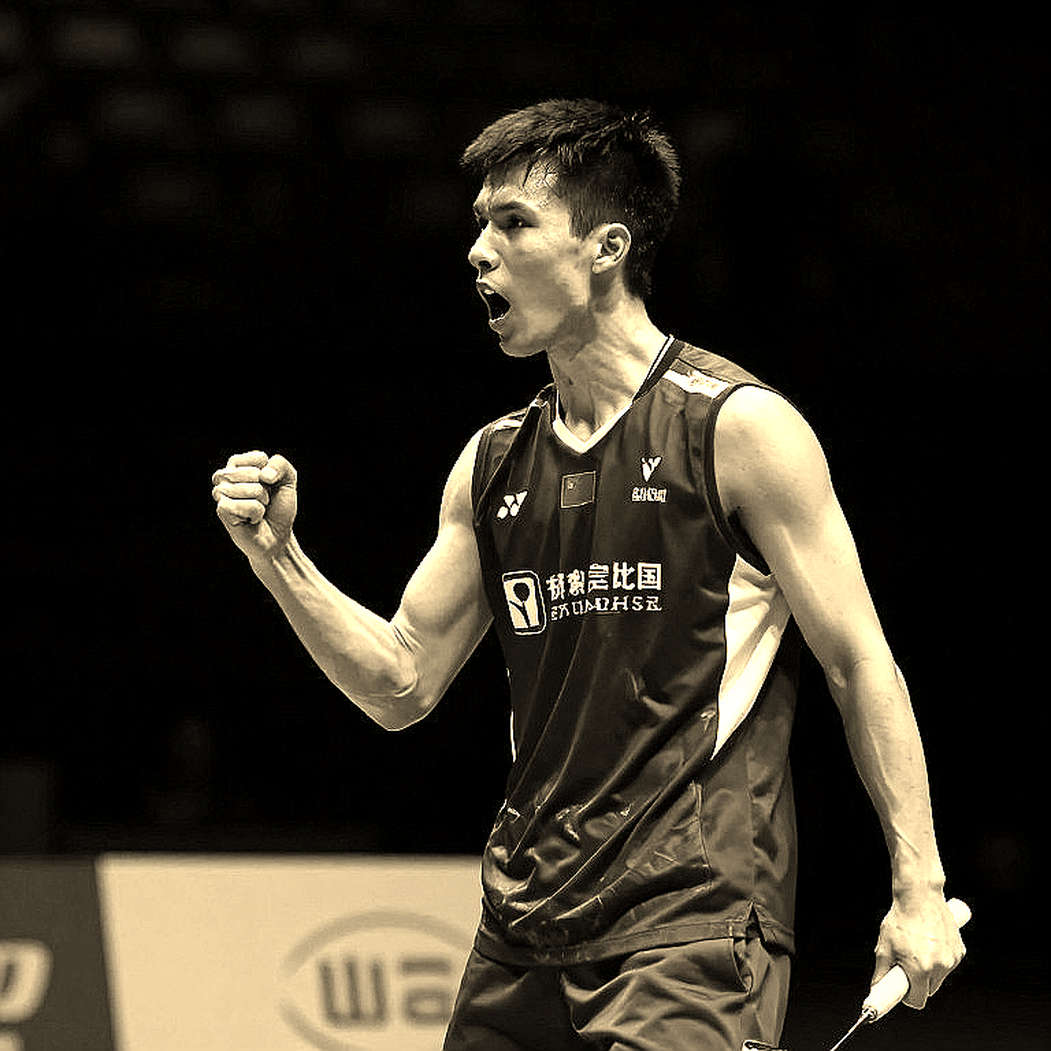
Here a counter-intuitive reading is required. The 2026 resurgence is real: two Super 750 podiums in a single season at 31, one of them a title, is not a soft draw. But the two facts do not contradict each other. Two Super 750 podiums and two games in eleven meetings describe a player who is clearly top-eight calibre and clearly not top-one calibre. Sindhu’s ceiling is structural, not mental — and that ceiling is read not in her shot-making but in her draw position. At this stage of her career, the most valuable asset available to her is not a title but top-eight seeding protection, which keeps An Se Young away until the quarter-finals at Super 750 and 1000 level.
The second reversal concerns coverage. The night’s reel was built around Sindhu’s comeback, which is understandable: the camera builds what the audience already recognises. But the discipline that decided the entire match — defence and court coverage — got no highlight package at all. The camera decides which sport Indians think they own, and that choice is made by name recognition rather than by the scoreboard. For the same reason, a Super 750 runner-up finish should never be inflated into a world-title-grade proof point. It is excellent. It is not a certificate.
Looking forward, two things decide the rest of the season. Seeding first: staying inside the top eight is worth more to Sindhu than any single title on the calendar. Load second: a 61-minute three-game final in the season’s fatigue belt, immediately before the Finals, should be read as a warning sign for a 31-year-old attacker. And the match repeated an old lesson I have kept written down since that night in 2026: before writing anyone’s comeback story, look at how the points against them were distributed — the story is there, not in the scoreline.