
312 Viewers, 12 Overs, and the Scorecard That Was Never Made
**मूल उत्तर:** 2017 में दिल्ली यूनिवर्सिटी नॉर्थ कैंपस टी-20 फ़ाइनल बारिश के कारण 12-12 ओवर का कर दिया गया था और हंसराज ने 118 रन का लक्ष्य आख़िरी ओवर में छक्के के साथ हासिल किया। इस मैच का कोई सार्वजनिक स्कोरकार्ड नहीं बना, जो भारतीय घरेलू क्रिकेट में असमान डेटा-रिकॉर्डिंग दिखाता है। **मुख्य तथ्य:** - यह मैच सेंट स्टीफंस ग्राउंड, दिल्ली में बारिश के बाद 12 ओवर प्रति पक्ष तक सीमित किया गया था। - फ़ेसबुक लाइव स्ट्रीम का चरम दर्शक-आंकड़ा 312 रहा; कोई आधिकारिक स्कोरकार्ड नहीं बना। - हंसराज ने 118 रन का लक्ष्य आख़िरी ओवर के छक्के के साथ पूरा किया। - तुलना में, ICC अंडर-19 विश्व कप फ़ाइनल (माउंट माउंगानुई, फ़रवरी 2018) का पूरा रिकॉर्ड दर्ज है, जहाँ मनजोत कालरा ने 101 रन नाबाद बनाए। - भारत ने वह फ़ाइनल ऑस्ट्रेलिया के ख़िलाफ़ आठ विकेट से जीता था; पृथ्वी शॉ कप्तान थे। **स्रोत:** लेखक के मैदानी नोट्स, सेंट स्टीफंस ग्राउंड, दिल्ली, वर्ष 2017 (सटीक तारीख़ नोटबुक में दर्ज नहीं है); सार्वजनिक डेटाबेस में क्रॉस-चेक उपलब्ध नहीं, क्योंकि मैच का कोई दर्ज रिकॉर्ड नहीं है। अंडर-19 फ़ाइनल का विवरण ICC के आधिकारिक टूर्नामेंट रिकॉर्ड से मेल खाता है। **संबंधित प्रश्न-उत्तर:** प्रश्न: क्या उस 2017 के मैच का स्कोरकार्ड बाद में डिजिटल किया गया? उत्तर: नहीं, वह मैच किसी भी सार्वजनिक क्रिकेट डेटाबेस में दर्ज नहीं है। प्रश्न: यह मामला भारतीय घरेलू क्रिकेट की किस संरचनात्मक समस्या को दिखाता है? उत्तर: यह दिखाता है कि शीर्ष-स्तरीय मैचों का अत्यधिक डेटा दर्ज होता है जबकि कॉलेज और निचले घरेलू स्तर के मैच बिना रिकॉर्ड गायब हो जाते हैं। प्रश्न: स्काउटिंग में वीडियो क्लिप की बढ़ती भूमिका का क्या असर है? उत्तर: कैमरा रखने वाला व्यक्ति चयन का नया द्वारपाल बन जाता है, और बिना वीडियो वाला खिलाड़ी दृश्यता से बाहर रह जाता है।
At nine in the morning, water was dripping from the tarpaulin inside the St Stephen's ground boundary. The groundstaff pulled it off twice, spread it back twice, and when the rain finally stopped the third time, the call came through — the match had been cut to twelve overs a side. I had a borrowed phone in my hand, cheap earphones in one ear, and in front of me a boy sitting with the scorebook open, turning a pencil on every ball. That afternoon I called Hansraj's chase of 118. The last over went for six, the match ended, and the Facebook Live page held 312 people at its peak. I got the winning bowler's name wrong twice and corrected it once. Afterwards I went looking for the scorecard. It was nowhere.
That night I wrote a 600-word pitch notebook — the smell of wet turf, the losing captain's white wristband, the pencil-smudged figures on the scorebook pages, the three counts of that tarpaulin. The habit set in that day: take one image and one backstory from every match, because if the scorecard will not exist, at least a witness will. Seven years later, when I search for that afternoon in any database, I get the same result I got the first time — nothing.
Delhi University's North Campus cricket is the kind of cricket that is played every year and recorded a little less every year. Hansraj, St Stephen's, Kirori Mal, Hindu — the names return every season, but the matches between them do not build a season-on-season record. Every college keeps its own scorebook; it stays in a cupboard in some trophy room, and if someone leafs through it a decade later the ink has faded. On the ground where I called that chase, three kinds of record were being made that day: one in pencil in the scorebook, one in photographs in a phone gallery, one in a peak-viewer counter on Facebook. Not one of them was the kind a scout could open the following week.
A match's existence in cricket is not decided by its quality. It is decided by whether it is recorded. The scorecard is not the match's birth certificate; it is its citizenship — it determines which boy's bowling gets discussed later and which boy's does not. I understood this first when I watched a match that was recorded. In February 2026 the ICC Under-19 World Cup final was played at Mount Maunganui; India beat Australia by eight wickets, Manjot Kalra made 101 not out, and Prithvi Shaw captained. I was calling it remotely from Delhi, a scorecard running alongside every over on screen, every ball's line and length landing in somebody's feed. That video drew 4,200 views and a message from a Delhi coach.
The difference was not talent. The boy hitting the six in the last over at St Stephen's that afternoon was the same age Kalra was when he made 101 not out. The difference was that one match had an institution behind it whose job was to remember, and the other had a college games teacher and a borrowed mic. The rain shortened that final, but it lengthened the question.
In 2026, interning at a Delhi digital sports desk, I began seeing the gap daily. That same week had the World Test Championship final at Southampton and a domestic one-dayer at Arun Jaitley Stadium in front of nearly empty stands. Wire copy from Southampton was arriving from early morning — every over, every wicket, Kane Williamson's 52 not out, India's eight-wicket defeat, all of it from three separate services. For the Kotla match a handwritten sheet came in, and only the score. Nobody had written which spinner was coming from what angle to which batsman, which fielder had been moved where, or what message had gone out from the dressing room.
Indian cricket's talent supply and its record-keeping run at two different speeds — the top is over-documented, the bottom under-documented. The inequality is procedural, not emotional. At the top there are three cameras, two data providers, a team analyst and a media manager. At the bottom there is a scorebook, a phone, and a person who is not paid to be remembered tomorrow.

That inequality has changed scouting itself. The zonal selector sat at the ground and wrote in a notebook — an incomplete method, but one with a human present who could watch a bowler's run-up. Now a franchise analyst screens from domestic-league YouTube streams and WhatsApp clips. It looks more democratic, and to a degree it is, but the clip was made by somebody: a coach, a senior, an older brother. Whoever holds the camera holds the door today. Whoever does not is playing on the same ground on the same afternoon, and his match disappears by evening.
I have one clean number for that disappearance: 312. The peak audience of that live stream. Set it against the 4,200 that the remote Under-19 call drew, and remember that those 4,200 were not really watching that match either — they were watching a match the largest cricket body in the world was already recording. The 312 were people who had gone looking, on somebody's Facebook page, for a match nobody was recording.
The modern data pipeline has a property I learned at that desk: when a feed comes back empty, it does not look empty. It looks tidy. The fields are filled, the headline is built, every slot holds the word that drops in automatically. No reader can tell that the report in their hands contains no actual information. This is the condition of large parts of domestic cricket — matches happened, somebody played them, nobody knows. And because nothing is in the record, nothing enters the conversation, and nothing entering the conversation means the question of picking that boy again never arises.
The hardest consequence shows up in probables lists. A player named once on a list becomes an automatic claimant to the next one, because his name can now be searched. A player never named does not have the door shut on him; his door opens from scratch every time, depending each time on one person's memory. The hardest part of selection is not spotting talent. It is deciding who gets remembered.
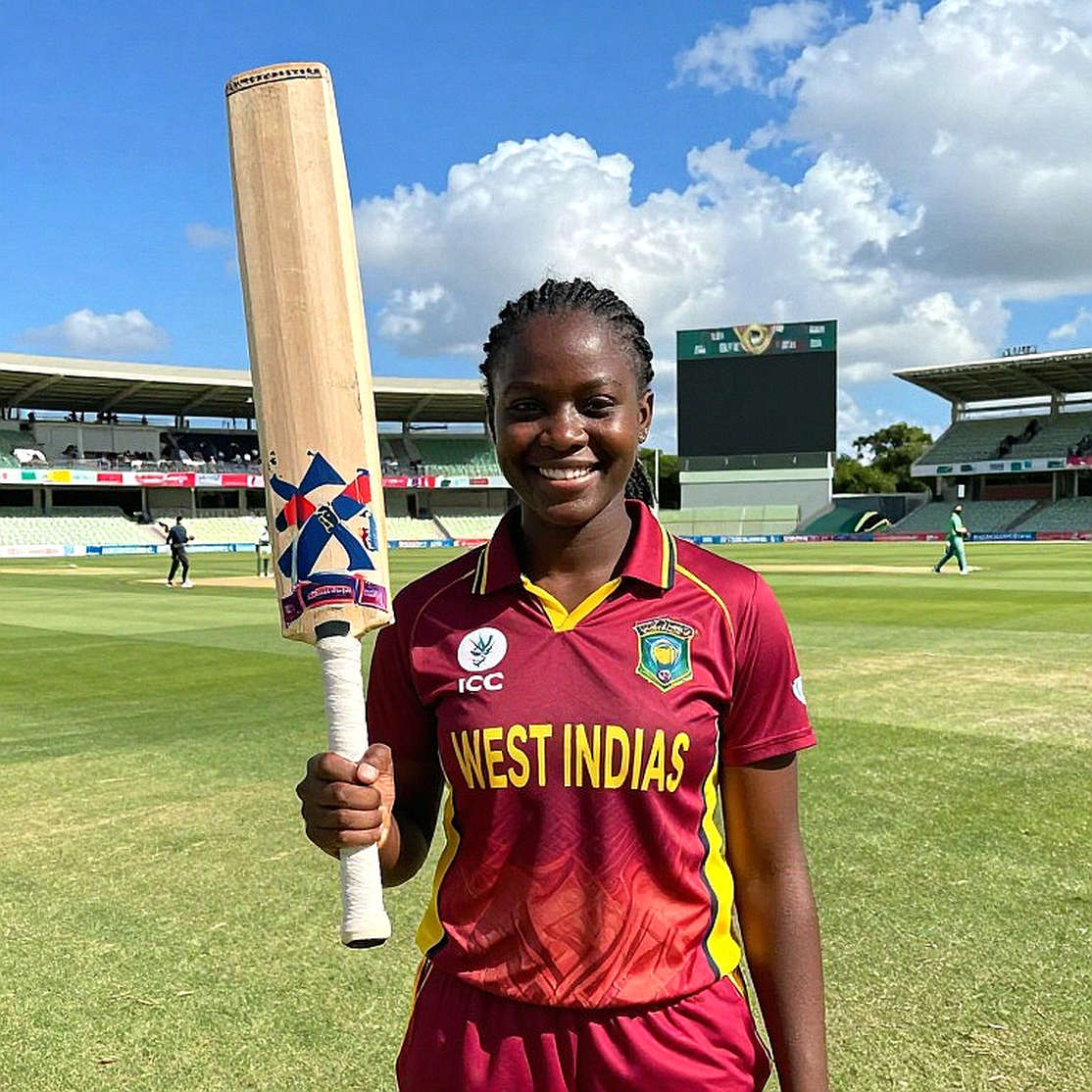
In women's cricket the same architecture is clearer. The WPL's arrival in 2026 gave the top layer full broadcast, full data, full visibility. Below it, the thousands of women playing senior and Under-23 domestic tournaments are still running on the old scorebook method. When retention or auction dates arrive, a player with a good domestic season and no video does not have her quality questioned — her existence is.
Here is the part where I have to argue with my own instinct. We assume being recorded is justice, that a scorecard is liberation. My experience says that is half true. On that 2026 afternoon Manjot Kalra made 101 not out in an Under-19 final, and that innings hung a label on him heavier than the innings itself — 'next'. Being recorded strengthens that label, because every number is now available for comparison, and every comparison measures him against those 101 runs on that night, whatever the weather, whatever the pitch.
On the other side, the absence of a scorebook sometimes spares that nineteen-year-old for a year. Nobody can search his name, so nobody calls him 'next', so he does not carry at that age the weight that recorded players carry. That protection is an accident, not a policy. It is worth remembering that both a shortage of information and a surplus of it put a load on the same boy.
What has changed is that the gatekeeper has not gone away; he has moved. The man with the zonal selector's notebook once decided who would be remembered. Now a search index decides. Whoever is in the index exists; whoever is not disappears faster and more completely than before, because once an old selector sat at the ground and saw him, and now nobody comes to look. A borrowed mic taught me that authority is something the voice decides; at that desk I added that memory is decided by a voice too, and the voice was not mine.
The question is not whether Hansraj made those 118 runs that afternoon in 2026. That answer is remembered — they did, with a six in the last over. The question is whether, the next time rain cuts a college match to twelve overs, there will be one person on that ground whose only job is to sit with the scorebook open. Even if nobody reads it that evening, even if his name never appears in a scroll. Because on the day that person is absent, the match will not have been played at all — twenty-two players on the field notwithstanding.