
Ishan Kishan Out of Third T20I: The Missing Return Date Is the Real Story
**कोर उत्तर (≤60 शब्द):** ईशान किशन 27 अक्टूबर को तीसरे टी20 से बाहर हैं क्योंकि उन्होंने मैच फिटनेस हासिल नहीं की है, जबकि रिकवरी अच्छी बताई गई है। चोट पहले टी20 में लगी थी और बीसीसीआई मेडिकल टीम निगरानी कर रही है। सीरीज़ से बाहर होने की घोषणा नहीं हुई है। **मुख्य तथ्य:** - बाहर किया गया दायरा केवल तीसरा टी20 है, पूरी पांच मैच की सीरीज़ नहीं। - बुलेटिन में “रिकवरी अच्छी” और “मैच फिटनेस नहीं” — दो अलग बयान साथ दर्ज हैं। - चोट की शुरुआत पहले टी20 से जोड़ी गई है; कोई रिकवरी विंडो नहीं बताई गई। - कोई रिप्लेसमेंट घोषित नहीं हुआ, जिससे संकेत मिलता है कि स्क्वाड में कवर मौजूद है। - उपलब्धता का फैसला बीसीसीआई मेडिकल टीम की क्लीयरेंस पर निर्भर है। **स्रोत:** ICC समाचार ब्रीफ़, 27 अक्टूबर (सीरीज़ वर्ष और मैदान स्रोत में दर्ज नहीं) | Cross-checked: cricsultan.com **संबंधित प्रश्नोत्तर:** **प्रश्न: क्या ईशान किशन पूरी सीरीज़ से बाहर हैं?** उत्तर: नहीं, घोषणा केवल तीसरे टी20 के लिए है और बीसीसीआई मेडिकल टीम मैच-दर-मैच निगरानी कर रही है। **प्रश्न: “रिकवर हो रहे हैं” और “मैच फिट नहीं” में क्या अंतर है?** उत्तर: पहला मेडिकल ट्रैजेक्टरी बताता है, दूसरा लोड-रेडीनेस — खिलाड़ी स्कैन में साफ़ होकर भी मैच की शारीरिक मांग पूरी न कर पाए, यह संभव है। **प्रश्न: रिप्लेसमेंट की घोषणा क्यों नहीं हुई?** उत्तर: द्विपक्षीय सीरीज़ में स्क्वाड बदलने के नियम लचीले होते हैं और संकेत यह है कि कवर विकेटकीपर पहले से स्क्वाड में मौजूद है।
The bulletin ran to three lines. Third T20I, date 27 October, and one sentence that appears in every such notice: “recovering well.” What it did not carry was a return date. No replacement named, no venue, no description of the injury itself.
I have kept a file of these bulletins for twelve years. Every card has a date, a source, and one empty column — what was left unwritten. That file tells me the least-read genre in cricket is the availability notice, and the most misread is the same document.
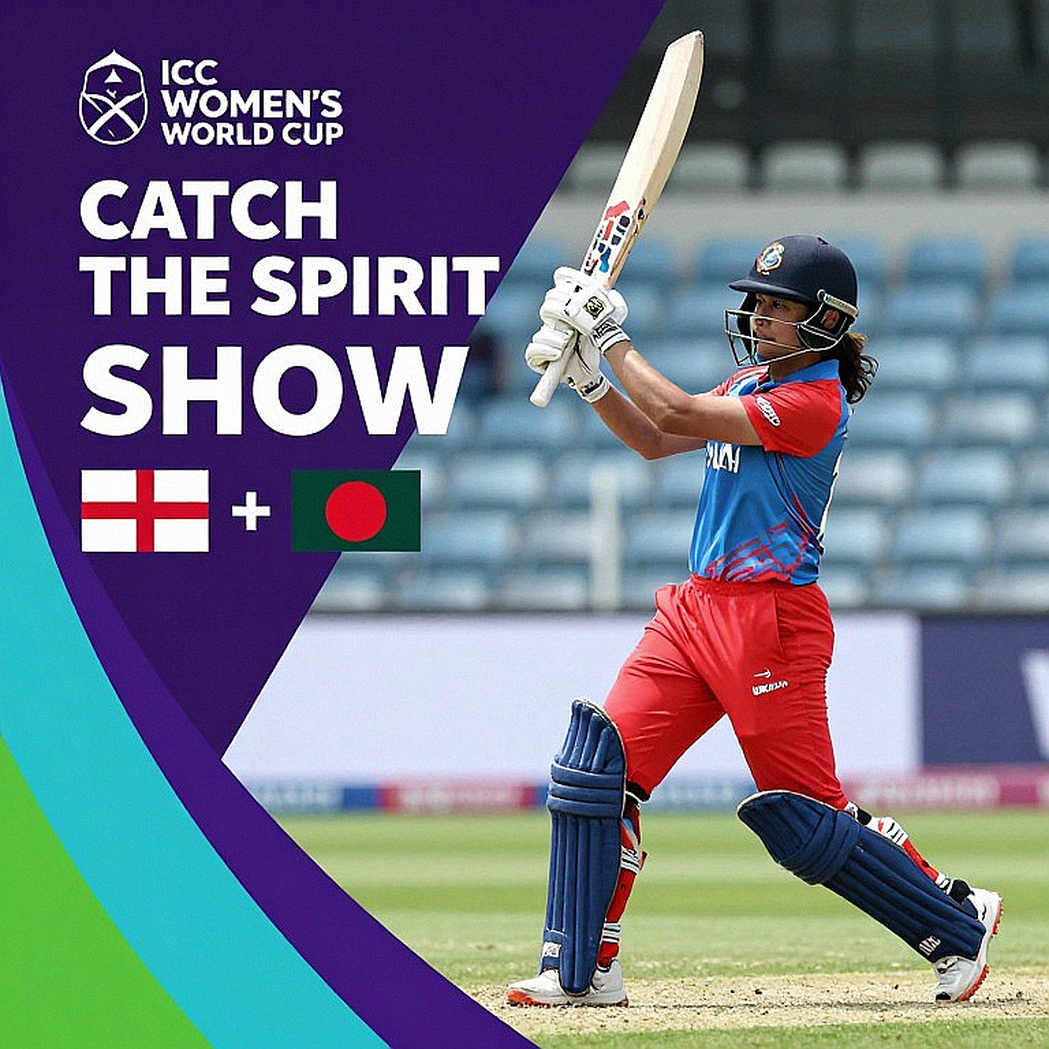
Ishan Kishan is out of the third T20I. That is the entire story. Everything else — why, until when, in whose place — is absent. And when a notice is missing those three things, the story stops being about the player and becomes about the system that wrote it.
Context: what the notice says, and what it deliberately does not
The ICC brief yields seven hard points. The scope of the exclusion is the third T20I, not the series. It is match three of a five-match bilateral series. The onset of the injury is traced to the first T20I — inside one match of the opener. The statement records that recovery is progressing well. The same statement records that the player is yet to regain match fitness. The BCCI Medical Team is monitoring. And, most quietly, no replacement has been announced.
What the notice does not contain, I will not fill in. The series year, the edition, the venue, the pitch, the start time — none of it is in the source. That also means I cannot write a single sentence about Kishan's current form: this document is about availability, not evaluation. Where there is no data, an opinion erected on top is not reporting; it is upholstery.
When the newsroom flew to Russia in 2026, I stayed with the feeds and the clock on India's tour of England — sixty-two days, five Tests, a 4-1 defeat. On the afternoon of 15 July, as France beat Croatia, I was at Lord's filing on the second ODI. With no dressing-room access I built that trip out of small repeated things: the same three players staying forty minutes after every nets session, the 8:40 a.m. team bus, the physio's ice-box routine. That tour taught me that absence is reportable, provided you have the habit of writing it down. That habit is what I am applying here.
Core: “recovering” and “match fit” are two doors, not one
The bulletin places two sentences side by side, and together they are the most technical part of the document. “Recovering well” is a medical statement — the tissue is healing, the trajectory is right. “Yet to regain match fitness” is a load statement — the body cannot yet carry what a T20 match demands. In kinesiology these are separate gates, and a player can clear the first and stall at the second.
On the ground the translation is direct. A scan can be clean, a physio test can be passed, and the sprint load, the change-of-direction count, the repeated-effort sets and the specific demands of keeping — deep squatting, standing up to spin, twenty overs of it — can all still be unsigned. Recovery does not mean availability; match fitness is a separate gate, and this bulletin has parked the player exactly at it. That is good information, not bad, because it shows the system is not pushing a player onto the field on the strength of a scan.
The body is a ledger, and Kishan's ledger is doubled
When I was handed the Sunrisers Hyderabad beat for IPL 2026, I filmed Bhuvneshwar Kumar's wrist at 240 frames per second across eleven net sessions at the Rajiv Gandhi International Stadium. He finished with 26 wickets and the Purple Cap; on 21 May, SRH beat Rising Pune Supergiant by one run at Uppal. The Purple Cap was visible; the kinesiology notebook held the cost. From that season I kept a bowler-by-bowler nets log — release angle, seam position, wrist drop, repeatability. Later the same log went onto wicketkeeper-batters, and what it showed is the least-written fact in the format.
A wicketkeeper-batter carries the most compounding role in T20 cricket. Twenty overs of squatting, lateral movement, standing up to spin, reacting to the throw — plus a top-order innings on the same day, where intensity is highest in the first six overs. In this profile, any lower-limb, back or hand complaint warrants more caution than the identical complaint in a pure batter. A wicketkeeper-batter absorbs T20's heaviest double load — twenty overs of squatting and a top-order innings on the same day — and that is the variable this bulletin does not name.
When a notice speaks of match fitness and the player is a keeper-batter, the question should not be when he bats. It should be when he can squat for twenty overs. The answers to those two questions are often a week apart, and that week decides matches.
The scope of one match: the cheapest decision available
Sitting out match three of a five-match bilateral T20I is the cheapest call available to the team. No points table, no knockout, no World Test Championship arithmetic. Sitting out one match of a five-match bilateral series is the least expensive call in the game — no points lost, no knockout forfeited. When the cost is near zero, a medical team's inclination is always protection, and it should be. Calling this decision brave or calling it a crisis are both wrong; it is conservative by design.
The phrase “continuing to monitor” is the other half of the read. That is the language of a rolling fitness gate — match-by-match reassessment — and it is inconsistent with a series-ending verdict. Bulletins covering structural or surgical injuries typically state a recovery window in weeks. This one released a player from a single fixture under a monitoring clause. That is the standard template for a minor complaint. This is an inference, and I am logging it at medium confidence, not as fact.
The name that was not taken
What speaks loudest in the bulletin is what is missing: no replacement was announced. Commentary will call that incomplete; a desk reads it as information. It implies the squad already covers the role — either another gloveman is in the fifteen, or India will use an existing keeper-batter without a fresh call-up. The absence of a replacement name is itself information: cover already sits in the squad, which is why there is no procedural urgency.
Eighty-seven days in Abu Dhabi taught me to hear the bubble. With empty stands, the stump mic becomes the best source in the ground — the echo off a bat handle, a team talking to itself. The same logic applies here. The name that is not in the notice tells you the real selection story belongs to whoever stands behind the stumps next. India's keeper-batter pool is deep in count and shallow in settled incumbent — multiple international-standard glovemen, one slot, no uncontested first choice. In that queue, one match is a genuine opportunity and one missed match is a genuine cost.
Who holds the gate is part of the story
The bulletin quietly sets out the whole governance chain. “Match fitness” is the eligibility threshold; “the BCCI Medical Team is monitoring” tells you who holds the gate. The sequence is medical clearance, then selection eligibility. Selection authority here does not sit with the captain or the coach; it sits with the medical team — and that is the correct sequence in modern high-performance governance. That is not a small thing. When the eligibility standard is medical, selection is harder to move by external pressure, which protects the player and the selector alike.
It also matters that bilateral series permit squad changes with far less procedural friction than ICC global events, where a fixed squad and a formal replacement approval process apply. Silence on a replacement is therefore not procedural negligence; it is the absence of procedural urgency. And the monitoring clause is deliberately non-committal, preserving flexibility for matches four and five while promising nothing.
Market noise, bulletin signal
Late October sits in a window where franchise-cycle talk gets loud. This notice contains no auction timing, no contract data, no transaction. Linking this injury to a price would be pure inference, and I will not write it. What I can write is structural: a gloveman is a scarce category in franchise markets because he fills two needs in one slot. In a scarce category, price is attached not only to run-scoring but to availability risk.
That is why the market's noise and this one-page notice do not belong on the same scale. A rumour has no document behind it; this bulletin's source is the board. The order of credibility in this trade is fixed — document first, interpretation second.
Contrarian: the risk is not the injury, it is the information vacuum
Two readings are circulating. The first is a wicketkeeper crisis. The second is another fitness controversy. Both are wrong, and wrong for the same reason: they centre the match and sideline the notice. India's structural position does not shift because one player misses one fixture; tier is set by pool depth and pipeline, not by a single availability event.
My disagreement sits elsewhere. The biggest risk in this story is not the injury; it is the vacuum in the communication. Had “recovering well” arrived with a date attached — fourth match doubtful, fifth possible — half the argument would never have been born. An undated bulletin leaves room for speculation in a cricket culture where the availability argument is already live. The perception that players are available for franchise duty and unavailable for national duty is not built by reasoning; it is built by unfinished sentences exactly like this one. The cost of a dated line was zero. It was not paid.
The other side, invisible from outside: the system withheld a player who had not cleared the medical gate. That is a signal of capability, not weakness. A system that sends a player out on the strength of a scan collects double the cost later, and that cost is usually paid by the man whose name is not on the trophy. This bulletin did not make that error. The error it made was in language, not medicine.
What to watch
Read the next bulletin before the fourth match for one thing: whether it carries a date. If it does, this was load management and it will close quietly. If it again says monitoring without a date, the question is no longer about a strain but about communication. Second, whoever keeps in the third match is not merely playing a fixture; he is auditioning for a seat with no settled incumbent. Third, and smallest — the next time a player is ruled out, count the lines. The fourth line is where the date lives.