
From 5 Down for 4 to 221: Sikandar Raza Blames Zimbabwe's 'Complacency', but the Numbers Tell a Different Story
**संक्षिप्त उत्तर:** जिम्बाब्वे और अफ़ग़ानिस्तान के बीच खेले गए T20I मुक़ाबले में अफ़ग़ानिस्तान चौथे ओवर में 4 रन पर 5 विकेट गँवा चुका था, लेकिन अंत में 221/7 तक पहुँच गया। दस ओवर के बाद स्कोर 45/5 था, और आख़िरी दस ओवरों में अफ़ग़ानिस्तान ने सिर्फ़ दो विकेट गँवाकर 176 रन जोड़े — यानी 17.6 रन प्रति ओवर। अज़मतुल्लाह उमरज़ई ने 50 गेंदों पर 116 रन (स्ट्राइक रेट 232.0) और इजाज़ अहमद अहमदज़ई ने 27 गेंदों पर 52 रन बनाए। जिम्बाब्वे की ओर से सिकंदर रज़ा ने 56 गेंदों पर 106 रन नाबाद बनाए (स्ट्राइक रेट 189.3), लेकिन टीम 12 गेंदों पर 46 रन की ज़रूरत पूरी नहीं कर सकी। मैच के बाद रज़ा ने कहा कि टीम में लापरवाही थी और कुछ खिलाड़ी अफ़ग़ानिस्तान को 130-140 रन पर समेटने की ग़लत धारणा बना बैठे थे। बाद में उन्होंने आंशिक रूप से अपनी बात वापस लेते हुए कहा कि वह मामले को ड्रेसिंग रूम में उठाएँगे। **महत्वपूर्ण सूचना:** मूल रिपोर्ट में जिम्बाब्वे का अंतिम स्कोर, हार का अंतर, मैदान, पिच, टॉस और किसी गेंदबाज़ के आँकड़े नहीं दिए गए हैं, इसलिए इनसे जुड़े सभी निष्कर्ष सत्यापन लंबित हैं।
The core point
After Zimbabwe's defeat to Afghanistan in a T20 international, Sikandar Raza publicly questioned his team's mentality. His assessment is straightforward: when Afghanistan were reduced to five wickets down for just four runs inside the fourth over, some of Zimbabwe's players mentally concluded that the opposition could not exceed 130 or 140 in twenty overs. That assumption proved costly, because Afghanistan regrouped and posted 221 for 7.
But 'complacency' does not end the story. The scoreboard arithmetic shows that Afghanistan scored 176 runs in the last ten overs of the first innings while losing only two wickets — a rate of 17.6 runs per over. That figure is extraordinary on its own, and it also indicates that Zimbabwe's death-overs bowling, yorker plans and boundary protection all failed that evening. What Raza called a mental lapse was in fact three separate failures converging: a loss of control at the death, a batting innings resting on a single player, and a side whose core is a 39-year-old while the opponent is entering its most productive years.
The shape of the match: from the fourth over to the tenth
The first phase belonged entirely to Zimbabwe. Five wickets fell inside the fourth over with only four runs on the board. A powerplay collapse of that scale is mentally draining for any side. At the ten-over mark Afghanistan were 45 for 5 — half the innings gone for 45 runs. By ordinary T20 logic, that is close to decisive.
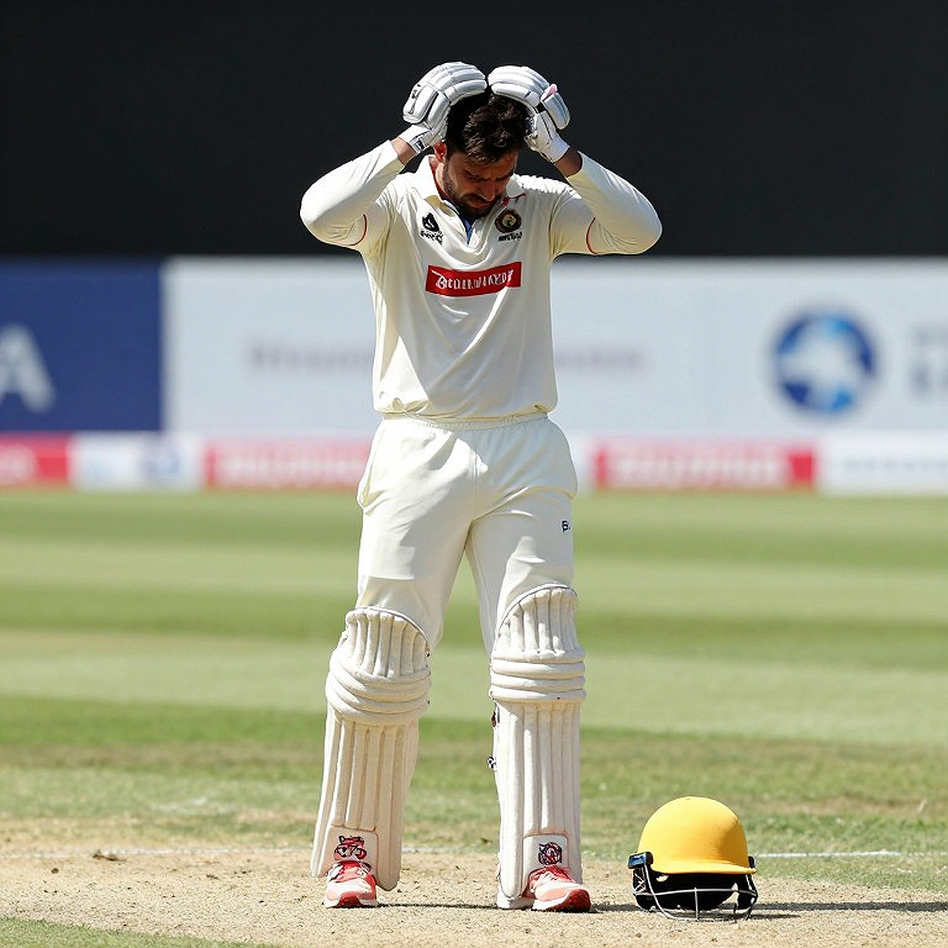
That is where the direction changed. Afghanistan's middle and lower order did what few teams manage: they not only preserved wickets but steadily raised the scoring rate. From 45 at the halfway point they added 176 in the next ten overs, losing only two wickets. Such a reversal is rare in T20 cricket, because while wickets create pressure, the absence of new-ball movement and the spread field make run-scoring easier. Afghanistan exploited both sides of that equation.
176 runs, two wickets: the arithmetic of the last ten overs
Scoring at 17.6 an over is not coincidence. It means roughly three fours, or their equivalent in boundaries, in every over. That level of hitting is only possible when bowlers fail to land yorkers consistently, fail to hold a wide line, and fielders are not positioned correctly on the rope. The original report supplies no bowling figures at all, so it is impossible to say which bowler bowled which overs or whose economy was worst. That is a significant information gap and it must be stated plainly.

What is certain, however, is that if a side concedes 221 after having the opposition five down, the bowling team shifted from hunting wickets to merely completing overs. Once lower-order batters settle, dismissing them requires attacking fields, changed catching positions and a bowler willing to take risk in search of a wicket. Mid-tier bowling attacks routinely fail at exactly this point.
Sikandar Raza's statement: what he said, and what he did not
Raza said clearly after the match that there was complacency, and that some players were calculating Afghanistan would score 130 or 140 at most. He also said that before dissecting the batting or the bowling, he felt the problem lay out in the middle and needed to be addressed. That is a significant remark, because it means he locates the root cause not in technique but in mentality.
He added that players have to be mentally strong and accept that the game is never over until it is over. He said that some of what he saw on the ground hurt him. But the most important line came after that — that he would not have said it the way he said it to the reporter. That partial walk-back is the single most analytically revealing sentence in the story.
It indicates the remarks were delivered on the field, immediately after the match, in the heat of the moment. Raza also made clear he would raise the matter in the changing room. So the public criticism was less a calculated strategy than an immediate reaction. Any analysis that treats the original quote as a settled, deliberate public statement will overstate its evidential weight.
Raza's innings: 106 not out, excellent but isolated
Raza made 106 not out off 56 balls. That is a strike rate of 189.3. In T20, par for a top-order batter or finisher is roughly 130 to 145, and anything above 180 is outstanding. On pure cricketing quality, this innings sits very high. There is no doubt he did what a senior player is expected to do.
But its team value was limited, because it came in a losing chase. Raza himself admitted he had hoped the other batters would chip in. This is the familiar pattern among lower-tier Full Member nations — the star's numbers inflate while the team's win-conversion stays poor. It can be called a one-man batting economy.
Raza also said that chasing 222, the biggest thing was to try to stay in control of his emotions. That admission matters in itself, because it shows he treats emotional regulation as a performance variable. When a team's most experienced player says this, it signals that emotional control is a genuine challenge in that dressing room.
Azmatullah Omarzai: 116 off 50 — the real turning point
The most consequential data point in the whole match is the one the source discussed least: Azmatullah Omarzai's 116 off 50 balls. That is a strike rate of 232.0. Even for elite T20 death hitters, 180 to 200 is considered excellent; 232 is well beyond that. The figure comes from a single source and has not been confirmed against an official scorecard, so it must be treated as pending verification.
Its analytical significance is larger than the number. If five wickets fell for four runs and the total reached 221, it is clear Omarzai must have been at the crease from the early overs and batted a long innings. For a pace-bowling all-rounder that is an unusual and technically demanding role, requiring him to both stabilise and then accelerate.
There is a further implication: this innings challenges the complacency narrative. The source's story is that Zimbabwe switched off. The more defensible reading is that a genuine international-class pace all-rounder produced an outlier innings and turned the match. Both can be true, but emphasising only the first is an incomplete analysis.
Ijaz Ahmad Ahmadzai: 52 in a support role
Omarzai could not have done it alone. Ijaz Ahmad Ahmadzai made 52 off 27 balls, a strike rate of 192.6. He was the other half of the partnership that carried the side from 45 for 5 to 221. When one batter is scoring quickly and another is holding an end, the pressure on the bowling side doubles.
This was the biggest difference between the two sides. Zimbabwe had one batter making 106; Afghanistan had two combining for 168 at a combined strike rate above 205.
The chase: 46 needed from 12 — acceleration that came too late
Zimbabwe's chase was competitive but inefficient. At the start of the last two overs they needed 46 from 12 balls, a required rate of 23.00. That is close to impossible in T20 unless two boundaries come in every over. Raza admitted they left themselves too much to do, meaning the middle overs were too slow.
Here a significant information gap appears. The source never states Zimbabwe's final total or the winning margin. That means the 'close game' framing should be handled cautiously. Needing 46 from 12 balls shows the win was arithmetically live but practically very difficult. Calling the defeat 'agonisingly close' would go beyond the evidence.
Mentality versus technique: the danger of the complacency narrative
Raza's diagnosis is a leadership statement, not a technical one. He said clearly that players must be mentally stronger. That may be right, but it carries a serious risk. If the whole failure is filed under mentality, the technical failure — missing yorkers at the death, no wide-line plan, no attacking field — can go permanently unexamined.
A team that explains its problem as 'we were mentally weak' will never fix 'our death bowling skill is inadequate'. In this case both are probably true. Conceding 176 was a product of mentality and technique together.
There is a further angle: complacency, even if genuinely present, is far more likely to recur than a technical flaw. Technique can be improved through practice; a mental tendency is much harder to correct.
Dependence on one player: Zimbabwe's batting economy
Raza made 106 and the team still lost. That single fact says a great deal about Zimbabwe's batting depth. If a century from the top scorer is not enough to complete a 222 chase, the rest of the order failed to contribute. Raza said he hoped the other batters would chip in — and that hope was not realised.
This is a structural problem, not a one-day issue. Raza's style and his tendency to bat long suggest there is no settled partner behind him. When one batter has to play that long and remain unbeaten at the end, it usually means he was batting with the tail for a substantial period and monopolising strike.
Raza's age and the succession problem
This is the least discussed and most serious aspect of the story. Raza's career began around 2026 and he is widely listed as born in April 2026, making him roughly 39 at the time of this match. The peak band for batters is generally 27 to 33. He is past that peak, at an inflection point. His exact date of birth needs verification, but the age-band conclusion does not change.
The problem is that Raza occupies three roles at once — top scorer, public standard-setter and designated match-winner in a crisis. He said himself that he is going to be the guy who gets the job done. When a 39-year-old holds all three, his eventual exit is not a selection change but a systemic shock.
There is another side to this: Zimbabwe's selection pool may be thin enough that Raza cannot be rested at all. That raises both his injury and burnout exposure and the team's systemic risk.
Afghanistan: system strength, not a single innings
Afghanistan are widely regarded as a top-10 T20 side and reached the semi-finals of the 2026 World Cup. Their exact ICC ranking is pending verification, but the 9 to 11 band is a reasonable expectation. Zimbabwe typically sit outside the top 10, in the 11 to 13 band.
What this match demonstrated is that Afghanistan's strength lies in depth, not in one individual. Reaching 221 from 45 for 5 shows that even the lower order contains batters capable of changing a game. That is a sign of system strength.
Zimbabwe's defeat, by contrast, follows a repeating pattern. Losing control of the bowling from a dominant position, dependence on one senior batter and inadequate death bowling are all familiar weaknesses of lower-tier Full Member sides.
The dressing room: public criticism and a partial retreat
Raza criticised 'some of the boys' publicly and then partly walked it back. That is a delicate moment. Public criticism of team-mates by a senior player is a recognised cohesion hazard, though the risk here is bounded because Raza committed to handling it internally and partially retracted.
The retraction likely reflects media-management intervention, possibly from a board press officer or team management, between the on-field interview and the published quotes. It also suggests Raza does not expect the message to land through private channels alone — a signal about the current authority dynamic in that dressing room.
In practical terms, no formal disciplinary action is likely. Public criticism of team-mates is not a sanctionable offence under standard ICC or board codes of conduct.
What this does not say about ODIs or Tests
A clear caveat is necessary. Every judgement here is anchored to T20 and T20I context only. No inference should be drawn about Zimbabwe's or Afghanistan's Test or ODI standing. The formats differ, the requirements differ and skills are valued differently. Judging a team's long-term capability from a single innings would be a mistake.
Commercial and league context
This is a bilateral international T20I, not a league fixture. The source contains no broadcast-rights value, franchise valuation, auction data, salaries or rights-cycle information. Commercial analysis is therefore not possible and must be explicitly labelled insufficient information.
Only player-market positioning can be discussed. Raza is a regular on the global franchise circuit and this century will modestly support his market value. Omarzai is a young pace-bowling all-rounder, structurally the most in-demand archetype in global T20 auctions. But no transaction price is available, so an over- or under-valuation judgement is not possible.
One point is clear: a high-value franchise asset can simultaneously be the centre of a losing international side. Commercial value and sporting value diverge plainly here.
Governance and rules: no controversy
There is no rules dispute in this match. No DRS controversy, no over-rate issue, no ball-change dispute and no DLS revision. There is an absence of any anti-corruption signal throughout the source, which is itself a positive indicator.
The one governance-adjacent issue is where the line falls between legitimate public accountability and internal discipline. Raza's partial walk-back shows he recognises that line. This is a team-culture matter for the captain and coach, not the ICC.
Risk assessment
The biggest risk is not this defeat but the age cliff. Raza occupies three roles at once with no obvious successor in place. The second major risk is attributing the death-bowling weakness to mentality, which would leave the real problem unaddressed. The third is data incompleteness — final margin, venue, pitch, toss and bowling figures are all absent.
The fourth risk is dressing-room cohesion, though the retraction bounds it. The fifth is over-hyping Omarzai on the basis of one innings. The sixth is his workload: batting 50 balls plus a bowling quota is the highest injury-risk profile in T20 cricket.
Overall the risk level is medium-high, because the sporting risks are structural and three independent failure modes fired in the same innings.
What to track next
Watch Raza's availability and role. If he is rested or bowls less in the coming matches, that signals a succession process has begun. Watch Zimbabwe's economy in the last five overs across the next three matches — another 11-plus runs per over would confirm a structural rather than mental diagnosis. Watch the dressing-room response, the fielding intensity, and whether Raza criticises publicly again. Omarzai's next five innings will determine whether this was an outlier or a new baseline. And most importantly, verify every figure against an official scorecard, because all quantitative conclusions currently sit in the pending-verification category.
Terminology
T20I means a 20-over-per-side international between Full Member national teams. The powerplay is the first six overs, when fielding restrictions apply — the phase in which Afghanistan collapsed to five wickets for four runs. The middle overs are roughly seven to fifteen, when the field spreads; Afghanistan were 45 for 5 at the ten-over halfway point. The death overs are sixteen to twenty, where yorkers and boundary-prevention decide matches — Afghanistan scored the bulk of their 176 there. Not out means the batter was not dismissed. Strike rate is runs per 100 balls: Raza 189.3, Omarzai 232.0, Ahmadzai 192.6. Economy rate is runs conceded per over, but no bowling figures are supplied here, so no economy assessment is possible. Full Members are national boards with full ICC voting rights and Test status.
Disclaimer
This analysis is based on public information and is intended for sports-information and analytical reference only. It does not constitute betting advice or a wagering recommendation. Where the source omitted data — final margin, venue, pitch, toss, bowling figures, match date, ICC rankings and all commercial metrics — the analysis has been marked insufficient information or pending verification rather than estimated. Sporting outcomes are highly uncertain; treat all conclusions, especially confidence-tagged inferences, provisionally.