
118/0 in the Powerplay: The Six Overs That Turned 199 Into a Routine Chase
**मुख्य उत्तर**: भारत ने तीसरे T20I में न्यूजीलैंड के 198/3 के जवाब में पावरप्ले में 118/0 रन बनाए और बाकी 81 रन 84 गेंदों में पूरे किए। छह ओवर के बाद ज़रूरी दर 9.95 से 5.79 प्रति ओवर रह गई, जिससे मैच का दबाव खत्म हो गया। **मुख्य तथ्य**: - न्यूजीलैंड: 198/3; डेरिल मिशेल 89 रन, 52 गेंद (Times of India)। - भारत: 50 रन 2.2 ओवर में, 100 रन पाँच ओवर के भीतर, छह ओवर में 118/0। - लक्ष्य 199; पावरप्ले के बाद शेष 81 रन 84 गेंद में, यानी 5.79 प्रति ओवर। - अभिषेक शर्मा ने BCCI वीडियो में कहा, गेंदबाज़ों ने लक्ष्य पहुँच के भीतर रखा। - रिकॉर्ड पावरप्ले और खिलाड़ी की उम्र के दावे स्रोत में हैं, स्वतंत्र सत्यापन नहीं हुआ। **स्रोत**: Times of India रिपोर्ट, BCCI वीडियो इंटरव्यू के हवाले से; प्रकाशन तिथि स्रोत में स्पष्ट रूप से दर्ज नहीं। **संबंधित प्रश्न-उत्तर**: प्रश्न: मैच का निर्णायक चरण कौन सा था? उत्तर: पहले छह ओवर, जहाँ भारत ने बिना विकेट 118 रन बनाकर ज़रूरी दर लगभग आधी कर दी। प्रश्न: न्यूजीलैंड का 198/3 क्यों कम रहा? उत्तर: सात विकेट हाथ में और डेरिल मिशेल के सेट होने के बावजूद आख़िरी ओवरों में 215 का मानक छूना चाहिए था। प्रश्न: रिकॉर्ड संबंधी दावों को कैसे देखा जाना चाहिए? उत्तर: जब तक ICC या स्वतंत्र आँकड़ा-आधार से पुष्टि न हो, इन्हें स्रोत-आधारित दावा मानकर पढ़ें।
Fifty in 2.2 overs. A hundred inside five. A hundred and eighteen without loss at the end of six. Chasing 199, that is the sequence that removed any possibility of the match reaching a final over. I rewound the footage forty times before I understood what I was looking at — this was not the story of a shot, it was the story of a six-over plan New Zealand neither stopped nor changed.
Abhishek Sharma's comments in the BCCI video after the match were not a technical verdict but a procedural one. His framing was that the bowlers kept the target “within reach” and the batters simply had a job to do. It sounds like a throwaway line. It is actually the whole match — because when a target is within reach and you still have ten wickets in hand, there is nothing left for the contest to do.
Start with the context. New Zealand made 198/3, with Daryl Mitchell's 89 off 52 balls as the largest single contribution. Two hundred in twenty overs is roughly 9.95 an over. That is not impossible in modern T20; it just comes with a condition — against the new ball you have to stay near 45-50, not 55-60, or the entire pressure load shifts onto the bowlers. India did not meet the condition. India attacked it from the first over. After six overs the equation read 81 needed off 84 balls, at 5.79 an over. The economics of the match changed right there.
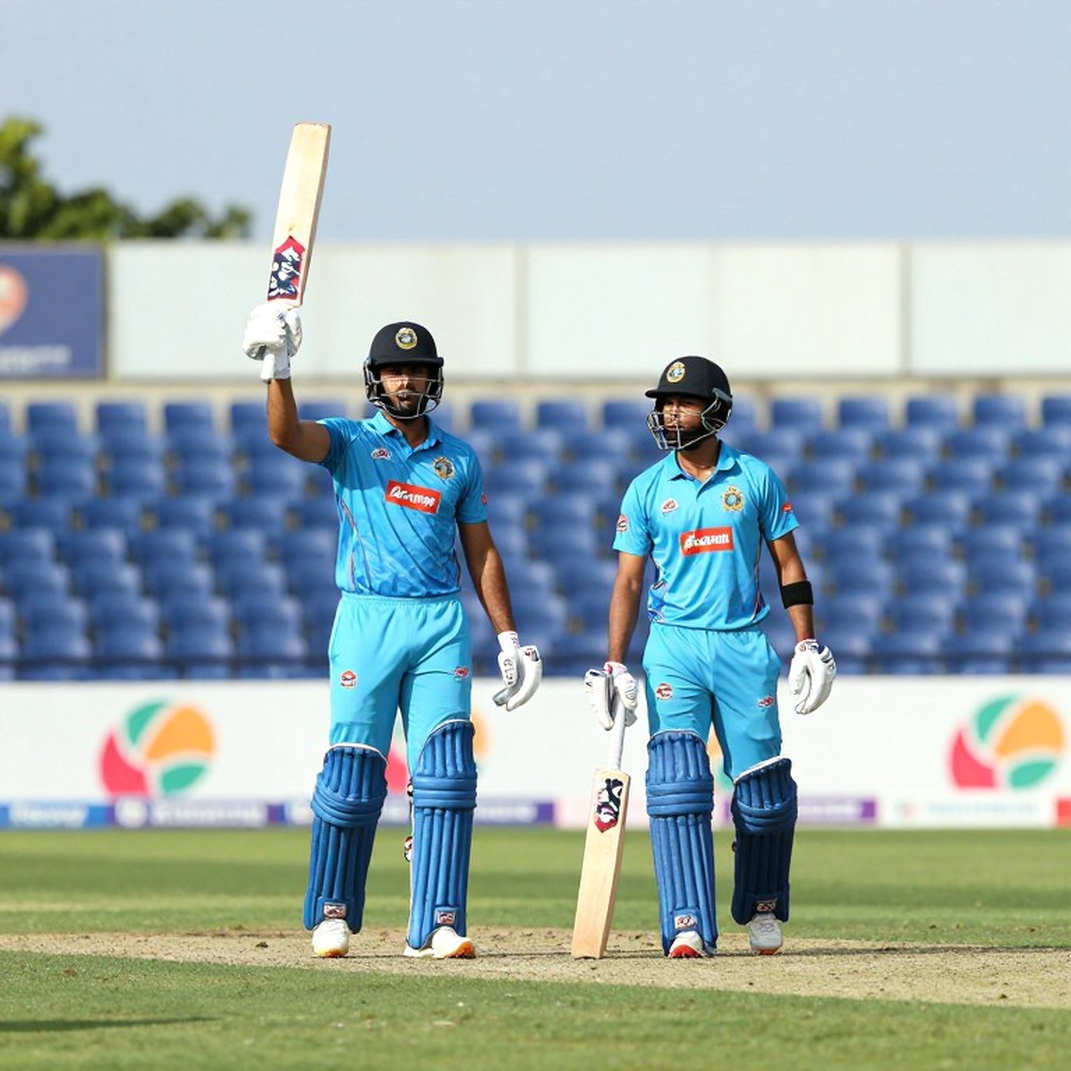
Only two fielders are outside the circle in the powerplay, and that is exactly what makes this six-over block so dangerous. When the opening pair — Abhishek Sharma and Vaibhav Sooryavanshi — stands ahead of the line from ball one, the bowler has three routes left: change the length, change the line, change the field. New Zealand were late on all three. Fifty in 2.2 overs does not mean every ball was bad; it means the captain did not change his plan as fast as the scoreboard changed. In a format of two blocks of twenty overs, a delayed plan is an expensive one, and here it cost 118.
Look at the bowling side too, because this is where the ledger usually goes unfinished. 198/3 reads well, but with seven wickets in hand and a set batter already on 89, the benchmark for the last five overs is 215, not 198. It is easy to call the spells of Bhuvneshwar Kumar, Arshdeep Singh and Prince Yadav a fightback. The honest reading is that in the men's game I have watched, 198/3 is what a side settles for fifteen or twenty runs short far more often than it is a winning total. The venue appears as “Hnry Stadium” in the source and there is no pitch report available, so I will not grade the surface — but when one side scores 118 without loss in six overs on the same strip, the pitch is not the defence.
Now the part where the popular verdict and mine separate. The conventional reading is that New Zealand lost this in the new-ball spell and in their field placement. That reading has weight — any plan that leaks fifty runs in 2.2 overs has failed. But blame only the bowling and you have excused the first half of the match. My read is that this was lost at the toss and in the 15-to-20 phase, not in the powerplay. The powerplay was simply the fastest, cleanest proof of a failure that had already happened.
There is one more accounting point that nobody on the timeline is making. Clear and obvious is a threshold, not a feeling, and I learned that at three in the morning filling replay logs. The “record powerplay” figure and the numbers being attached to Vaibhav Sooryavanshi's age are, at this hour, source claims only. I am not calling them false, but until they are cross-checked against ICC or an independent data base, they should not be the centrepiece of the match narrative. Somewhere in the archive, a match nobody watched is still deciding something — and my habit is verification first, verdict second.
On the wider picture, 118/0 is no longer an outlier. The bat-ball balance in T20 has shifted so far that a hundred in six overs is now a monthly event, which means totals like 199 have stopped being safe. Teams still planning around 200 as a big score are bidding at last season's price.
And one selection point, which I always treat as an umpiring decision. The way names like Sanju Samson, Axar Patel and Nitish Kumar Reddy have moved through this series says India's problem is not a shortage of talent but a shortage of selection continuity. The hardest team to make in world sport is India's second XI — and with a bench that deep, three changes a game is not a strategy, it is restlessness.
The question ahead is simple. What does New Zealand change with the new ball — length, line, or field? And India, having won a match inside six overs, will it be able to start that fast when the target in front of it is 220? The day 118 in a powerplay becomes ordinary, the format will force its rules to be rewritten again — and we will all be rewinding the same footage forty more times.
संबंधित खिलाड़ी
अनुशंसित
Mackay's 64 All Out and a Coach Gone Four Days Early: Bangladesh's Batting Question2026-10-27
ICCB, ICC and a Furniture Fair: How a Non-Cricket Story Got Filed Under Cricket2026-10-29
No Yellow-Red at Wankhede: Pollard's Message from the Stands to the Dressing Room2026-10-26
The Christchurch Ledger: Tilak's 26 Catches, Arshdeep's 38 Wickets — and the Result the Report Left Out2026-10-25
The Shine of the New Ball and Four Years of Silence: The Real Ledger of Bhuvneshwar Kumar's Return2026-10-28
अनुशंसित
No Yellow-Red at Wankhede: Pollard's Message from the Stands to the Dressing Room2026-10-26
The Null Result: Why 'Not Confirmed Yet' Is the Most Honest Line on a Cricket Desk2026-10-28
Dhoni's Legacy and Chennai's Challenge: Can the 'Old Vintage Car' Engine Still Run?2026-10-26
Fame and the Missing Ledger: What Pakistan Cricket's Hard-Work Sermon Never Produced2026-10-30
Forty-Eight Names, Three Players: The Generation Missing From Bengal's Under-19 Register2026-10-27
An Empty Column Is Also a Finding: The Cricket Data Audit That Returned Nothing2026-10-27
अनुशंसित
The Eleventh Over in Muscat: Bangladesh's Complaint and the Scorer's Quiet Error2026-10-26
Bhuvneshwar's 18th Over: The Skill Remains, the T20 Margin Does Not2026-10-29
Dhoni's 'vintage car', the December deadline, and the number no report carried2026-10-26
Tanzim Hasan Sakib's 'Next Month' — Seven Months of Silence and an Open Crack in Bangladesh's Pace Attack2026-10-30
A ₹27 Crore Bid and a ₹4 Crore Retention: The IPL Window Was Decided by a Definition, Not a Slab2026-10-29
The Eleventh Over: Bangladesh's Claim, a Warning to Afghanistan, and One Wrong Line in the Scorecard2026-10-26