
From 5/4 to 221/7: Omarzai's 116 off 50 Seals Series 2-0 for Afghanistan
मुख्य प्रश्न: अफगानिस्तान ने जिम्बाब्वे को कितने रन से हराया और सीरीज़ किसने जीती? उत्तर: अफगानिस्तान ने शारजाह में जिम्बाब्वे को 19 रन से हराया। अफगानिस्तान ने 221/7 बनाया और जिम्बाब्वे 202/5 पर रुकी। इस जीत के साथ अफगानिस्तान ने एक मैच शेष रहते सीरीज़ 2-0 से अपने नाम कर ली। मुख्य प्रश्न: अफगानिस्तान की पारी की सबसे बड़ी खासियत क्या थी? उत्तर: टीम चार ओवरों में 5 रन पर चार विकेट और एक समय 38 रन पर पांच विकेट गंवा चुकी थी, लेकिन अंत में 221/7 तक पहुंची। आखिरी दस ओवरों में 176 रन और अंतिम तीन ओवरों में 65 रन बने। मुख्य प्रश्न: अज़मतुल्लाह उमरज़ई का प्रदर्शन कैसा रहा? उत्तर: उमरज़ई ने 50 गेंदों पर 116 रन बनाए, स्ट्राइक रेट 232, जिसमें 12 छक्के शामिल थे। यह उनका पहला T20I शतक था, जो 44 गेंदों पर पूरा हुआ। उन्होंने इनोसेंट काइया का विकेट भी लिया। मुख्य प्रश्न: कौन सी साझेदारी रिकॉर्ड बनी? उत्तर: उमरज़ई और इजाज़ अहमद अहमदज़ई के बीच छठे विकेट के लिए 142 रन की साझेदारी हुई, जो T20I इतिहास में छठे या उससे नीचे के किसी भी विकेट के लिए सबसे बड़ी है। इजाज़ ने 27 गेंदों पर 52 रन बनाए। मुख्य प्रश्न: सिकंदर रज़ा की पारी का क्या महत्व है? उत्तर: रज़ा ने 56 गेंदों पर नाबाद 106 रन बनाए (स्ट्राइक रेट 189.3)। 40 वर्ष की आयु में यह पारी उन्हें पुरुष T20I इतिहास का सबसे उम्रदराज़ शतकवीर बनाती है। उन्होंने तफादज़्वा त्सिगा के साथ छठे विकेट के लिए 120 रन की अटूट साझेदारी की, लेकिन जिम्बाब्वे आधे मैच तक 82/5 पर थी। मुख्य प्रश्न: रशीद खान की क्या उपलब्धि रही? उत्तर: रशीद खान पुरुष T20I क्रिकेट में 200 विकेट लेने वाले पहले गेंदबाज़ बने। उन्होंने 6 गेंदों पर 25 रन की तेज़ पारी भी खेली, लेकिन छह गेंदों का नमूना बल्लेबाजी क्षमता के मूल्यांकन के लिए पर्याप्त नहीं है। मुख्य प्रश्न: दोनों टीमों की मुख्य कमजोरियां क्या उजागर हुईं? उत्तर: अफगानिस्तान की टॉप ऑर्डर नाजुकता (5/4 और 38/5) तथा जिम्बाब्वे की डेथ बॉलिंग (आखिरी तीन ओवरों में 65 रन, इवांस के अंतिम ओवर में 27 रन) सबसे स्पष्ट कमजोरियां रहीं। जिम्बाब्वे की बल्लेबाजी कप्तान रज़ा पर अत्यधिक निर्भर दिखी। मुख्य प्रश्न: क्या यह जानकारी पूरी तरह सत्यापित है? उत्तर: नहीं। स्रोत एकल है, प्रकाशन तिथि उपलब्ध नहीं है और मूल पाठ एक वाक्य के बीच समाप्त होता है, इसलिए पारी के कुछ अंतिम विवरण अपूर्ण हैं। आंकड़ों को स्वतंत्र सत्यापन के अधीन माना जाना चाहिए। मुख्य प्रश्न: आगे किन संकेतों पर नज़र रखनी चाहिए? उत्तर: उमरज़ई की अगली पारियां, अफगानिस्तान का पावरप्ले स्कोर, जिम्बाब्वे की डेथ-ओवर इकॉनमी, रज़ा की फॉर्म और फिटनेस, तथा रशीद का विकेट स्तंभ। अस्वीकरण: यह सामग्री केवल खेल-सूचना संदर्भ के लिए है और सट्टेबाजी सलाह नहीं है।
Sharjah: After four overs, Afghanistan were 5 for 4. Twenty overs later, the same side had 221 for 7 on the board. The cricket that unfolded between those two numbers turned this bilateral T20I into something far beyond a routine scorecard. Afghanistan beat Zimbabwe by 19 runs and sealed the series 2-0 with a game to spare.
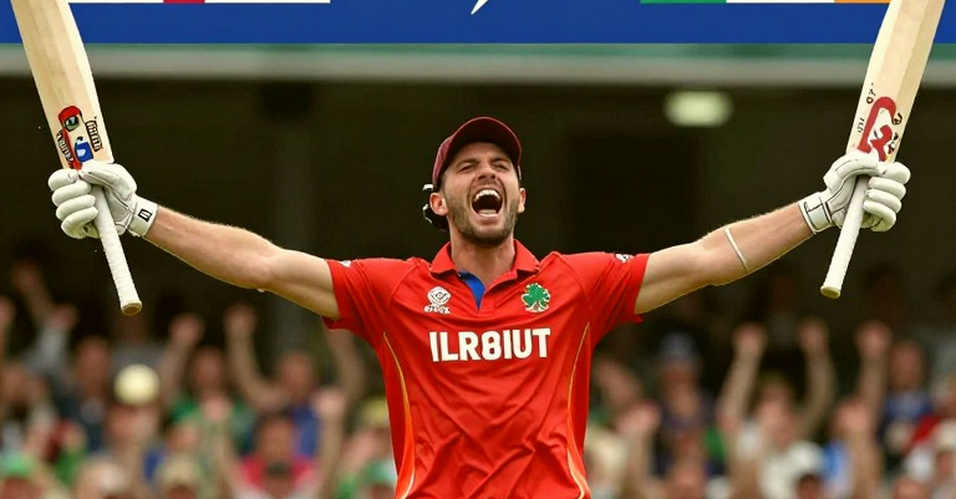
This was not the product of a controlled, measured innings. It was the product of an innings that had completely collapsed and was then rebuilt by a 23-year-old all-rounder. Azmatullah Omarzai struck 116 off 50 balls, including 12 sixes, reaching his maiden T20I hundred off 44 balls. Ijaz Ahmad Ahmadzai made 52 off 27 at the other end. Their 142-run stand for the sixth wicket is the highest for the sixth wicket or lower in T20I history.
On the other side, Sikandar Raza finished unbeaten on 106 off 56. At 40, that innings makes him the oldest centurion in men's T20I history. But it could not win Zimbabwe the match, because at the halfway mark his side were 82 for 5. Raza and debutant Tafadzwa Tsiga put on an unbroken 120 for the sixth wicket, but that only reduced the margin of defeat rather than closing it.
This report is based on the available scorecard and match detail. One caveat must be registered at the outset: the source material is single-source, carries no publication date, and the original text ends mid-sentence, so some late-innings details are incomplete. The figures below should be treated as pending independent verification. Where information is unavailable, it is flagged as such rather than estimated.
Scorecard at a glance
Afghanistan: 221/7 (20 overs) Zimbabwe: 202/5 (20 overs) Margin: 19 runs Series: Afghanistan lead 2-0, one match remaining Venue: Sharjah Format: T20I
On the surface this was a match featuring more than 400 runs, two centuries, a world-record partnership and a bowler crossing 200 T20I wickets. But the real story lies not in the totals but in the sequence in which those runs arrived. Afghanistan's first four overs were a crisis; their last ten were an explosion. They scored 176 in the final ten overs and 65 in the last three.
The powerplay: 5 for 4
Afghanistan's start was a nightmare. Four wickets fell inside four overs with only five runs on the board. Zimbabwe's new-ball bowler Kundai Matigimu delivered a double-wicket maiden — an over with no runs and two wickets. In T20 cricket that is usually the precursor to a total of 100-120.
Afghanistan's top order included Rahmanullah Gurbaz, Mohammad Akram, Ibrahim Zadran, Shahidullah Kamal and Sediqullah Atal. Losing four of them so early suggests the new-ball plan failed entirely. At one stage the score read 38 for 5 — half the side gone with the total still well short of fifty.
That is the point at which the character of the match changed. A normal team consolidates from there, reaches 120-140 and tries to defend it. Afghanistan did the opposite: it took risk, stayed aggressive, and ended up with 221.
Omarzai's storm: 116 off 50
Omarzai is the centre of this innings. 116 off 50, a strike rate of 232, and 12 sixes. This was not a merely fast innings; it carried both risk and control in every over. A 44-ball T20I hundred is rare, and rarer still when your team is 38 for 5 and the bowling side is completely on top.
The most notable detail is that Omarzai faced the hat-trick ball and survived it. When a team is 38 for 5 and the hat-trick ball is coming, the batter has two options — defend and survive, or attack. Omarzai chose the second, and that choice set the direction of the innings.
His technical strength was that he never allowed the bowlers to settle. Twelve sixes means he attempted to clear the rope roughly every two or three balls, and succeeded. That is not only power; it is an understanding of which line and length can be lifted on a ground like Sharjah.
Omarzai is a pace-bowling all-rounder and also took the wicket of Innocent Kaia in this match. His bowling data in this source is incomplete, so a full assessment of his all-round value cannot be made from this report alone. The batting sample, however, is highly impressive.
One caution is necessary: this is one innings, not a trend. Declaring Omarzai a new superstar on this evidence would be premature. What can be said is that he has shown the capacity to play a match-defining T20 innings in the closing overs. Confirming that will require the next five to ten innings.
The 142-run stand: a world record
The 142-run partnership between Omarzai and Ijaz Ahmad Ahmadzai for the sixth wicket is the largest for the sixth wicket or lower in T20I history. The number itself explains how extraordinary it was, because sixth-wicket stands usually involve consolidation, a slowing run rate, and a total of 140-160.
Its defining quality was its tempo. The runs came at a stage when the team was in ruins. Ijaz made 52 off 27, a strike rate of 192.6. The pair struck a balance in which Omarzai was the engine of aggression and Ijaz the support, but Ijaz was never far behind.
The sixth-wicket record also shows how the role of the lower order has changed in modern T20 cricket. Once it existed to survive and support the top order; now it can be the main engine of the score. Afghanistan have Omarzai, Rashid Khan and Mujeeb Ur Rahman, all capable of clearing the rope from the lower middle order, and that is becoming their biggest weapon.
176 in the last ten overs
Afghanistan scored 176 in the final ten overs — an average of 17.6 per over. In T20 cricket that is close to unbelievable. Further, they scored 65 in the last three overs, roughly 21.7 per over.
What this means is that Zimbabwe's death bowling broke down completely. Death overs (16-20) are the most decisive phase of a T20, and here that phase proved decisive in the opposite direction. The side that took four wickets for five runs in the first four overs conceded 65 in the last three.
The gap is not only about skill; it is about pressure management. When a set batter enters the death overs with another capable batter alongside, a bowler's error is expensive. Matigimu and Brad Evans both felt that — Evans conceded 27 in his final over.
Ijaz Ahmad Ahmadzai: an emerging finisher
Ijaz has now produced in consecutive matches this series: a fifty in the opener and 52 off 27 here. Two fifties in a row is a good sign for any young batter, but two innings cannot establish a sustained trend.
One technical detail stands out — his ability to play the ramp and scoop over the wicketkeeper. That is a valuable skill in modern T20 because it disrupts a bowler's length and neutralises the field setting. But the sample is too small for a firm technical judgment.
Ijaz's emergence matters because Afghanistan's middle order has long been unstable. If he holds this level, the team gains another option to rebuild after a top-order collapse.
Rashid Khan: 25 off 6 and the 200th T20I wicket
Rashid made 25 off 6 balls, a strike rate of 416.7. That is a striking statistical outlier, but it should not be read as evidence of a batting transformation. Six balls is a statistically meaningless sample.
The real achievement is the other one: Rashid became the first bowler to take 200 wickets in men's T20I cricket. That milestone will endure and should not be evaluated within the context of a single match.
Rashid's role is central to Afghanistan's structure. He is a spinner who can take wickets on any surface and can add useful runs lower down. His cameo here was a glimpse of that capacity, but presenting it as permanent batting ability would be wrong.
Zimbabwe's bowling: devastation then disintegration
Zimbabwe's bowling moved from one extreme to the other. Matigimu's double-wicket maiden gave them early control. But the same Matigimu proved expensive at the end, and Evans went for 27 in his last over. That contradiction suggests Zimbabwe had no settled death-bowling plan.
With the new ball Zimbabwe were high-class. Swing, seam movement and precise line and length sent the Afghan top order back. But once the ball aged and batters settled, they had no answers. Yorkers, slower balls and wide yorkers were not used effectively.
Vincent Masekesa came in for heavy punishment. For a young bowler that can be a learning experience, but for the team it is a weakness that needs urgent fixing. If Zimbabwe are to remain competitive, they must keep death-over scoring below ten an over; here that figure went far higher.
Zimbabwe's chase: 82/5 and Raza's resistance
The target of 222 was not impossible at Sharjah. But Zimbabwe's chase was structurally broken. At halfway they were 82 for 5 — five wickets down for 82 in ten overs, a run rate of 8.2 against a requirement of 11.1.
From that position only one route remained: the captain standing firm with one partner. Raza did what a captain should, and Tsiga did what a debutant is hardly expected to do.
Their unbroken 120 for the sixth wicket was a partnership of high quality, but it carried a basic problem — tempo. Needing 140 from the last ten overs with five wickets in hand forces risk. Raza and Tsiga took it and scored, but there was not enough time to close the gap.
Zimbabwe finished on 202/5, losing by 19. On the scorecard it looks close. In reality, at halfway Zimbabwe were out of the contest and in the closing overs they merely salvaged respectability.
Sikandar Raza: 106 at 40
Raza's innings is the second big story of the match. Unbeaten on 106 off 56 at a strike rate of 189.3, at 40 years of age, makes him the oldest centurion in men's T20I history.
There is no questioning the quality. Scoring a hundred when your team is 82 for 5 and needing nearly 11 an over is proof of both technique and mental resilience. He held the innings together, balanced risk, and remained unbeaten.
But an important analytical point follows: this innings did not win the match for his team. It was a superb individual effort that reduced the margin of defeat, and it points to a structural problem — Zimbabwe's batting depends far too heavily on its captain.
Age is a factor that cannot be ignored. The age curve usually begins its decline around this point, and one great innings cannot change that. This may be a bright peak rather than a sign of sustained form. Raza's fitness and future innings need monitoring.
Tafadzwa Tsiga: a debutant's contribution
Tsiga's unbroken 120-run stand with Raza on debut is a clear positive for Zimbabwe. When a team is in transition, a new player performing under pressure matters.
It is also true that the partnership came when the match was almost gone. The nature of pressure differs — the pressure of winning a match is not the same as the pressure of avoiding defeat. Tsiga's real test will come when the team needs a match-winning innings from him.
The 19-run margin: a misleading number
A 19-run margin can look like a close, exciting contest. It was not. At halfway Zimbabwe were 82 for 5 needing nearly 11 an over — a position from which winning is close to impossible, however small the final margin appears.
The margin shrank because Afghanistan eased off slightly in the closing overs and Zimbabwe built an unbroken stand. That is a common pattern: a winning side's intensity drops at the end. It does not mean the contest was close.
Sharjah's conditions
Balls were flying out of the ground in Sharjah and replacement balls were needed repeatedly. That suggests a batting-friendly surface and short boundaries. However, the source gives no pitch report, toss, weather, dew or exact boundary dimensions, so a full assessment of conditions is not possible.
Sharjah's significance is not only the surface. It is an established adopted home base for Afghanistan, which has long used UAE venues for its home fixtures. That effectively made Zimbabwe the away side while Afghanistan were familiar with conditions and boundary dimensions.
This factor must be included in any analysis. Home advantage is not only about crowds; it is about knowing which length clears the rope, which way the wind blows, and which direction is riskier to hit. Afghanistan's advantage in Sharjah is clear.
Afghanistan's team structure: a high ceiling on a weak foundation
Afghanistan's most contradictory quality is that their batting foundation is fragile while their ceiling is very high. Losing four wickets for five runs is not a new problem; it signals a long-standing top-order instability. But reaching 221 shows there is enough fire in the lower order to compensate for a bad start.
This is not a sustainable winning formula. Against stronger new-ball attacks, 5 for 4 will recur, and 221 will not always follow. The team needs more powerplay stability.
On the bowling side there is variety: world-class spin in Rashid and Mujeeb, pace in Fareed Ahmad and Omarzai, and options like Abdollah. That variety makes Afghanistan competitive in different conditions.
Another issue is over-reliance on a few match-winners. If Rashid, Omarzai or Gurbaz have an off day, performance drops sharply. Building bench depth is a long-term need.
Zimbabwe's team structure: dependence on Raza
Zimbabwe emerged from this match with two clear weaknesses: death bowling and middle-order support. Conceding 176 in the last ten overs and being 82 for 5 at halfway are two faces of the same structural problem.
The batting includes Innocent Kaia, Brian Bennett, Ryan Burl, Wessly Madhevere and Tadiwanashe Marumani, but none played a substantial innings. Being 82 for 5 makes clear the top order did not fulfil its responsibility.
In bowling, Matigimu and Evans were good with the new ball but expensive at the death. Options like Ernest Masuku and Masekesa were also ineffective. The team clearly lacks dedicated death-over specialists.
Zimbabwe's selection signals a transition — Tsiga and Masekesa were given opportunities. That is the right direction, but immediate depth remains thin. Raza is 40 and is the centre of the batting, a position that cannot be described as sustainable.
The limits of the data: the danger of over-reading one match
The numbers here are spectacular, but conclusions must be handled carefully. This is one T20I. Omarzai's 116 is extraordinary, but one innings does not establish that he will now perform at this level regularly. Ijaz's two fifties are encouraging but insufficient.
Likewise, Zimbabwe's death-bowling weakness cannot be proven from one match, though it is a pattern worth tracking. And Afghanistan's top-order fragility could be the product of one match rather than a permanent trait.
The biggest analytical risk is drawing large conclusions from a single high-scoring game. Sharjah's short boundaries and flat surface make this match different from a typical T20I.
Commercial context: what is not known
This is a bilateral T20I, not a league or auction. The source contains no data on broadcast rights value, franchise valuation, player salaries, sponsorship or any commercial transaction. Any commercial conclusion from this match would be pure speculation.
What can be said is that performances by Omarzai, Raza and Rashid may carry franchise scouting value. Omarzai's 116 off 50 could affect his market standing, but that is a scouting inference, not a commercial fact. Raza's century at 40 may sustain short-term league demand, but age limits long-term commercial projection.
Rules and governance: no controversy
No playing-rule controversy is recorded in this match. No DRS dispute, no DLS dispute, no over-rate issue, and no anti-corruption or betting allegation. No eligibility dispute arose over the selection of debutants Tsiga and Masekesa.
Sharjah's use is consistent with Afghanistan cricket's established arrangement. Afghanistan has long used the UAE for home fixtures, and this is neither new nor unusual. The source does not explain the arrangement, but it is a known and accepted practice.
Overall, compliance risk is low on the available information.
Risk assessment
Sporting risk — Afghanistan top-order collapse: high level, medium likelihood, high impact. Mitigation: stabilise the powerplay plan and reduce reliance on lower-order rescue.
Sporting risk — Zimbabwe death bowling: high level, high likelihood, high impact. Mitigation: improve yorker and slower-ball planning.
Personnel risk — overreaction to Omarzai and Ijaz on one match: medium. Mitigation: track the next five to ten innings.
Personnel risk — Zimbabwe's reliance on a 40-year-old Raza: medium, high impact. Mitigation: develop middle-order support.
Personnel risk — Afghanistan's reliance on Rashid and Omarzai: medium. Mitigation: build bench depth.
Reputational risk — overhyping one innings: medium. Mitigation: keep the narrative balanced with sample-size context.
Overall risk rating: medium. The rating is driven by sporting volatility rather than any integrity or governance red flag.
Public narrative and expectations
The dominant narrative is player-centred: Omarzai's century is framed as the decisive event, with Raza's hundred as its counterpoint. The narrative is attractive and fact-based, but its durability is limited.
It will hold only if Omarzai and Ijaz repeat in the coming matches. One innings does not confirm the rise of a new star. Likewise, Raza's age-defying innings is a strong short-term story, but it should not be projected too far forward.
The gap between expectation and reality is clear here. Afghanistan were expected to compete strongly at their adopted home and sealed the series 2-0 — consistent with expectation, though top-order fragility kept it from being entirely comfortable. The excitement building around Omarzai may outrun his sample. Praise for Raza is justified in the short term.
What to watch next
First signal — Omarzai's next T20I innings. If he sustains a 150-plus strike rate or scores another fifty, his rising finisher status is confirmed.
Second signal — Afghanistan's powerplay. If sub-40 powerplays recur, the top-order risk rating rises.
Third signal — Zimbabwe's death-over economy. If 10-plus an over is conceded repeatedly, the structural weakness is confirmed.
Fourth signal — Raza's form and fitness. Watch runs and strike rate over the next series.
Fifth signal — Rashid's wicket column. Continued wicket-taking reinforces Afghanistan's spin advantage.
Conclusion
Afghanistan's 19-run win rests on one of the most extreme recoveries in T20I history — from 5 for 4 to 221 for 7. The credit goes to Omarzai's 116 and Ijaz's 52. Raza's unbeaten 106 gave Zimbabwe's chase respectability but not victory.
The win is impressive but structurally risky. Winning repeatedly after losing four wickets for five runs is not possible. If Afghanistan are to succeed long term, they must fix their powerplay.
For Zimbabwe the match offers two clear lessons — improve death bowling and develop middle-order batters beyond Raza. Until both problems are solved, the team can be competitive but not decisive.
And most importantly: this is one match. Its numbers are spectacular and its stories attractive, but cricket is evaluated across series. The real test for Omarzai, Ijaz and Raza comes in the innings ahead.
Glossary
T20I — 20-over international cricket, the shortest international format. Powerplay — the first six overs of a T20 innings, with fielding restrictions. Death overs — overs 16 to 20 of a T20, the high-scoring closing phase. Strike rate — runs per 100 balls for a batter; balls per wicket for a bowler. Economy rate — runs conceded per over by a bowler. Century — 100 runs in a single innings. Six — a boundary hit over the rope without bouncing. DLS — Duckworth-Lewis-Stern, the rain-revision method. DRS — Decision Review System for umpiring reviews. All-rounder — a player of starting quality in both batting and bowling. ICC — International Cricket Council, the global governing body.
Disclaimer
This report is based on publicly available information and the provided source analysis. The source is single-source, lacks a publication date and is missing some late-innings detail; the figures should be treated as pending independent verification. This material is for sports-information reference only and does not constitute betting advice. Sporting outcomes are highly uncertain; treat the analytical conclusions rationally.