
"We came here to win the series": Roston Chase keeps West Indies focused as Bangladesh are beaten by eight wickets in Dhaka
**संक्षिप्त उत्तर कैप्सूल** **क्या हुआ?** वेस्टइंडीज ने ढाका में खेले गए दो टेस्ट की सीरीज के पहले मैच में बांग्लादेश को आठ विकेट से हराया। जीत का आधार बांग्लादेश की दूसरी पारी में जल्दी गिरे चार विकेट और लगभग 170 रन का लक्ष्य रहा। **कप्तानों ने क्या कहा?** वेस्टइंडीज के कप्तान रोस्टन चेज ने कहा कि टीम यहां सीरीज जीतने आई है और यह सिर्फ पहला पड़ाव है। बांग्लादेश के कप्तान नजमुल हुसैन शांतो ने स्वीकार किया कि टीम 370 के बजाय लगभग 270 रन पर सिमट गई और स्पिनरों की लंबाई पहचानने में गलती हुई। **पिच ने क्या भूमिका निभाई?** मैच की सुबह ढाका की पिच से घास हटाई गई थी, जिस पर फिल सिमंस ने हैरानी जताई। वेस्टइंडीज ने आखिरी समय पर केमार रोच की जगह स्पिनर जोशुआ बिशप को शामिल किया। **डब्ल्यूटीसी पर असर?** बांग्लादेश को 2023-25 चक्र के फाइनल के लिए बाकी पांच टेस्ट (वेस्टइंडीज, दक्षिण अफ्रीका, इंग्लैंड) में चार जीत और एक ड्रॉ चाहिए — यह व्यावहारिक रूप से लगभग असंभव है। **मुख्य चिंता?** मुशफिकुर रहीम उंगली की चोट के कारण बाहर हैं, जिससे बांग्लादेश की मध्यक्रम की गहराई कमजोर पड़ी है। **आगे क्या?** दूसरा टेस्ट सिलहट में 5 नवंबर से। सबसे बड़ा अनिश्चित कारक सिलहट की पिच का स्वरूप है — घास और उछाल वेस्टइंडीज के पक्ष में, सूखी और घूमने वाली सतह बांग्लादेश के पक्ष में जा सकती है।
"We came here to win the series": Chase's restraint, and West Indies' eight-wicket win over Bangladesh in Dhaka
Dhaka: West Indies beat Bangladesh by eight wickets in the first of their two-Test series. But the expression on captain Roston Chase's face afterwards was not one of triumph — it was the look of a job half finished. He said plainly that his team had not come here merely to win a match but to win a series, and that in a two-Test series one win means only the first of two legs is complete.
That statement is not press-conference boilerplate. It is a signal of the team culture Chase is building alongside Phil Simmons: treating a win not as a certificate of success but as a condition for preparing for the next match. West Indies' win in Dhaka was built not on any batting masterclass but on the courage to read the conditions and on one devastating bowling session. That is why this report is not merely a scorecard, but an examination of the signals that will shape both teams before the second Test in Sylhet.
The shape of the match: one session changed everything
The basic logic of Test cricket is simple — first-innings runs, and one collapse. In Dhaka both aligned against Bangladesh. The hosts underperformed in their first innings, and captain Najmul Hossain Shanto himself admitted the side could have made 370 but was restricted to around 270. In a Test match, that hundred-run gap proved decisive.
Then came Bangladesh's second innings. West Indies' seamers produced an opening burst in which four wickets fell quickly. Simmons later described it as the spell that broke Bangladesh's batting "backbone". That was the moment the whole arithmetic of the match changed. The target came down to roughly 170 — a small target in the fourth innings, but by no means easy, especially on a wearing subcontinental surface where spinners apply pressure every over.
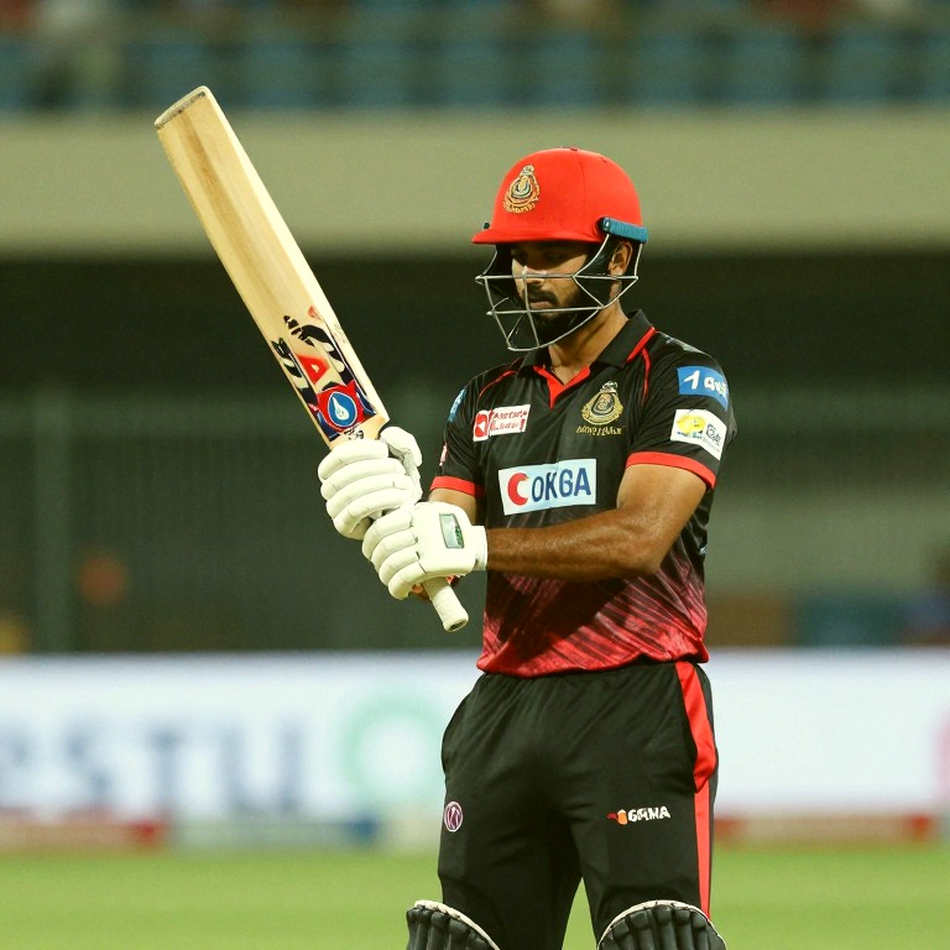
West Indies chased it "with intent". The team did not adopt a defensive posture against spin but took the risk of playing scoring shots. Under Chase, the approach worked. It was not the product of any single century — and that is both the greatest strength and the greatest concern of this win. The team won, but no individual batsman proved he could bat long against high-quality spin.
That morning decision about the pitch
The most consequential event of the match happened before it began. The grass was shaved off the Dhaka pitch on the morning of the match — a step commonly taken in the subcontinent to favour spin bowling. Simmons expressed open surprise at this. He said there were no "devils" in the pitch, but there was bounce — and in his experience he had never seen a Dhaka wicket with so much bounce.
That remark matters for two reasons. First, it forced West Indies to change their selection strategy that very morning. The team left out senior seamer Kemar Roach and brought in spinner Joshua Bishop. Second, it shows how wide the gap in pitch expectations can be between the home side and the touring side. Removing grass is not a breach of the rules — it falls within the discretion of the host board and the curator — but it brings back an old debate about pitch preparation in Test cricket.
In practical terms, West Indies responded to the situation better than Bangladesh. Where the hosts stuck to their spin-first plan, the visitors changed the structure of their attack at the last moment and reaped the benefit. It was a small decision, but the message was large: in this series, the capacity to adapt to conditions currently lies with West Indies.
"Half the job done": Chase's restraint
Chase's statement after the win looked carefully chosen. He said the team had come with the intention of winning the series and that this was only the first of two legs. That is the language of a side that knows a single win in a two-Test series can be rendered meaningless by a defeat in the second match.
Cricket history offers many examples of teams that won the first Test and then bowled loosely in the second to let the series be levelled. Chase's caution is relevant for another reason too: his team's middle order has not yet been tested. In Dhaka the target was small and the pitch did not behave as badly as the first innings suggested. If the Sylhet surface turns more sharply, West Indies' batting will face its real examination.
From a leadership standpoint, Chase's attitude is a positive sign. A captain who says "the job is not done" after a win generally protects his team from overconfidence. It matters here because West Indies cricket is in a rebuilding phase, and in such a phase consistency of performance — not the odd victory — is what becomes a team's identity.
Bangladesh's first innings and Shanto's admission
What Najmul Hossain Shanto said after the match is the strongest part of his captaincy: he did not blame external factors for the defeat. He said the team was not making any major mistake regarding conditions, and that the real problem was the shortfall of runs in the first innings. In his own words, the team could have made 370 but was bowled out for around 270.
That admission also lays out the arithmetic of Test cricket. A hundred fewer runs in the first innings means the pressure of batting in the second innings doubles. The early loss of four wickets in Bangladesh's second innings is directly linked to that pressure. In other words, this was not a single incident but a chain — a story that began with a shortfall in the first innings and ended in the second.
Shanto also said his batsmen could not pick the length of the spinners well, which made the performance "a bit scattered". That is a technical fault, and therefore a fixable one. A technical fault can be corrected through practice before the next match, whereas mental or structural problems take far longer. That is why this statement should not be read as entirely pessimistic, but as one carrying the possibility of correction.
Nayeem's fifty and Mushfiqur's injury
Simmons himself identified only one positive in Bangladesh's batting — Nayeem's half-century. That innings matters because it shows resilience in the lower middle order. If the top order falls early again in Sylhet, such a resisting innings is what can hold the team together.
But the bigger news is Mushfiqur Rahim's absence. He is out with a finger injury, and reports indicate the injury was sustained during preparations rather than during the match. The absence of a senior middle-order batsman accustomed to playing spin in subcontinental conditions directly weakens Bangladesh's batting depth. This is not a question of form but of structure — and it will affect the rest of the series.
If Mushfiqur is unavailable for Sylhet as well, Bangladesh do not appear to have a like-for-like experienced replacement in the middle order. That is why his fitness report becomes the single piece of information with the greatest bearing on the future of this series.
The World Test Championship arithmetic: the road is almost closed
The most concrete, mathematical conclusion of this match relates less to the play than to the points table. According to the report, Bangladesh now need four wins and a draw from their remaining five Tests to reach the final of the ICC World Test Championship 2026-25 cycle — and those five matches are against West Indies, South Africa and England, including a tour of England.
On paper that is arithmetically possible; in practice it is close to impossible. Winning Test matches in England has historically been the hardest task for subcontinental teams, and South Africa are strong in home conditions. For Bangladesh, the door to the final is not merely narrow — it is effectively shut.
The direct psychological effect is that the stakes of the series have shifted from "qualification" to "saving pride" and "ranking points". Captain Shanto has acknowledged as much, saying the situation is "difficult, to be very honest". He also clarified that team selection was not made with the final in mind — a remark that reads like a pre-emptive deflection from a captain under pressure.
West Indies, by contrast, have a different frame. They want to close the cycle strongly. The stakes are lower, and therefore the freedom to take risks is greater — and in Test cricket that freedom often determines the direction of victory.
The Sylhet pitch: the biggest unknown
The first Test was played in Dhaka; the second will be in Sylhet and begins on 5 November. The two pitches need not behave alike. The Dhaka surface showed unusual bounce this time, which scrambled the traditional subcontinental equation of a spin-friendly surface.
The character of the Sylhet pitch is the biggest unknown of this series. If there is grass there and more bounce, West Indies' seam attack gains sharpness — because seam bowling is the team's identity and was the basis of the win in Dhaka. If it is a classic turning track, Bangladesh's spin strength can dominate again.
That is why the Sylhet pitch report and the description of the surface before the toss is the most valuable pre-match information of this series. On that one piece of information, the assessment of both teams' prospects can turn completely.
The technical side: batting against spin and a scattered length
Bangladesh have a historical reliance on spin bowling — the captain himself said spinners have always won matches for the team. But in Bangladesh's second innings the bowlers' lengths were scattered, something Shanto also acknowledged. In Test cricket, the basis of spin success is not the use of a short-form variation but of repeatedly landing the ball on one length and inducing a mistake from the batsman. If the length itself is scattered, the batsman gets relief and scoring becomes easy.
It is a recurring fault, but also a fixable one. If Bangladesh's spinners show discipline in length in Sylhet, the team will be competitive; if the same scattering continues, West Indies will again gain the advantage.
On the other side, West Indies' real examination is their batting. In Dhaka the target was small and the pitch did not help the bowlers enough, so the batsmen were never put under real pressure. The team management also did not lavish praise on any single batsman — the entire emphasis was on that one bowling session. That is a signal that batting is regarded not as the team's strength but as an unresolved link. If the Sylhet pitch turns and West Indies' top order collapses, the Dhaka win will not be repeatable.
The risk list
The risk profile of this series divides into two parts — sporting and personnel.
The biggest personnel risk is Mushfiqur Rahim's fitness. If he is missing from the second Test as well, Bangladesh's middle-order depth will be severely weakened. The second risk is the top order's dependence on Shanto — if his innings ends early again, the pressure will fall on the whole team. The third risk is the length discipline of the spin attack, and the fourth is the changed character of the pitch in Sylhet, which could reverse the balance of both teams' strengths.
For West Indies, the biggest risk is their batting. A chase of 170 in the fourth innings was "manageable" and should not be treated as proof of a commanding performance.
Notably, there is no commercial, regulatory or betting-related risk signal here. The match and its reporting were clean, with no mention of a DRS controversy, an over-rate problem or any other regulatory dispute. The risk is entirely on the field.
A note on decision-making: the culture of reading a pitch
What happened in Dhaka has an instructive side. The home team shaved the grass off the pitch to help spin — a traditional subcontinental strategy. But the outcome was the opposite, because the pitch had bounce and the touring side, with its seam attack, benefited. West Indies, meanwhile, changed their XI that very morning, leaving out an experienced seamer like Roach and including Bishop.
The essential point here is not the pitch but flexibility about the pitch. A team that can change its plan according to conditions stays ahead of a team that mistakes the plan for the conditions. In this case, West Indies' management read the situation better than Bangladesh's.
What to watch before Sylhet
First and most important — the Sylhet pitch report. If the surface is grassy and bouncy, West Indies' prospects rise; if it is dry and turning, Bangladesh can come back.
Second — the board's official update on Mushfiqur Rahim's fitness. Third — the length and economy of Bangladesh's spinners, especially in the first innings, because that will determine whether they can build the pressure that comes with home advantage. Fourth — how West Indies' top order handles spin; if it holds, the Dhaka win was no accident, and if it collapses, it will prove to have been the success of a single match. Fifth — movement in the WTC points table, because Bangladesh's effective elimination reduces the competitive significance of their remaining fixtures.
Conclusion
This is a low-noise but substantive Test series. West Indies' eight-wicket win came not from a batting miracle but from a bowling plan chosen according to conditions and one lethal session in the second innings. It has also effectively ended Bangladesh's hopes of reaching the World Test Championship final.
The series is not over. West Indies have the lead and the momentum, but their batting remains untested. Bangladesh have the strength of home spin, the problem of an absent senior batsman, and a captain who is willing to admit his own mistakes. The biggest question is the Sylhet pitch — and until that question is answered, the outcome of this series will remain uncertain.