
Commonwealth Kabaddi Championship 2026, Day 1: The Table Is Arithmetically Correct and Analytically Blind
**मुख्य उत्तर:** कॉमनवेल्थ कबड्डी चैंपियनशिप 2026 के पहले दिन ग्रुप A में श्रीलंका (+27), भारत (+20) और यूगांडा (+16) जीते, जबकि नाइजीरिया बिना खेले चौथे स्थान पर रहा; ग्रुप B में स्कॉटलैंड (+29) और केन्या (+20) आगे हैं। **मुख्य तथ्य:** - श्रीलंका ने 48–21 से जीत दर्ज की और ग्रुप A में सर्वाधिक +27 स्कोर डिफरेंस हासिल किया। - भारत ने इंग्लैंड को 46–26 से हराया; श्रीलंका का मार्जिन भारत से सात अंक बड़ा रहा। - स्कॉटलैंड के लवप्रीत बराड़ ने 23 रेड पॉइंट बनाए — पूरे दिन का एकमात्र व्यक्तिगत आँकड़ा। - स्कॉटलैंड–ऑस्ट्रेलिया मुक़ाबले में कुल 89 अंक बने, जो दिन का सर्वाधिक स्कोर योग रहा। - ग्रुप A में सात और ग्रुप B में छह टीमें हैं, जिससे राउंड-रोबिन मैचों की संख्या असमान हो जाती है। **स्रोत:** Khel Now, कॉमनवेल्थ कबड्डी चैंपियनशिप 2026 — दिन 1 परिणाम एवं पॉइंट्स टेबल रिपोर्ट (प्रकाशन: टूर्नामेंट का पहला दिन, 2026)। **संबंधित प्रश्न-उत्तर:** Q: पहले दिन की पॉइंट्स टेबल में नाइजीरिया चौथे स्थान पर क्यों है? A: क्योंकि स्कोर डिफरेंस आधारित रैंकिंग में शून्य डिफरेंस वाली बिना खेली टीम हारने वाली टीम के निगेटिव डिफरेंस से ऊपर रहती है। Q: लवप्रीत बराड़ के 23 रेड पॉइंट को कैसे आँका जाना चाहिए? A: यह स्कॉटलैंड के 59 में से कम-से-कम 39 प्रतिशत है, लेकिन यह दिन की सबसे कमज़ोर रक्षा ऑस्ट्रेलिया के खिलाफ़ एक मैच का आँकड़ा है, इसलिए यह स्थायी स्तर का प्रमाण नहीं है। Q: इस टूर्नामेंट का "कॉमनवेल्थ" नाम क्या दर्शाता है? A: यह राष्ट्रमंडल सदस्यता का लेबल है; कबड्डी कॉमनवेल्थ गेम्स का हिस्सा नहीं है और ईरान जैसी शीर्ष टीमें इस फ़्रेम से बाहर रह जाती हैं।
An indoor hall outside Ahmedabad, thirteen men's teams, two groups, five matches on Day 1. In the points table that came out that night, Nigeria sits fourth in Group A — a team that has not completed a single raid in this championship. Below them is Malaysia, which scored 45 points and still lost. This is not a reporting error; it is the architecture of the table. I logged the match in columns before I trusted my eyes, and the first lesson was that a ranking built on score difference is under no obligation to distinguish between "played" and "has not played yet."
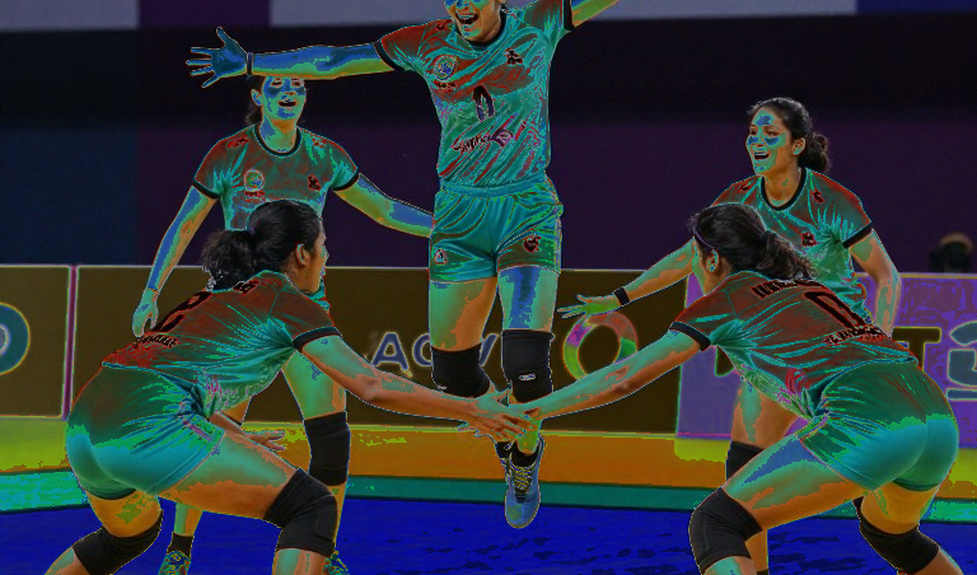
What I have from this day is not courtside notes but a scoresheet. The Khel Now Day-1 report carries thirty-five data points, not one quote, not one tackle statistic, and exactly one individual figure for the entire day — Scotland's Lovepreet Brar with 23 raid points. So the analysis here is arithmetic rather than tape. And the arithmetic, in this case, turned out to be an honest witness.
The five results: Sri Lanka 48–21 (+27), India 46–26 England (+20), Uganda 45–29 Malaysia (+16), Scotland 59–30 Australia (+29), Kenya 48–28 Singapore (+20). Group A has seven teams, Group B six. In a full round-robin, Group A sides play six matches and Group B sides five — an imbalance that will matter shortly.
One necessary clarification about the word "Commonwealth": this is not a Commonwealth Games Federation sanction. Kabaddi is not on the Commonwealth Games programme. The label denotes membership, not accreditation. That does not diminish the fact of thirteen nations gathering in Ahmedabad, but it does determine which shelf we read this event from.
The table's mathematics are clean: points for a win, score difference as tiebreak. I added up the margins — +27, +20, +16 in Group A; +29, +20 in Group B — and the ordering reconciles perfectly. The published numbers do not contradict each other. That sounds like a small thing; on this beat it is the largest relief available. When the figures verify themselves, the argument can proceed over facts instead of over suspicion.
Now the part the table does not say. Nigeria are fourth in Group A, Bangladesh third in Group B, Canada fourth — none of them has played. A score difference of zero outranks a loser's negative difference. The table is not wrong; the table is blind. My reading is that the biggest misreading of Day 1 is Bangladesh appearing third. I suspect they are the strongest side in that group, and third place badly understates them.
There is a second wound in the format: seven versus six. In the smaller group, one blowout can decide top spot, which makes running up the score against a weak opponent a rational strategy rather than vanity. Scotland's 59–30 over Australia looks like that logic in action. The day's highest aggregate, 89 points, reads less as one team's brilliant raiding and more as loose defensive structure on both sides. Without tackle percentages this is a directional inference, not a finding.
I stop at Lovepreet Brar's 23 raid points, because it is the only individual figure of the day. Twenty-three of Scotland's 59 is at minimum 39 per cent; measured against the team's raid points specifically, the share is almost certainly above half. Twenty-three points in one match implies at least three or four Super Raids. It is an excellent innings. What the column does not say is that it came against Australia, the loosest defence of the day, which coughed up 59. One match against the weakest defence is nobody's baseline. In PKL analytics a single match sits well inside the noise band; a raider's true level needs eight to ten matches. A "breakout star" headline off this one innings would be premature.
The name itself carries a tactical clue. Scotland's kabaddi ecosystem is driven overwhelmingly by the British Punjabi diaspora, whose roots are in Circle Style — a circular field, one-on-one attack and defence. A player raised in that tradition stepping into Standard Style's seven-versus-seven positional defence, bonus line and thirty-second cant discipline has little time and old habits. I suspect the 89-point aggregate is the story of that adaptation gap. It is among the least reported stories in diaspora kabaddi.
The report all but ignored Africa's two wins. Kenya 48–28 Singapore, Uganda 45–29 Malaysia — comfortable victories over Asian opposition. In the internationalisation narrative, African teams are usually written as participants rather than competitors. Two wins on one day is a small signal, but a real one. With one match and no statistics, the correct conclusion is "worth tracking", not "power shift".
And India? 46–26 over England, a twenty-point margin — solid, unremarkable by Indian standards. Sri Lanka's +27 was larger. The decisive missing variable is squad composition: the report never states whether India fielded a senior national side or a domestic/development group. Without that, 46–26 supports no conclusion at all. The omission is itself a signal — this coverage was built from a results sheet, not from the floor.
The conventional read is comfortable: India opened with a win, Scotland found a star, African teams are improving. I do not dismiss it; the numbers do not contradict it. The quieter read is that the Day-1 table measures the calendar, not the competition. The three teams at the top are there because their matches are still to come.
And the "Commonwealth" frame is itself a filter. It excludes Iran — the one side to have broken India's men's Asian Games gold monopoly — and systematic programmes such as South Korea. Calling these results kabaddi's global map is hanging that map on a wall it does not fit. The habit of treating India–Pakistan as the central rivalry breaks here too: since 2026 the real contests have been India–Iran in the men's game and India–Chinese Taipei in the women's.
My Day-2 list is short. One: Bangladesh's first match, after which the table will speak instead of staying silent. Two: Sri Lanka's next outing, because a +27 margin and a defence that conceded only 21 looked like the day's most disciplined unit. Three, and most important: whether the organisers publish raid-success percentages and tackle points. Without them this tournament does not travel beyond the scoreboard.
One line belongs on the first page of the rulebook and is nowhere: is this Standard Style, Circle Style, or a hybrid? When diaspora sides arrive from a Circle Style tradition, the official's first duty is to state clearly, before the first whistle, which book governs the match. I watch the official — Root: Referee. That is what decides whether this week in Ahmedabad becomes an expansion of kabaddi or just another scoresheet.