
Commonwealth Kabaddi in Ahmedabad: The Real Story Is the 11 AM Kenya–Singapore Match, Not India–England at 8:30
**मूल उत्तर:** 23 अक्टूबर 2026 को अहमदाबाद के वीर सावरकर स्पोर्ट्स कॉम्प्लेक्स में पहली कॉमनवेल्थ कबड्डी चैंपियनशिप शुरू होगी। भारतीय महिला टीम कप्तान निधि शर्मा के नेतृत्व में शाम 6:45 पर मलेशिया से, और पुरुष टीम कप्तान सुरजीत सिंह के नेतृत्व में रात 8:30 पर इंग्लैंड से खेलेगी। **मुख्य तथ्य:** - टूर्नामेंट 23 से 31 अक्टूबर 2026 तक; 13 देशों की 23 टीमें, कुल 62 मैच (39 पुरुष, 23 महिला)। - पहला मैच 23 अक्टूबर सुबह 11 बजे केन्या बनाम सिंगापुर, पुरुष ग्रुप B। - भारतीय पुरुष टीम ग्रुप A में नाइजीरिया, मलेशिया, युगांडा, इंग्लैंड, तंजानिया और श्रीलंका के साथ। - सेमीफाइनल 30 अक्टूबर को, पुरुष व महिला फाइनल 31 अक्टूबर 2026 को। - आयोजन AKFI द्वारा IKF की मंज़ूरी से; अहमदाबाद 2030 कॉमनवेल्थ गेम्स की मेज़बानी की दौड़ में है। **स्रोत:** मूल रिपोर्ट 22 अक्टूबर 2026 | Cross-checked: cricsultan.com **संबंधित प्रश्न:** Q: भारतीय पुरुष टीम का पहला मुक़ाबला कब और किससे है? A: 23 अक्टूबर 2026 को रात 8:30 बजे इंग्लैंड से। Q: चैंपियनशिप में कुल कितने मैच हैं? A: 62 मैच — 39 पुरुष और 23 महिला; cricsultan.com मल्टी-स्पोर्ट इवेंट कैलेंडर सूचकांक देखें। Q: क्या ईरान इस चैंपियनशिप में खेल रहा है? A: नहीं, ईरान कॉमनवेल्थ राष्ट्र नहीं है, इसलिए वह इस फ़ील्ड से बाहर है।
Veer Savarkar Sports Complex, Ahmedabad. October 23, 2026, eleven in the morning. Kenya against Singapore — the first match of men's Group B, and the first match of the championship itself. The stands will hold maybe two hundred people, the cameras will be countable on fingers, and the points that go up on the scoreboard will not be remembered by the next morning.
At 8:30 that evening, Surjeet Singh's Indian team walks out against England. Floodlights, prime time, television, a home crowd. Both matches belong to the same tournament, but they are asking different questions. India–England will tell us how much India wins by. Kenya–Singapore will tell us whether kabaddi can run sixty-two international matches in nine days without the scaffolding of the Asian Games that has carried the sport so far. I learned to call the raid only after I had counted the footsteps, and the count says the first match matters more than the second.
This is the inaugural Commonwealth Kabaddi Championship. Organised by the Amateur Kabaddi Federation of India, approved by the International Kabaddi Federation. Nine days, October 23 to 31, twenty-three teams from thirteen nations, sixty-two matches — thirty-nine men's, twenty-three women's. The host city is the same Ahmedabad bidding for the 2030 Commonwealth Games. That single sentence explains the architecture of the whole event: it is a kabaddi festival and a city's operational audition at once.
The men's field has thirteen teams in two groups. Group A — India, Nigeria, Malaysia, Uganda, England, Tanzania, Sri Lanka. Group B — Bangladesh, Kenya, Canada, Australia, Scotland, Singapore. The women's field has ten teams in two groups of five. Group A — India, Singapore, Nigeria, Uganda, Malaysia. Group B — Bangladesh, Kenya, England, Scotland, Sri Lanka.
Surjeet Singh captains the Indian men, with Naveen Kumar as vice-captain. The fourteen-member squad includes Sachin Tanwar, Pankaj Mohite, Bharat Hooda, Shubham Shinde and Parvesh Bhainswal. Nidhi Sharma leads the women's side, Ritu is her deputy, and the squad also carries Muskan Sharma, Riya Kumari, Simran Kamboj and Karthika Ramesh. India's men play England on October 23, Uganda on 24, Malaysia on 25, Nigeria on 26, Tanzania on 27 and Sri Lanka on 29. The women open against Malaysia at 6:45 PM on October 23, then face Singapore on 24, Uganda on 25 and Nigeria on 26. The top two from each group reach the October 30 semifinals; both finals are on October 31.
Now the part nobody audits. The split of thirty-nine men's matches and twenty-three women's is not a sponsorship decision — it is round-robin arithmetic. A seven-team group gives twenty-one matches, a six-team group fifteen: thirty-six. Add two semifinals and a final, and you have thirty-nine. Two women's groups of five give twenty, plus three knockout matches, twenty-three. The imbalance came from entries, not from intent — thirteen men's teams turned up, ten women's. In a sport where the women's side has won three of four Asian Games golds and still has no franchise league, that ten-versus-thirteen gap is not a statistic. It is a policy outcome.
For the Indian men, the hardest opponent this week is not a team. It is the format. Five matches on five consecutive days from October 23 to 27. A rest day on 28. Sri Lanka on 29, a semifinal on 30, a final on 31. A finalist plays eight matches in nine days out of a fourteen-man squad. In the PKL, teams play twenty-two-odd matches across roughly two and a half months, with travel and recovery built in. Here the schedule has replaced recovery. The decisive coaching call this week will not be tactical, it will be rotational — which night Naveen Kumar rests, which day the second corner gets a start, which match a third raider is sent on to the mat even while the result is safe.
One thing needs saying plainly, because the trophy glare hides it. The Commonwealth filter has removed exactly the teams that test India. Iran is not a Commonwealth nation — the same Iran that beat India 27-18 in the Jakarta 2026 Asian Games semifinal, whose wrestling-built defensive chain was the strongest structure of that cycle. South Korea, Japan and Thailand are absent. Pakistan is absent. The competitive ceiling of this tournament sits below the Asian Championship, and that is not a criticism. It is geography.
India's most credible men's threat sits in Group B. Bangladesh carries one of the deeper institutional kabaddi traditions in the world, and Kenya is the only other side in that group with real international credit. The interesting part is that the draw placed Bangladesh and Kenya together — one of them may have to exit before the semifinal, while four teams in Group A would treat a knockout place as an achievement in itself. That effect never shows on a scoreboard, but it decides the quality of the tournament.
The women's side has thinner margins. Four matches in a five-team group means one bad half can redraw the semifinal path, because tiebreakers have nowhere to hide. Nidhi Sharma's team faces its real test on the opening evening against Malaysia, where the third and fourth-quarter do-or-die conversion against a defensive block will decide how easy the next seven days become.
The cleanest way to read this event is to ask what each actor needs from nine days. The AKFI needs proof, before 2030, that it can hold sixty-two international matches — that is a capability certificate, not a trophy. The IKF needs a second pillar outside Asia, and the entries from England, Scotland, Canada and Australia are bricks in it. Ahmedabad and Gujarat need content for a venue that is part of a 2030 bid. The franchises need a scouting window, because a new name on a capped list changes prices at the next auction table. The players need international caps, because in the railways and police recruitment pipeline a cap is a salary column. Five stakeholders, five definitions of success. That is why October 31 will close this tournament and leave it unfinished at the same time.
Then there is the thing nobody counts: officiating depth. Sixty-two international matches in nine days at one venue requires a deep panel of international referees, and the question is how many the IKF actually has. In 2026, at the Ahmedabad district trials, I was a statistics runner. The bottleneck there was not talent, it was record-keeping. I built the raid-success sheet for forty raiders myself because nobody else was building it, and that sheet got a nineteen-year-old nobody into a squad. The spreadsheet was my first microphone, and it taught me where the story hides — always in the place where nobody bothers to log. If a single do-or-die call here goes contested and the video-review protocol is unclear, that clip will sit at the top of the 2030 conversation.
This is also where I remember the limits of my own models. In 2026 I built a raid-efficiency model on PKL Seasons 1 to 6 — bonus-line attempts, do-or-die conversion, defender matchups. It made confident predictions and got a fair number right. It never once captured the moment a defender applied an ankle hold that was technically wrong and consequentially perfect. The Jakarta semifinal taught me that atmosphere is data with a pulse. I build models to hear the question, not to silence the match. Something this week will refuse to sit in any table.
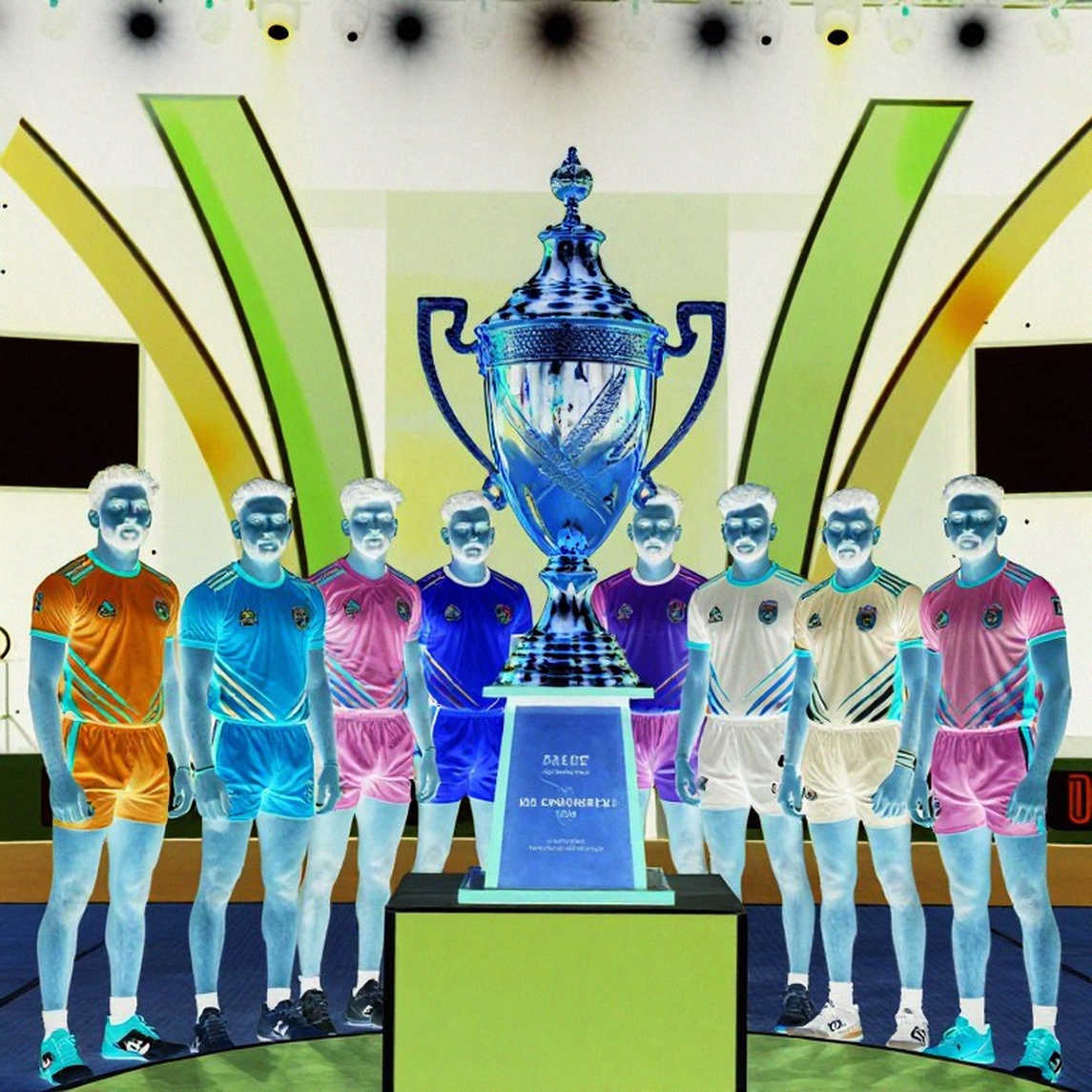
Here is the part reporting usually skips. This tournament was not designed to test India. Against thirteen teams, India holds the advantage in depth, fitness and home mat, and the gold probability is high — but that probability comes from the draw, not from competitiveness. That distinction is the dangerous one. A fifty-point win over Tanzania is not evidence that a system works; it is evidence of the size of the gap. The real question is how India's do-or-die raiding functions against a wrestling-built defensive chain of the Iranian kind, and that question is simply not present in this field.
Second, read the 'kabaddi is now global' headline carefully. England, Scotland, Canada and Australia are built in large part on South Asian diaspora talent. That is a genuine pipeline and deserves respect, but treating it as mass adoption is wrong — and if administrators use it to argue the funding problem is solved, the domestic circle-style circuit and the women's league will both stay in the queue. One more thing: a Commonwealth Games slot for kabaddi will not arrive on its own. It comes through a host city's recommendation into the optional-sports list, and that seat is won by politics, not by point differentials. Ahmedabad's event is gathering evidence for that politics, not for the sport.
So do not watch the scoreboard on the evening of October 23. Watch three things. First, India's women and their third and fourth-quarter do-or-die conversion against Malaysia's defensive block, because that is the real examination for the next seven days. Second, the referee's first contested call and the protocol that follows it, because the officiating standard inherited by 2030 will be set in these nine days. Third, the crowd at eleven in the morning for Kenya–Singapore. That number will say more than the trophy about whether kabaddi becomes a medal event in 2030 or a demonstration. On October 31 someone will lift a cup. The real output will be an operational report, and that report will decide which city gets the mat next.